The rhetorician Quintilian, in his study of the orator’s education (IV.2.52), stated that there were four factors affecting the credibility of a forensic argument. By forensic argument, we mean a speech or writing that examines past events and evidence in order to evaluate culpability.
The Stoic philosopher Ariston of Chios was said to have believed strongly that the wise man should avoid making absolute judgments. Certitude, he felt, was neither possible nor desirable.
De poena prophetarum falsarum. If a leader cannot base his decisions on verifiable truth, or on the closest approximation of what he believes to be the truth, he will not escape calamity. He must surround himself with advisors who have his, and not their own, interests at heart; and he must seek independent confirmation of advice provided, especially during times of war or crisis.
It can often be instructive, in the study of history, to play the intriguing game of “what if?” We are inclined to believe in the inevitability of historical events, simply because things turned out as they did; yet we tend to forget that different decisions might have produced very different outcomes. Thought experiments also help us to review those timeless principles of leadership and morals that may be applicable to our own lives. Let us, then, review Hannibal’s decision not to march on Rome in the immediate wake of his shattering victory at Cannae in August of 216 B.C.
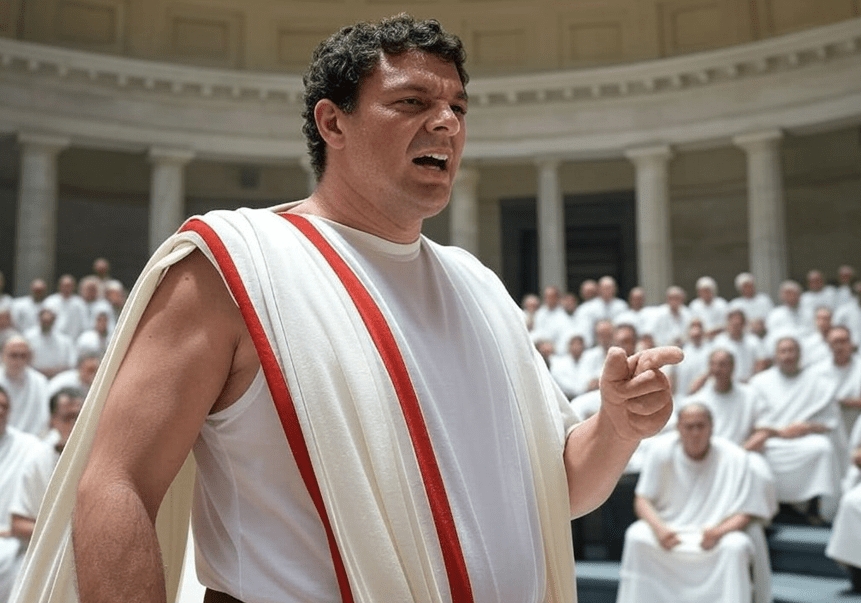
In November of 43 B.C., Rome was gripped by a terrible sense of foreboding. The historian Appian, in his Civil Wars (IV.1.4) relates that all kinds of strange portents were observed around the city. Statues sweated blood; a newborn infant uttered words; lightning struck sacred temples; and cattle spoke with a human voice. So alarmed were some senators that they summoned expert diviners from Etruria to weigh these ominous signs. The most authoritative of these was an elderly man who told them, “The monarchical rule of ancient times is returning. You will all be slaves except me.” Once the Etruscan priest spoke these words to the startled senators, says Appian, he closed his mouth and held his breath until he dropped dead before them.
One of Saladin’s advisors was a man known by the honorific title Al-Qadi Al-Fadil (“The Excellent Judge”). We will not try the reader’s patience by recording his protracted real name, but we will note that he lived from 1135 to 1200. Great conquerors in history always seem to be accompanied by wise counsellors; perhaps there is an important lesson to be derived from this fact.
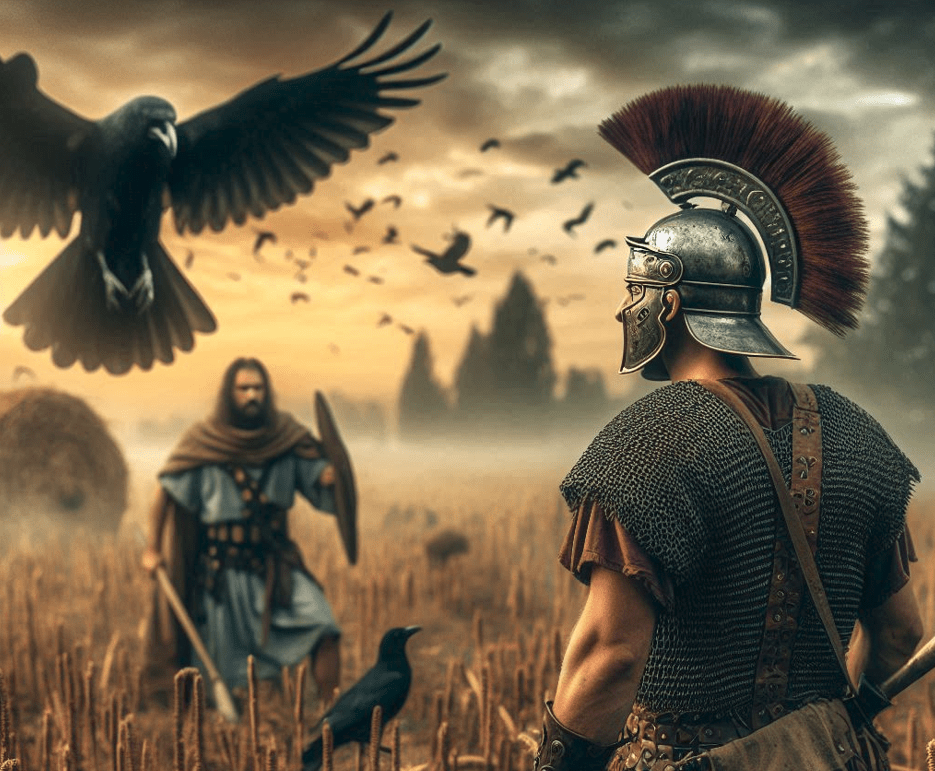
There is a story told in Livy (VII.26) of a raven’s fortuitous intervention on behalf of a Roman soldier engaged in personal combat with a Gaul. This event, if indeed it is not apocryphal, occurred in 348 B.C. during the consulship of Lucius Furius Camillus.
There is a humorous scene in the 1969 film Butch Cassidy and the Sundance Kid that you may be familiar with. Paul Newman’s character (Butch), when confronted by a rebellious member of his gang who wishes to displace him as leader, is challenged to a knife fight.
There is a tendency in conflict situations for inaction to take precedence over action. In his chapter The Suspension of Action in War (III.16), Clausewitz explains why this is so. Three determinants, he says, “function as inherent counterweights” to the impulse for positive action.
During a recent panel discussion at the World Economic Forum on Green Energy, former American Secretary of State John Kerry made the following rather disconcerting statement:




 Quintus Curtius
You must be logged in to post a comment.