Behind Everything Is The Unknowable

The never-ending debate between faith and reason, and between science and religion, leaves us more perplexed than ever.  Explanations generate more questions than they answer.  Behind every apparent certainty lies an inscrutable unknown.  If we see science and religion as opposite poles, then perhaps we can begin to see the wisdom in Herbert Spencer’s assertion in his Autobiography that “Truth generally lies in the coordination of antagonistic principles.”  That is, Aristotle’s conception of the “golden mean” seems to be the best determiner of truth.  So, for example, courage can be seen as the median between the extremes of rashness and cowardice.

Neither science nor religion can answer all questions.  The atheist rashly believes that science contains all the answers that matter.  But we find just as many absurdities in science as we do in religion.  Do we really even know what matter is?  As we divide and subdivide the atom, we get a nearly infinite plethora of particles, strings, waves, and vibrations, all existing (we think!) in an uneasy cacaphony.  Space, time, and motion all seem to be (so we are told) relative to everything else, a fact that leaves us feeling more helpless and bewildered than ever.  Grand theories that purport to explain everything are replaced every few decades by ever more grand theories.  We are left to scratch our heads.

The theologian hardly fares better.  He constructs intricate cobwebs of metaphysics to convince himself and others of the eternal truths that, with the passage of a few centuries, appear to be neither eternal nor true.  Perhaps the problem lies in the limitations of thinking itself, in the very process of cognition.  If we choose to think one way, we are steered towards “rational” explanations; if we choose to think another way, we are steered towards “spiritual” explanations.  Viewed in this way, it is not difficult to reconcile religion and science.  Both of them are different ways of approaching the Unknowable.  Our very act of thinking helps determine the outcome of the thought.

What is evolution?  Spencer defined it as “an integration of matter and a concomitant dissipation of motion; during which the matter passes from an indefinite, incoherent homogeneity to a definite, coherent heterogeneity…”  That is, systems move from a state of chaos to something that looks more ordered and “coherent.”  But things do not “evolve” upwardly forever.  At some point, what was once evolution begins to disintegrate back into disorder and simplicity.  Empires collapse; societies disintegrate; and genius reduces itself to absurdity.  Disorder evolves from order, and then the process begins again.  Nietzsche’s Eternal Recurrence is a reality.  All things will repeat themselves, as prophesied in Virgil’s Fourth Eclogue when he says (IV.31):

A second Typhys will then arise, and a second Argo to carry
Chosen heroes; a second war will be fought, and great Achilles be sent again to Troy.

With regard to biology, Nature cares more about groups of organisms than about individual organisms.  It is the perpetuation of the species that matters for Nature; she cares little for the virtue of the individual, only the fecundity of the race.  In fact, intelligence and fertility seem to be inversely related:  as intelligence grows, so is lessened the desire to breed.  On average, scientists and philosophers are not known for their procreative abilities.  The more highly developed a group or an individual is, the less fertile the group or individual seems to be.  It is as if all of the energy normally devoted to procreation is channeled into the refinements of civilization.

Organisms adapt themselves to their environments by the processes of natural selection; those traits that help ensure the survival of the species are passed on, and those that contribute little or nothing are marginalized.  The individual organism has little or no say in this grand process.  The process is random, uncontrolled, and imperceptible.

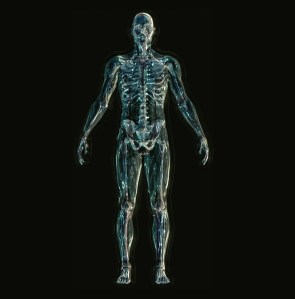
Is there a role for the individual in this seemingly impersonal process?  Apparently not.  At least this has been the rule historically; but it appears that humans are approaching some sort of tipping point where they will finally be able to “influence” the process of evolution.  Nanotechnology, genetic engineering, and robotics are poised to change the very definition of what it means to be human.  We are creating our replacements.  They are right before our eyes.

And this is precisely the point.  Once we begin to control the natural process of evolution–by using these new technologies–we have taken an evolutionary detour from which there will be no return.  We will have taken, perhaps, the first steps towards the development of a new species:  homo mechanicus.

We are evolving ourselves right into oblivion.

Read More:  Samuel Griffith:  Warrior And Scholar


The Rise And Fall Of Empires: Ibn Khaldun’s Theory Of Social Development

khaldun2

The most remarkable figure in medieval historiography was Abd al-Rahman Ibn Khaldun; his name in Arabic is أبو زيد عبد الرحمن بن محمد بن خلدون الحضرمي‎, but this is mercifully shortened to us simply as Ibn Khaldun.  He was an urbane and well-traveled figure, whose life experiences taught him intimate lessons on both rulers and ruled.  He was born in Tunis, North Africa, in 1332 and received the best education of his day; his absorption of knowledge was made easier, he tells us, by his zealous devotion to travel and study.

Continue reading

On Whether It Is Better To Criticize, Or To Remain Silent

100_0851

The great Italian humanist Lorenzo Valla (1406-1457) took great pride in his constant need to attack his forebearers, as well as his contemporaries.  Few escaped the wrathful attentions of his pen.  Yet Valla saw himself as an upholder of the classical virtues, and for him, criticism was a form of moral duty.  He said in 1440 in one letter to Joan Serra:

Continue reading

The Practical Wisdom Of Thomas A Kempis

inquis1

One of the most enlightening yet now underappreciated books of “personal improvement” is a small volume entitled The Imitation of Christ.  It was written by an obscure cleric named Thomas a Kempis in the late medieval period in Germany.  His name has various spellings, among them Thomas Von Kempen and Thomas Haemerkken.

Continue reading

Invective Has A Distinguished Lineage

Acquaintance with the ancient art of invective reminds us just how hypersensitive today’s reading audience can be.  We often hear tiresome complaints from some quarters about how some article or other on the internet “triggered” someone, or how some author is a “horrible person” for upsetting someone’s serenity.  It was not always so.  Invective and personal attack have a long and distinguished history.

Continue reading

The Traits Needed For Progress In Mystical Studies

delusion

In Pantheon, we devoted a chapter (“The Heart Of Plotinus”) to the foundational text of Western mysticism, Plotinus’s Enneads.  That text made it clear that every man possesses within himself the capacity for special knowledge of the world; and every man has the potential for awareness of things outside the realm of accepted cognition.

Some will use and develop this innate and intuitive capacity, and some will not.  The question then arises: what are the attributes of the true mystic?  And for those who seek to embark on a study of this field, what traits mark those with natural talent?  An awareness of these traits will assist us in our own spiritual explorations.

The great mystics of Christianity, Judaism, and Islam all seem to have a few core traits in common:

1.  A capacity for concentration.  The ability to master large amounts of recondite and difficult material is a prerequisite for success.  This must happen before the novice can approach the more abstruse doctrines.  Before the great rewards can be reaped, a great deal of effort must first be expended.  Furthermore, without a single minded focus on study, ritual, and recitation, it will not be possible for the student to achieve the correct mental states required for ascension to higher consciousness.

2.  A sincere and pious disposition.  The true seeker is not a chest-beater, a braggart, or a publicist.  He does not wish to be seen to do good, but instead wishes actually to do good.  The open heart carries the additional advantage of not being enmeshed by the nets of jealousy, pride, or preconception; it is willing to give a fair hearing to doctrines that may run counter to its own experience and common sense.  The mystic is a lover, first and foremost:  a lover of truth, divine knowledge, and the wonders of the natural world.

3.  A soaring imagination.  The literature of the best mystics is marked by an intoxicating language derived from the seeker’s imaginative creations.  This is not frivolous vanity, but rather a necessary part of the search for esoteric knowledge.  The fundamental nature of existence is cloaked in ambiguity.  As we delve more deeply into our own imagination and our own dreams, we quickly discover that our imagination serves as a “bridge” (in Arabic, a برزخ or barzakh) between the world of the spirit and the world of the corporeal.

water2

Unless we understand the imagination and how it operates, it is not really possible to grasp the deeper core of mystical doctrines.  The great mystic Ibn Arabi assured us that imagination (خيال or khayal) actually took place on three planes:  in the cosmos, where existence equaled the Divine imagination; in the intermediate world between the corporeal and spiritual realms; and in the individual man, whose soul used it as a means of communication with the body.

Not all of us will be great mystics, but all of us can benefit from a consideration of these matters in a basic way; they will open spiritual doors for us previously closed.

If anyone would doubt the power of imagination, let him consider this unsettling story told by Ibn Arabi in his monumental work The Meccan Revelations.  

When he was but a beardless youth in his early teens, Ibn Arabi had begun to attract attention for his incredible powers of perception, recitation, and cognition of spiritual matters.  His “opening” came at an early age.

The chief judge in Seville, Spain at the time was the famous philosopher and jurist Averroes (Ibn Rushd).  Ibn Arabi’s father was an acquaintance of Averroes, and one day decided to take his precocious young son to meet him.  Averroes had heard about the young lad’s abilities and wanted to take his measure.  We should also note that he was a strict rationalist, and had little use for the imprecise and airy creations of the mystics, whom he doubtless considered to be mostly deluded.

He asked the boy, “How did you find the situation in unveiling and divine emanation? Is is what rational thought demonstrates for us?”

Ibn Arabi replied, “Yes and no.  Between the yes and the no, spirits fly from their matter, and heads from their bodies.”

Upon hearing this answer, Averroes was said to have gone pale and begun to tremble.  He had no further meetings with the young man, whose strange answer had completely disarmed him.


Read More:  How Character Can Change According To Circumstances

How Character Can Change According To Circumstances

delusion1

It may be asked how a man’s character changes according to his circumstances.  Without doubt it does change; there remains an unalterable core of our character, fashioned from our earliest years, but onto this trunk may be grafted or discarded a variety of traits and habits.

On this subject we should be mindful of the following:

1.  It is easier to add character traits than it is to remove them.  The learning of a new set of habits and traits can be accomplished if the incentives and motivations are there.  Far more difficult it is to try to remove some ingrained character feature that may have been with us for years.  It is not impossible, but it is difficult.

Adding is easier than removing.  Being mindful of this, we should endeavor to add character traits, rather than to try to remove ones that may already exist.  The removal of character traits should be reserved for those situations where the trait in question is directly harmful or a serious impediment to future growth.

2.  The true revelation of character comes at moments of difficulty or stress.  If we wish to know our own, or someone else’s character, we should seek out situations in which we can exert pressure on that individual.  The resulting observations will be useful.

3.  The ravages of disease or old age can corrode positive character traits.  It will not corrupt the most important ones, but it can have adverse effects.  As an example of this, Plutarch mentions an incident (Pericles 38) where Pericles, who had contracted the plague, permitted some visitors on his sickbed to lay amulets and charms on him. He had always derided superstition and would never have permitted such conduct had he been healthy.  Thus is it shown that disease may corrode the bulwarks of virtue.

grapes2

Somewhat conversely Plutarch in his Spartan Sayings also relates an anecdote about the Agiad king Cleomenes, the son of Anaxandridas.  The king had suffered greatly from a long bout of illness, and in desperation, had enlisted the aid of practitioners of the magical arts.  When his friends had expressed unease at this development, the king said, “There is no reason to be amazed.  I’m not the same person I was before, so of course what I believe and disbelieve isn’t the same either.”

It is also clear that with the advance of old age come the vices of greed, superstition, and timidity; for these vices flourish in a climate of fear, which old age does much to aggravate.  As a man advances in age, he will acutely feel the hound of fear biting his heels, as he becomes more and more worried about his security and health.

And it is for this reason that we must do all we can when young, so that the advance of old age or sickness will not expose us to these vices.


Read More:  Are Omens Real?


On Why Some Negative Gossip Can Be A Benefit

Plutarch’s Life of Alcibiades is rich in anecdote.  One such anecdote (Alcidiades 9) relates how the great statesman, who lived from 450 to 404 B.C., used a minor transgression to his advantage.

He was said to have owned a large and attractive dog, which cost him a significant sum of money.  Alcibiades then proceeded to have the dog’s tail cut off.  His friends and acquaintances were angered and dismayed by this action; one trusted advisor told him that the general public were also grumbling about what he had done.

Alcibiades was not concerned.  “That is exactly what I wanted,” he told his advisor sternly.  “For if all of Athens is complaining about this, then it will stop them from saying anything worse about me.”

By this he meant that people often permit themselves to become fixated on relatively minor things, and miss the larger issues in their distraction.  Canny leaders and wise men are aware of this, and are always careful to lay out carefully-placed lightning rods, which channel and absorb the grumblings of the people.  Anger must be managed with the same care as good feelings.

Just as we attempt to have some measure of control over the good things that people may say about us, so we should not neglect to attempt to control some of the malicious things that are said about us.  It is also proven by experience that most people, conscious of their own foibles, feel more comfortable knowing that a person may have a minor misdeed in his history.

A small amount of vice humanizes, but a large amount destroys.  Those who are too free from vice attract not admiration, but contempt.

Read More:  Why Avoiding Time Wasters Is Important

Are Omens Real?

omens2

The ancient historians would often mention portents, oracles, augurs, and omens.  The ancients like to interpret events by various such means:  observing the flight of birds (the Romans loved this ), or the entrails of sacrificed animals, or nearly any unusual phenomenon that happened to present itself.

It is not always clear how we should take such observations.  Should we laugh at them?  Gloss over them?  Study them?

Cicero wrote a minor treatise on the subject (On Divination).  Even writers noted for their cool-headed rationality like Plutarch, Livy, and Tacitus would occasionally interrupt their narratives with comments such as:

“In the fourth year of the consulship of [insert name here], it was noted that the sun remained red for seven days.”

“In the third year of the war of [insert name here], it is said that a two-headed calf was born in Palermo.”

On the face of things, it would seem that such comments are relics of an ignorant and barbarous past.  And of course, man’s progress of knowledge since those times have rendered such comments quaint with age.

But is there something more happening here?  It is not as simple a question as it may seem.  Divination, portents, and oracles are very ancient.  It seems clear that they would not have endured so long if they did not serve some useful purpose.  I would be not be surprised that, even today, the horoscope section of the newspaper is more popular than any other section.

I was walking today from Copacabana to Ipanema to meet with girl I had met earlier.  On the way, I saw something that caught my attention.  I saw the proprietor of a drogaria (drugstore) forcibly throw a filthy vagabond out of the store and onto the street.  He seized him by the back of the collar and the seat of the pants and actually threw him out into the street; as I was walking by, he nearly collided with me.  The proprietor’s face was afire with rage.

This type of thing happens nearly every day.  But this was the first time I had seen it.  Something about it left an impression on me.  My date later that day did not go well, despite my best efforts.  Life is like that sometimes.  You just move on.  At the time I saw the “ejection” incident, it felt like it was significant.  It felt like…a portent.

There is no better way to describe it.

Maybe the incident was an example of one of those happenings that the ancients so much liked to use to explain unfortunate events.  Or, maybe the incident had absolutely nothing to do with anything, and I’m just projecting my own misfortune onto an unrelated incident.

This is what I’ve come to believe about omens.

1.  They say more about the person observing the omen, or reporting on it.  In other words, an “omen” only has significance if a person already, somewhere deep in his subconscious, has some predisposition for believing something.  Omens appeal to our subconscious.  Omens are true in the sense that exorcisms “work”:  they operate through the power of suggestion.

They confirm things that we may have suspected for some time.  In my situation, I likely deep down knew that my date was not going to go well.  Or, I had some sense of foreboding about it.


Where all of this really gets complicated is when we ask if such a belief becomes a self-fulfilling “prophecy.”

omens1

2.  Omens and portents are our way of reminding ourselves that Fate controls more than we like to believe.  Omens are our way of channeling the nervous energy that comes about when we finally recognize that Fortune holds many of the cards in the game of life.

3.  It might be argued that omens were a way of explaining phenomena that were inexplicable to ancient man.  This has much truth, but I don’t get this sense from looking at the actual texts.  Ancient man was not as ignorant as we moderns like to believe.  His range of vision was more limited than ours, but he was not a fool.  The primary purpose of omens, I believe, was to satisfy man’s psychological needs, not his informational needs.

These observations make sense to me.  Divination, omens, portents, and such things must serve some psychological purpose for us, or they would not have lasted as long as they have.  To the question of whether omens are “real” the answer must be:  yes, they are real to he who faithfully observes and reports the omen.  For he who does so reveals something to us of his own inner nature, and his mental workings.

When we seek to understand man, we must look at his habits and practices over many centuries.  Longevity does confer some authority, however much we may dislike the idea.


Read More:  The Need For Adventure


You Will Carry Burdens

I was re-reading Plutarch’s Life of Pericles over the past few days.  One of the things I’ve learned over the years is that the best solace is always to keep company with the greatest of men; for in doing so we cannot help but become greater.

We should be careful with whom we spend out time.

When you wish to improve your basketball game, you don’t play two-on-two with a flat-footed dullard.  When you wish to improve your social skills, you don’t pick an uncalibrated dunce as a wingman.  So how can one expect to improve one’s character if a man constantly associates with fools and clowns?

The life of a great man, Plutarch tells us, is one of burdens.  The average spectator doesn’t see these burdens, believing the great man to be blessed by the Divine.  And his is, in a way.  But there is a Janus-face to this rosy picture.

The glories of the great man are counterbalanced by the price of such greatness.  What are some of these burdens?  The life of Pericles shows us that they are these:

1.  You will be surrounded by non-comprehending people.  In one anecdote, Plutarch describes how Pericles was boarding a ship during a time of political crisis.  Suddenly, a solar eclipse took place.  The phenomena caused great consternation among the passengers, and the ship’s navigator was greatly disturbed.

Pericles said to him:  “Why are you so upset?,” and held his cloak up before the navigator’s face, blocking the navigator’s vision of the sun.

“If you cannot see the sun now, and are not afraid, why would you be afraid when some other obstruction blocks it from view?”  This question he asked the navigator.

The point of this story was obviously to show that people are often afraid of what they do not understand.  Great men, almost by definition, seek out paths that are not trod by others.  They will be misunderstood, ridiculed, mocked, even vilified.  But if we wish to achieve anything in this world, there will come a time–often not of your own choosing–where you will have to swim against the prevailing currents.

The salmon will all be swimming one way, and you will have to swim another way.  And the salmon will not be pleased about this.  Not one bit.

2.  You will have to endure great tragedy.  Plutarch also tells us how the life of Pericles, although filled with the most transcendent glory, was scarred by personal tragedy.  During the wars against Sparta, a plague gripped Athens, killing off a great many people and throwing the city into disorder.

Pericles was blamed for much of this (unfairly, of course) by his political enemies.  He lost a number of personal relatives in the plague, including several of his own sons.  One anecdote has him being driven almost mad with grief over the loss of one of his favorite sons.

And yet he had to endure.  He could not take “time off” for morbid self-reflection.  He had to keep going.  There was no respite.

And this is one measure of greatness:  the ability to carry great burdens.  It is not often discussed.  It is not often meditated on.  But it is there.

Theodore Roosevelt lost both his wife and his mother in one day, and was nearly paralyzed by grief.  Yet it forced him to go West, and seek a new type of life for himself; and this act probably saved him from madness and a stupefying inactivity.  Cicero lost his favorite daughter, and this fact threw him into a serious bout of depression.  Yet this period of convalescence he used to write some of his best philosophical works.

General John J. Pershing, one of America’s most capable military figures of the early twentieth century, lost nearly his entire family in a catastrophic fire.

The neck of the Chinese peasant has a thick musculature, gained from years of pole-carrying and balancing of heavy weight.  He knows hardship, and he knows how, in the Chinese phrase, how “to eat bitterness.”

In our efforts at character development, and in our polishing of our souls, we should know from the beginning that we will carry heavy burdens.  It is inevitable.  It is unavoidable.  Don’t seek to avoid them:  instead, learn how to manage them.

But with practice, these burdens can be managed and balanced.  We can, in time, develop the thick pole-carrying neck of the patient, determined Chinese peasant.

Read More:  The Material Requirements Of Victory