Linnaeus And The Art Of Classification

One of the great names of eighteenth century science is the botanist Carl von Linné, more commonly known as Carl Linnaeus.  His primary importance to history lies in his innovative classification system for living organisms.  Before him, there was a chaos of competing names and terms for the swelling corpus of knowledge about plants and animals; after him, there was something approaching order.

Continue reading

Sunday Movie Roundup (5/14/2017)

This was a great week.  I’ve said it before, and I’ll say it again:  discovering unexpectedly good films in out-of-the-way places is one of the things that keeps my faith in cinema alive.  There are good things happening out there; you just have to be persistent and know how to wade through all the sewage.

Continue reading

“How Do I Convince A Student That His Ideas Are Wrong?” (Podcast)

A reader who is a teacher is troubled by the fact that one of his teenage students firmly believes in fascist government. The teacher seeks advice on how to deal with this situation. He relates this situation to similar experiences he had as a soldier in Afghanistan when he was speaking with local villagers.

Continue reading

The Great New York City Blackout Of 1977

I saw a program the other day about an event I previously had known little about:  the great New York blackout of 1977.  Something about the story left me with a distinct feeling of unease.  I don’t imagine many readers here are familiar with it, either.  Let me describe some of the details.

Continue reading

Sunday Movie Roundup (5/7/2017)

Some weeks are better than others.  I’ve had better weeks, but here are the results.  Even disappointing movies are fun to write about.

Continue reading

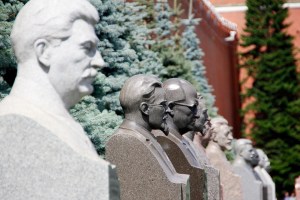
A Meeting With Stalin (Podcast)

A former NKVD agent describes a meeting with Joseph Stalin and the special assignment he was given.  We reflect on the fact that power and glory are fleeting, and that they can vanish faster than most people believe.

Continue reading

Sunday Film Roundup (4/30/2017)

Escobar:  Paradise Lost (2014)

Director:  Andrea DiStefano

A mildly absorbing crime melodrama about an innocent Canadian guy named Nick who marries Pablo Escobar’s niece and gets sucked into the family business.  A theme like this has great potential if handled the right way, but it turns out that the director prefers formula to serious drama.  Irritatingly fresh-faced young Canadian (Josh Hutcherson) is hanging around on the beaches of Colombia in the early 1990s with his brother, doing not much of anything but surfing and looking like a dipshit gringo target for extortion.

Continue reading

The Curious Customs Of The Franks: How One Arab Knight Saw The Crusaders

We have recently discussed a story from the life of the learned Ali Ibn Munqidh.  His grandson Usama Ibn Munqidh (1095–1188) was a very famous poet, warrior and literary figure in medieval Islam and his memoirs are an almost unique portal of insight on how one culture saw the other.  The scholar Philip Hitti describes Usama this way:

Continue reading

Language Mastery As A Secret Code: How Sadid Al-Mulk Was Saved From Danger

Mastery of language is indeed a powerful tool.  This is especially true when the speakers hail from the same cultural background, and can make use of all those subtleties that would be lost on the non-native. This point is brilliantly illustrated by an anecdote told about Ali Ibn Munqidh, who became emir of the district of Shaizar in northern Syria in 1081.  His surname was Sadid al-Mulk, and this is how I will refer to him in this article.  We will see that words effectively deployed can literally save lives.  This story is adapted from Ibn Khallikan’s short biographical sketch of Sadid al-Mulk.

Continue reading

Sunday Movie Roundup (4/23/2017)

Oklahoma City (2017)

Director:  Barak Goodman

The 1990s seem to have an air of unreality about them now.  Looking back, they seem like a time of missed opportunities:  failure to reform the financial system, failure to improve the infrastructure, failure to understand the consequences of unrelenting interference in Middle Eastern affairs.  The drama of 9/11–and everything that followed from it–superseded all that came before it.  It blocked out from our collective memory the threat of domestic radicalism and replaced it the the overarching National Security State where everything was watched and everything was monitored.

Continue reading