

The political philosopher Ibn Zafar, in his masterful treatise Consolation for the Ruler During the Hostility of his Subjects, states as follows:
Continue readingThe political philosopher Ibn Zafar, in his masterful treatise Consolation for the Ruler During the Hostility of his Subjects, states as follows:
Continue reading
We turn now to the wisdom of those who are able to extricate themselves from the ensnaring brambles of theological thickets. The scholar and theologian Abd Al Rahman Ibn Al Jawzi, or more commonly Ibn Al Jawzi (ابن الجوزي), was born in Baghdad around 1115, and died there in 1201.
Continue reading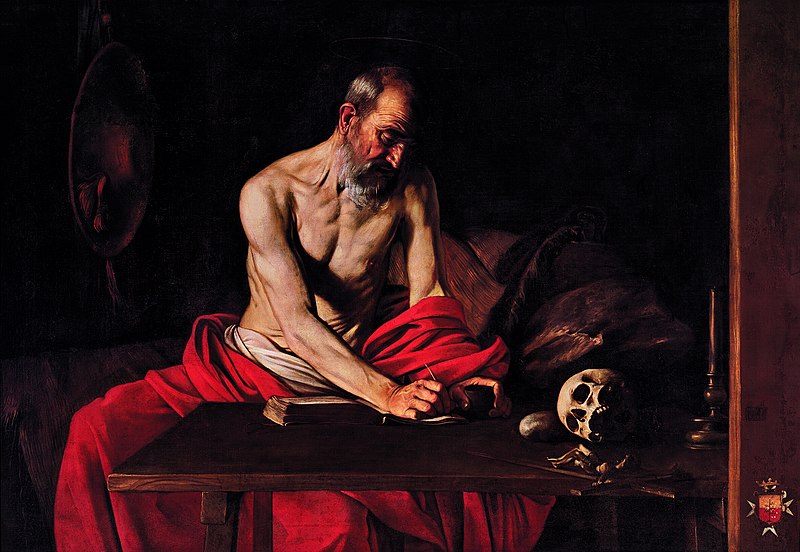
An edifying and unintentionally humorous story emerges from a letter written by St. Jerome in A.D. 405. It is epistle 117, which was addressed to a quarreling mother and daughter residing in Gaul (Ad matrem et filiam in Gallia commorantes).
Continue reading
The Iberian peninsula’s uniqueness derives from the fact that its shores have been washed by successive cultural waves: Roman, Gothic, Arab, and then indigenous Christian. No other region of Europe has acted as a similar crossroad, or has stimulated a comparable fermentation. Each of these civilizational tides altered the terrain as it flowed in, and then receded. We now turn, once again, to the world of medieval Arabic scholarship, and attempt to pry open its chests of mysterious treasures.

In the year 357 A.D., twenty-seven years after the empire’s capital had been moved to Constantinople, the emperor Constantius II visited Rome. He was awed by its architectural splendor, which at that time was still substantially preserved. He visited the center of the city and the extensive suburbs; the sanctuaries of Tarpeian Jove, “transcendent to the same extent as heavenly things rise above those of earth” (quantum terrenis divina praecellunt); the extensive baths; the amphitheatres; the immortal Pantheon, “arched in high grandeur, like a smooth neighborhood” (velut regionem teretem speciosa celsitudine fornicatam), and whose lofty niches were still adorned with the statues of former emperors; the Forum of Peace; the Oleum; and all the other brilliant monuments of this venerable jewel of a city.

Yahya Ibn Khalid (يحيى بن خالد) was an influential figure during the tenure of Abbasid caliph Harun Al-Rashid. We do not know the precise date of his birth, but he was the son of Khalid Ibn Barmak, a member of the powerful Persian family known as the Barmakids. The third Abbasid caliph, Al-Mahdi, tasked Yahya Ibn Khalid around 778 A.D. with the education of his son Harun. Yahya must have perceived the seeds of greatness in the young Harun, for he tried to convince the fourth Abbasid caliph Al-Hadi to elevate Harun to a high position of leadership. This was a mistake. Al-Hadi had his own son in mind for the position, and so tossed Yahya into prison; but Fate would eventually smile on Yahya.
In this podcast we discuss some life advice offered by the medieval Arabic political theorist and philosopher Ibn Zafar in his treatise, Consolation of the Ruler Amid the Hostility of His Subjects. I’ve written several articles before about him that can be found on this site (use the search box in the upper right corner), and wanted to do a podcast about some of his life advice.

One of the first and greatest classics of Arabic prose is the Book of Kalila and Dimna. It is a collection of fables told with an allegorical purpose, but it is presented with such wisdom, poetic eloquence, and engaging humor as to make it one of the treasures of world literature. Its pedigree verifies its merit. The stories it contains were originally derived from a Sanskrit classic called the Panchatantra, but a Persian scholar and translator named Ibn Muqaffa’ (ابن المقفع), writing around 740 A.D., reworked the stories into something that was entirely original.

The Arab military commander Al Muhallab Ibn Abi Sufra (المهلّب بن أبي صفرة الأزدي) was born around A.D. 632, but not much is known of his early life beyond anecdotes. His biographer Ibn Khallikan tells us on good authority that “His surnames Al-Azdi, Al-Ataki, [and] Al-Basri indicate that he descended from Al-Atik, member of the tribe of Al-Azd, and that he was a native of Basra.” We are also told that he was distinguished for his generosity and graciousness. His military prowess was beyond question; he defended the city of Basra so effectively from its enemies that some took to calling the city “The Basra of Al-Muhallab.”
It is often said that a man should rely on his first impressions of things when trying to form a final judgment. There is some merit to instinct; but it seems to me that reasoned deliberation will always provide more accurate results than the shifting sands of sense-perception. We cannot know all things, or even many things, at a glance.
 Quintus Curtius
You must be logged in to post a comment.