A Dog’s Heroism During The Wreck Of HMS “Harpooner”

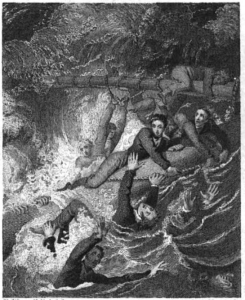
Whether our canine friends risk themselves out of a conscious sense of duty, or whether they act out of blind instinct, is a question that dog lovers and animal behaviorists will endlessly debate.  It is not an unimportant question.  For if it is true that dogs may, under some circumstances, feel the pull of obligation, then it must follow that they are capable of the noblest emotions, and the stirrings of dutiful love.  This was the question that the following sea-story raised.  Buried in a volume of forgotten nautical lore, it describes the heroics of a service dog named King during the wreck of the British transport Harpooner in Newfoundland in 1816.

Continue reading

“How To Drink” (Book Review)

It is often forgotten that Latin was a primary European language of education and literature until the late eighteenth century.  University lectures were conducted in Latin; textbooks, treatises, doctoral dissertations, legal work, and government publications were composed in Latin; and scientific and religious tracts were written in Latin.  There was a thriving vernacular literature in prose and poetry in every country, of course, but this arrangement co-existed (sometimes uneasily) with the official standard.  Scholars and officials frequently debated the extent to which the vernaculars should replace Latin.  Yet anyone wanting to reach an international audience—which in those days meant the breadth of the European continent—needed to be proficient in the language.  Among the competitive and tussling European states, its neutrality and prestige meant that it was the only language accepted as an international vehicle.

Continue reading

The Diamond Maker (Podcast)

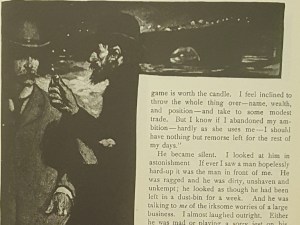
In this podcast, I read H.G. Wells’s short story The Diamond Maker.  The tale raises questions about the price that creative people have to pay for their efforts.  Have a listen, and see what you think.

Continue reading

Some Observations On Responses To Disease Epidemics In The United States In The Eighteenth And Nineteenth Centuries

Disease epidemics are not new to the American scene.  In fact, of all the historic threats to national and local security, they are the type with which we probably have the most experience.  During the eighteenth, nineteenth, and early twentieth centuries, the United States faced and dealt with outbreaks of scarlet fever, yellow fever, cholera, smallpox, tuberculosis, malaria, and influenza.  And while the innovations of medical science were often insufficient to banish these plagues, the people handled such infections with the tools available at their disposal.  National economic life did not grind to a halt; communities were not paralyzed by fear; the press did not consciously stoke the flames of hysteria; and the political system did not descend into bickering, factionalism and recrimination.  Diseases were understood to be part of the natural order of things, to be confronted with resolution and grim determination while the rhythms of life continued to strum.

Continue reading

G Manifesto Tweet Reading: Lockdown Edition

You asked for it, and you got it.  This is the latest installment in the G Manifesto tweet reading podcasts, and it’s called “Lockdown Edition.”  Tune in, laugh, and catch the positive vibes.

Continue reading

Even A Small Cave May Hold Calamities

The decrees of Fortune may be postponed, but they can never be vacated.  He who imagines that he can avoid these rulings is like the man who exerts his limited control over a raft traveling on a swiftly-moving river; he may be able to organize the furnishings on his raft, but it is the river that decides his course.  It swirls him about in its currents and eddies; it pushes him against projecting rocks and rapids; and its flux holds him firmly in its aquatic grip.  Individual effort can arrest or divert this course, but only under certain conditions.  Most men are unable to summon the required exertions of will necessary to resist such implacable torrents.  We celebrate heroism because it is so uncommon, and because it represents, in some ways, a kind of conscious rebellion against Fortune’s unfeeling mandates.

Continue reading

The Six Most Important Leadership Principles (Podcast)

In this podcast, I state what I believe are the six most critical leadership traits that anyone in a position of authority needs to master.  They can be applied to nearly any circumstance or situation.

Continue reading

In Trying To Avoid One Harm, You May Cause A Worse One

Aesop tells the following tale called “The Son and the Painted Lion.”  A fearful old man was worried about his robust son’s enthusiasm for hunting wild game.  He imagined that the son’s courage might go too far, and result in serious bodily injury or death.  So he did everything he could to shelter and sequester his son; yet his fears grew constantly, even reaching the point where he began to dream about possible disasters.

Continue reading

Smoked Pork Neck Bones And Black Beans

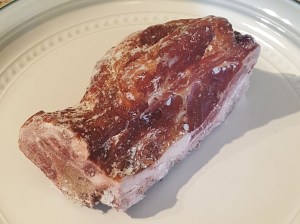
I was in a grocery store the other day and saw a package of smoked pork neck bones.  I don’t recall ever eating them before; but they were enticing, and I had a good intuition on how they might be prepared.  Slow-cooked with spices and black beans, I thought, and they might evoke memories of Brazilian feijoada.  Now before you rap my knuckles, understand that I am not saying this is anything that approximates feijoada:  I know that the real thing requires multiple steps and is a very complicated dish.  I only say that this dish may evoke memories of that venerable Brazilian dish.  Decide for yourself.  In any case, this is a simple matter to prepare, is very inexpensive, and is undeniably delicious.

Continue reading

A Simple Dish With Pinto Beans And Chilies

I’m going to share an easy and satisfying recipe that I threw together yesterday.  It doesn’t have a name, and I didn’t get it from any recipe book.  I’ve been experimenting with this very useful Instant Pot pressure cooker lately, and thought readers might want to hear about this.  If you don’t have one of these, you should consider getting one.  Even if you don’t have one, you can make this recipe on the stove in a pot, although the preparation time will be longer.  It’s very easy, and you can substitute different ingredients, or add additional ingredients.  It’s all up to you.

Continue reading