
George Washington was keenly aware of the psychological pressures of being in debt. He once advised a nephew on the subject:

George Washington was keenly aware of the psychological pressures of being in debt. He once advised a nephew on the subject:

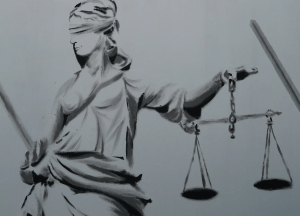
A reader asks if he’s making the right decision by leaving his corporate job and going to law school. He is uninspired by his current job, feels restless, and wants to fight against the injustices he sees around him. He is intelligent, organized, and motivated to change. I offer some thoughts on his decision.

The jurist, poet, and scholar Baha Al-Din Ibn Shaddad (بهاء الدين ابن شداد) was born in the city of Mosul, Iraq in 1145. He was a close friend of the famed commander and statesman Saladin, and wrote a highly valued biography of that eminent conqueror. He served for a time as the qadi (judge) of Aleppo, and in this capacity had much opportunity to acquaint himself to the realities of human behavior; it seems that, no matter the country or culture, career lawyers and judges make remarkably astute observers. Ibn Shaddad’s biographer Ibn Khallikan says that the judge often liked to quote this line of verse from the poet Ibn Al-Fadl (known as Surr-Durr):

The traveler Ibn Battuta visited north India in the early 1330s to seek the employment of the sultan Mohammad Ibn Tughluq. At some point during his residence in the city of Delhi, he had occasion to observe the practices of the Indian holy men, whom he called jugis (i.e., yogis).

There is an interesting passage in the writings of Valerius Maximus (III.3) that is open to different interpretations. It reads as follows:

In life there are certain crisis points that may lead to fateful decisions. Recognizing these points, and acting decisively when they are reached, is the mark of a true man of action. When you are on a track that you don’t want to be on, you will eventually have to choose one of two options: accept your present circumstances, or take dramatic action to break out of your situation. This crisis point, this moment of decision, what I call the “Multimixer Moment.” It’s a reference to a scene in the 2016 film The Founder, a movie about how a traveling salesman named Ray Kroc founded the McDonald’s franchise.

The medieval Arab traveler Ibn Battuta passed through Persia during his many years of wanderings. One of the regions he visited there was Lorestan, which is today a province in western Iran, situated in the Zagros mountains. Lorestan was at that time ruled by Muzaffar Al-Din Afrasiyab, a member of the Hazaraspid dynasty, which was a line of Kurdish Sunni composition. The sultans who ruled this country carried the title atabek, a hereditary Turkic and Persian title of nobility.

It has been said, my son, that a society which neglects its youth is a society unworthy of survival. For while libraries and museums may be repositories of our cultural heritage, it is the youth that embody our sentient aspirations, and, through their activities, redeem our errors with the vitality of innocence. Yet surging waters require dams and embankments to control their flows; their energies must be checked and directed into proper channels, lest this raw force of effluence create a destructive tide. To this end I offer some words of advice. I have drawn up seven of them; there are probably many more, but certainly there are none less.

There are too many who are too quick to leave the field, give up, and throw in the towel. When you do that, you forfeit the game to the other side. And in many cases, the unworthies win. Then they end up in positions of power. Good men and women must always be prepared to see the game through to the very end, and must never allow themselves to concede the game. You have just as much right to be there as the unworthies do, so stake a claim, and make yourself heard.

Herman Melville’s first book, Typee, describes his adventures among the natives of the Marquesas Islands in the South Pacific. His whaler, the Acushnet, had reached Nuku Hiva, and by that time the young rogue had reached the limits of his tolerance of shipboard life. So he left. He and his friend Toby took a few personal possessions and descended into the valley of the Typee (Taipi) tribe, to see what the great Unknown had to offer. Melville had had enough with tyrannical ship-captains; he could accept no further impediments to his exploratory desires. As the Roman historian Velleius Paterculus says,
You must be logged in to post a comment.