

A reader has just been laid off from his accounting job and is distressed. He is not sure what to do next, and is faced with a few difficult options. We discuss some general thoughts, and what principles to keep in mind.
A reader has just been laid off from his accounting job and is distressed. He is not sure what to do next, and is faced with a few difficult options. We discuss some general thoughts, and what principles to keep in mind.

In a letter to Titinius Capito, the Roman official and career lawyer Pliny discusses the idea of writing a book of history. Of particular concern to him was the choice of topic: he was uncertain whether he should treat an ancient or a modern subject. Valid arguments existed for both options. An older subject might allow for a more considered perspective, far removed from the passions of immediate memory; whereas the treatment of a current subject might inflame unreasonable emotions in his readers. Pliny has serious doubts about choosing a subject that might be within the living memory of his readers. He summarizes his feelings with this sentence:
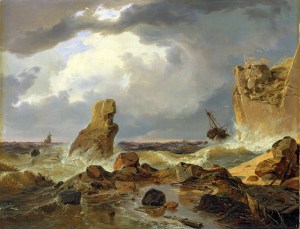
We discuss two fables from Aesop that illustrate the point that we ourselves must take action, and not expect deities to come to our aid. When all is said and done, we must see ourselves as the architects of our own destinies.
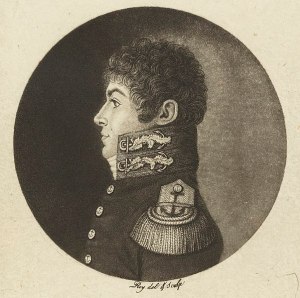
Those who perform great deeds are guided by inner lights whose intensity never wanes. Perhaps the most significant French maritime expedition of the nineteenth century was that of naval commander Louis Claude de Saulces de Freycinet (1779—1841). Its chief aim, according to novelist Jules Verne, was “to survey the shape of the land in the southern hemisphere, and to make observations in terrestrial magnetism, without, at the same time, omitting to give attention to all natural phenomena, and to the manners, customs, and languages of indigenous races.” In an epic voyage that lasted over three years, he and the crew of the corvette Uranie covered a vast portion of the earth’s surface; and he was the first explorer to chart the precise contours of the Australian continent.

“In war the greatest hope lies in the justice of one’s cause.” This is a line from the historian Appian (IV.12.97), who lived from about 95 A.D. to 165 A.D. We discuss what this line means, and how we can apply it to our own lives.
David Nasaw’s The Patriarch is a comprehensive account of the life and times of the founder of the Kennedy family dynasty, Joseph P. Kennedy. In many ways he remains the least understood Kennedy; his name has been subject to rumor, surrounded by myth, and maligned in whispers. Even during his life he remained a divisive, controversial figure: at once irascible, overbearing, frustratingly obdurate, and cunning, as well as loyal, devoted, conscientious, and steadfast.
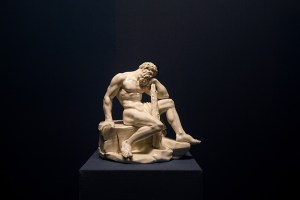
As I have gotten older I find that reading plays brings more enjoyment than it did in earlier years. Tragedies especially: the unformed mind has not yet been sufficiently battered by the winds and waves of fortune against the rocks, and is equipped with a merciful immunity to the pathos of existence. And yet, as the years roll on, beards and barnacles begin to replace the smooth, supple surfaces of youth; scars and aches accumulate; and the omnipresence of tragedy dawns on the maturing mind with a startling rapidity. The mind then calls for a tonic: it requires the writer to make sense of all this chaos, all this pain, and all this suffering. The struggle must be dignified with a sense of universal justice, and an ethic of enduring goodness. So the tragedian steps forward, and with his stylus attempts to perform this task.
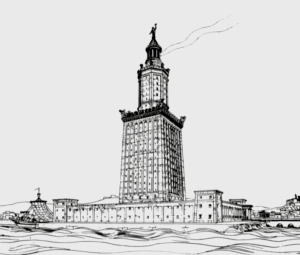
One of the more fascinating of the seven wonders of the ancient world was the Pharos Lighthouse in Alexandria, Egypt. I have lately been reading the history of the Arab conquest of Egypt in the seventh century, and have become more acquainted with some of the monument’s unique characteristics, and the legends that have surrounded it.

In this podcast we discuss the subject of having the faith and confidence to follow your creative muse, without looking for the approval or endorsement of others. The herd is always going to try to enforce conformity. Do your homework, do your research, and learn your subject: but at the critical jumping-off moment, you need to keep your own counsel and not let anyone undermine your instinct.

In late 2019, several months after the release of Lives of the Great Commanders, Fortress of the Mind Publications will release Digest, the definitive collection of the most important essays of Quintus Curtius covering the period 2016 to 2019.


 Quintus Curtius
You must be logged in to post a comment.