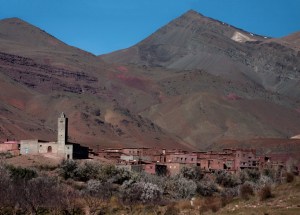
Antonio De Ulloa’s Explorations In South America

Antonio de Ulloa y de la Torre-Giral may have been Spain’s greatest explorer of the eighteenth century.  The hardships he endured certainly merit his inclusion on any list of that century’s great cultivators of geographic knowledge.  He was born in Seville on January 12, 1716; and like many accomplished travelers, he received a thorough education in the traditional disciplines.  He came from a family with a naval tradition, and young Antonio was eager to follow in these footsteps.

Continue reading

Treachery Ensnares Some, But Is Defeated By Others

Every man who goes about his business must be attuned to the realities of his surroundings.  He should not close his eyes to what lies within his field of vision; and he must not delude himself by rationalizing the treacherous intentions of others.  The prudent man will not see plots and conspiracies everywhere, for this is the mentality of a craven fool; but he will still maintain a healthy alertness and awareness of his environment.  Such a policy might have saved the life of the camel in the tale that follows, as we will see.

Continue reading

A Reading From “Pantheon”: Ice Odyssey: Douglas Mawson’s Race Against Death

In this podcast, I read a chapter from my 2015 book Pantheon. The chapter is entitled “Ice Odyssey: Douglas Mawson’s Race Against Death.”  It is good for us to be reminded of stories like this.

Continue reading

Georg Wilhelm Freytag’s Latin Compendium Of Arabic Proverbs

About a year ago one of the readers here at Fortress of the Mind informed me of a work of scholarship that he thought might be of interest.  The work was Georg Wilhelm Freytag’s monumental Latin treatise Arabum Proverbia (literally Proverbs of the Arabs, but better rendered as Arabic Proverbs), a three-volume collection of classical Arabic proverbs drawn from the Compendium of Proverbs (مجمع الامثال) of the medieval philologist Ahmad Ibn Muhammad Al-Maydani (احمد ابن محمد الميداني).  I was able to locate this impressive yet forgotten work, and have found much pleasure in poring over its pages.

Continue reading

The Villa Of The Papyri: A Glimpse At A Roman Book Collection

Sometimes an accident of history can preserve records of great value.  As is well-known, Mount Vesuvius in Italy erupted in 79 A.D. entombing the towns of Pompeii and Herculaneum in ash and ejecta.  In the eighteenth century, these sites began to be explored in a random and haphazard manner; one of the villas so discovered turned out to be the residence of a dedicated scholar.

Continue reading

The Top Ten Articles At Fortress Of The Mind For 2018

The following articles were the most popular at the site in 2018.  There are some surprises here.  For the first time since the site was founded in 2015, a podcast made it to the top ten list.  And not just one podcast, but two of them.  They were “The Surrealistic World of Michael Porfirio” (at no. 3) and “The Porfirio Effect” (at no. 9).  I much appreciated Michael’s feedback in these podcasts, and I’m glad that readers also found them enjoyable.

Continue reading

Ibn Qalaqis On The Importance Of Travel

The poet Nasrallah Ibn Abdallah Al-Qalaqis (نصر اللّه بن عبد اللّه القاضي الأعزّ ابن قلاقس) was born near Alexandria, Egypt in 1137.  He was a master of language and a composer of many exquisite verses, and was also an intrepid traveler.  The name by which he is generally known (Ibn Qalaqis) is derived from the Arabic word for colocasia, a plant cultivated in his day for its medicinal qualities.  His biographer tells us (with a twinkle in his eye) that “He had so little beard that his face was quite bare and, for that reason, verses were composed against him, which I abstain from mentioning on account of their indelicacy.”  One wishes that these lampoons might have been preserved, if only to see how little insults have changed over the centuries.

Continue reading

Between Mouth And Morsel

The Roman writer Aulus Gellius relates an anecdote about his discovery of the meaning of an old proverb.  He tells us that he read the following line in one of the speeches of Marcus Cato Censorius:

Continue reading

The Pride Of Mihyar Al Daylami

The poet Mihyar Al Daylami (?–1037) came from that region of Persia which bordered the southern shores of the Caspian Sea.  He wrote in Arabic, and his works were so copious that his biographer says they filled four volumes.  He was originally a Zoroastrian, but converted to Islam around the year 1003 under the influence of one of his professors.

Continue reading