Anecdotes Related To Ya’qub Ibn Al-Laith Al-Saffar, Founder Of The Saffarid Dynasty

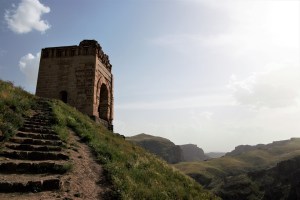
Ya’qub Ibn Al-Laith Al-Saffar was the founder of the Saffarid Dynasty of Sistan.  He lived from A.D. 840 to 879, and rose from humble origins in Afghanistan to conquer an immense area comprising parts of Iran, Afghanistan, Turkmenistan, Tajikistan, and Uzbekistan. 

Continue reading

Roosevelt In Cuba

Theodore Roosevelt was going to Cuba when war with Spain broke out, and no power on earth was going to stop him.  As Assistant Secretary of the Navy, he had fought, schemed, and maneuvered to get an officer’s commission, and he had prevailed. 

Continue reading

Ibn Gabirol Discusses The Virtues

If we accept the premise that personal sufferings and misfortunes provide excellent grist for philosophy’s mill, then we must concede that Solomon Ibn Gabirol was provided with incomparable ingredients for speculative thought.  He was born to a prosperous family in Malaga, Spain around 1022.  Yet life wasted no time in dealing him cruel cards; his parents died when he was a child, making him an itinerant orphan.  He seems to have been stricken by a degenerative disease as a teenager, and this fact lodged in his breast an enduring sense of alienation and resentment; but like many other thinkers, he would find refuge from his pain by taking up the pen. 

Continue reading

Pythagoras: An Introduction To His Life, School, And Ideas

Only one name in European history unites the realms of religion, mathematics, and philosophy, and that name is Pythagoras.  Yet it is this very achievement that so torments posterity when assessing his legacy.  Centuries of speculative accretions, hagiographic mythologizing, and the dubious testimonia of ancient authors have so obscured his original doctrines that the exasperated scholar must, at last, accept that fact and legend are in him inseparably woven.

Continue reading

The Travels Of Benjamin Of Tudela

The motivations of intrepid travelers are not difficult to discern.  The desire to get out, to get away from everything that reeks of contemptible familiarity, to smash through obstacles and barriers both mental and physical, to be confronted with stimuli both terrifying and strange:  these would be primary impulses.  Following close behind them would be a thirst to seek one’s fortune, to take a certain measure of the world and its people, and to test one’s mettle against the mettlesome natures of others.  It has been so for centuries.

Continue reading

The Travels And Philosophy Of Lady Mary Wortley Montagu

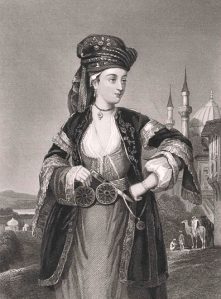
She was born in 1689 in Thoresby in Nottinghamshire, the eldest daughter of Evelyn, Duke of Kingston, and Lady Mary Fielding.  When she was only four years old, her mother died, and this event became a defining one in her life; for she was raised in a decidedly male environment, a fact that imparted her personality with a bluntness and daring that distinguished her from other aristocratic women of her era.  As seems to be the case for many great travelers, she had to win her education through her own efforts.  She developed an interest in the classical languages at an early age; but as good instruction was impossible to come by, she taught herself Latin, French, and the basics of Greek through her own unrelenting exertions.  By her teenage years, she was composing verses.

Continue reading

The Wisdom And Character Of Athanasios Of Athos

Of all the great and sanctified names of Mount Athos, few inspire more veneration than that of Athanasios.  He lived from about A.D. 925 to 1001, and occupies a central place in the development of the monasticism there.  As a young man he was a teacher and scholar in Constantinople, and mixed with the upper classes of that great city; he knew personally the Byzantine emperor Nicephoras II Phocas and served as his spiritual advisor.  But at some point he underwent some kind of conversion experience, and abandoned his old life to pursue the road of religion.  This pattern is not unknown among great holy men; we find it often repeated in the histories of the world’s great faiths.

Continue reading

Be Scrupulous About What You Write: The Lesson Of Rhazes

Abū Bakr Muhammad ibn Zakariyyā al-Rāzī (known in the West by his Latinized name Rhazes) is considered one of the most original and accomplished of the medieval Muslim physicians.  An impressive list of achievements is linked to his name: he pioneered the study of pediatrics, ophthalmology, synthesized laboratory acids, composed treatises on smallpox and measles, wrote voluminously in a number of scientific fields, and had extensive practical experience with treating patients.

Continue reading

The Remarkable Travels Of Jonas Hanway, And What He Learned From Them

Travelers and explorers march on; and I march on with my retellings of their adventures and philosophies.  I suspect that few readers will have heard of the great English traveler and philanthropist Jonas Hanway; yet his career and worldview embodies many of the values we have extolled here, as we will understand later in this article.  Hanway’s journeys in Russia and Persia alone make him worthy of inclusion among any list of great itinerants; but, when these experiences are combined with his expansive moral and ethical philosophy, we have the ingredients of true greatness.  The world needs more men like him now.

Continue reading

Removing The Veils Of False Modesty: The Life-Affirming Philosophy Of Al-Salami

The name Muhammad al-Salami (محمد السلامي) (A.D. 948–1003) is nearly unknown in the West, but occupies a prominent position in medieval Arabic poetry.  The genius of his metaphors, the richness of his turns of phrase, and the elegance of his diction can be felt even through the fog of translation; and we will do our best to pay him homage here.  The anthologist Abu Mansur al-Tha’alibi called him:

Continue reading