Charles Étienne Brasseur de Bourbourg: An Early Pioneer In Mesoamerican Studies

We have previously discussed the career and work of Fray Bernardino de Sahagún.  Another major pioneer in the study of early Mexican antiquities was the intense French abbé Charles Étienne Brasseur de Bourbourg (1814–1874).  He remains another name nearly lost to history, but a good case can be made that without his work, we would know far less than we do about the culture of old Mexico and Guatemala.

Continue reading

The Wisdom Of Ibn Al-Sammak

The biographical encyclopedia of Ibn Khallikan–that deep well of collective anecdotal wisdom–has an interesting entry for one Abu Al-Abbas Muhammad Ibn Sabih.  His surname was Al Mazkur, but like many famous figures it is his nickname that posterity recalls best.  This nickname is Ibn Al-Sammak, which literally means “son of a fish-monger” in Arabic (the word for fish is samak, سمك).  It is not clear where this name came from; perhaps he had a fish-merchant as an ancestor.

Continue reading

Steven L. Myers’s “The New Tsar: The Rise And Reign Of Vladimir Putin” (Book Review)

For many years in the West there has been a lack of understanding of Vladimir Putin and his policies.  His personality, motivations, and objectives have been clouded in obscurity by the Western press, which almost always reverts to its simplistic “black and white” view of the world.  Not all of the fault for this lies with the West, of course.  The Russian president’s own media apparatus has little interest in encouraging critical analysis or speculation that falls outside the range of permissible opinion.  But leadership is as much about perception as anything else, and every leader in the modern age must take care to cultivate his image.  In this regard, Russia is no different from the United States, France, or England.  In the media age, it cannot be otherwise.

Continue reading

Some Wise Sayings Of The Philosopher Al-Turtushi

Abu Bakr Al Turtushi (ابو بكر محمد بن الوليد الطرطوشي‎‎‎) was a political philosopher and doctor of the Malikite sect.  He was but one of that avalanche of philosophers, poets, writers, scientists, and theologians produced by the energy and brilliance of Andalusian Spain in the medieval period.  Many–probably most–of these Andalusian writers are completely unknown today in the West, a fact that I have made efforts to change in previous articles here.

Continue reading

Revealing Anecdotes On The Character Of Abraham Lincoln

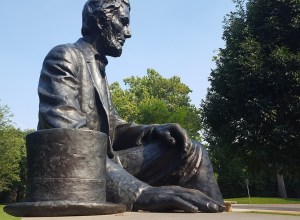
We have earlier stated that anecdotes often reveal more about a man’s thinking and character than might a long recounting of his deeds.  About Abraham Lincoln many stories have been told, some no doubt apocryphal, others not.  I will present here a few true anecdotes that most readers are not likely to be familiar with; they shed revelatory light on Lincoln’s character, and how his leadership gifts were powerful in their own understated way.

Continue reading

The Wisdom Of Fakhr Al-Din Al-Razi

Fakhr al-Din al-Razi (1149–1210) was a Persian theologian and philosopher whose fecundity was only surpassed by his depth of understanding of various disciplines.  He is credited with over one hundred works, although it is likely that this number was considerably higher.  Learned in astronomy, philosophy, theology, chemistry, and a variety of other subjects, he was also said to have been a man of great humanity and understanding.  His inclinations were rationalist and scientific; for this reason he found more to his liking in the natural sciences than in airy theological speculations.

Continue reading

Scott Joplin: A Musical Visionary

Those who have seen the classic movie The Sting (1974) may be aware that the film’s ragtime score set off a revival of interest in the music of Scott Joplin.  Despite the incongruity with the setting of the movie (The Sting is set in the Depression of the 1930s, while ragtime is music of the 1890s), ragtime works brilliantly as a score to the film.  Its free-wheeling, optimistic, and tightly calibrated sound fits perfectly with the themes and tone of the film.  Joplin himself was a fascinating figure, a brilliant visionary who does not fit neatly into any standard classification system.

Continue reading

The Search For The Real Anwar Sadat

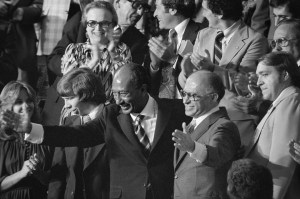
Immediately after he was assassinated in 1981, Egyptian president Anwar Sadat was canonized by the Western media.  He was portrayed as a brave crusader for peace who had taken bold steps to overcome his people’s alleged resistance to resolving the Arab-Israeli conflict.  By single-handedly flying to the Israeli Knesset and embracing Menachem Begin, he had broken down years of psychological barriers and secured his place in history as a statesman of unblemished stature.  Sadat, we have been told, was a man “ahead of his time” whose bold vision was overcome by the fanaticism of the “extremists” who cut him down in his prime.

Continue reading

Linnaeus And The Art Of Classification

One of the great names of eighteenth century science is the botanist Carl von Linné, more commonly known as Carl Linnaeus.  His primary importance to history lies in his innovative classification system for living organisms.  Before him, there was a chaos of competing names and terms for the swelling corpus of knowledge about plants and animals; after him, there was something approaching order.

Continue reading

Wise Sayings Of The Poet Al-Tihami

The Arabic poet Abu al-Hasan Ali Ibn Muhammad al-Tihami (? – 1025) is said to have taken the name Tihami in one of two possible ways that may hint at his family’s origins, according to our trusted chronicler Ibn Khallikan.  Tihami was used both as an informal name for the city of Mecca, and as a name for the mountains between the Hijaz and Yemen.  But it is not clear which of these geographic references apply to our poet.

Continue reading