
Solomon Outwits The Queen Of Sheba

The following tale is related in a forgotten nineteenth-century volume on the literature of the ancient world.  Its ultimate source is the Talmud (literally, “learning”), that immense compendium of Judaic civil and religious law, garnished with the diligent commentaries of hundreds of learned men.  To the foreigner unfamiliar with its mysteries, it appears to be a vast encyclopedia on every conceivable subject, including the minutiae of social life, work, family, and leisure.  Included also are fables, stories, allegories, proverbs, even jokes; the overall impression given is that of a distillation of cultural traditions and thought that spans many centuries.  The Talmud itself contains two parts:  the Mishna (the older text), and the Gemara, which is a commentary on the Mishna.

Continue reading

The Architect Of The Imagination

Man was born for action.  Even if he does not know this–especially if he does not know this–his physical being revolts from long intermissions of supine inertia, and craves the physical release of the violent contest.  This is part of his blood-spirit, his irreconcilable inner Being.  He can try to deny this, and he can try to avoid the consequences of this reality; but in the end the same simple truth returns to stare him in the face.  Even the corpulent sloth will light up like a pinball machine when asked to discuss topics that are of intense interest to him; he will leap out his chair, gesticulate wildly, and hold forth on that topic to which all his energies are directed.  Within him is that fundamental desire for action, and this no amount of subcutaneous body fat can suppress.

Continue reading

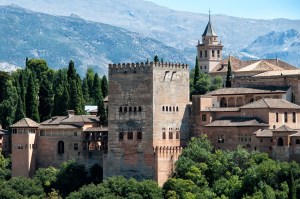
The Bricklayer Of Granada: A Tale Of The Alhambra

I was lucky enough today to find an old  copy of Washington Irving’s Tales of the Alhambra; the volume is lavishly illustrated and was actually published in Granada in the late 1940s.  The following tale is found in this Andalusian collection; it reminds us of the influence of Fortune in the lives of mortals, a theme that we have  explored frequently in these pages.

Continue reading

The Syrian Lightning: The Fleeting Pleasures Of Imad Al-Din Al-Isfahani

The Persian scholar and poet Imad al-Din al-Isfahani (عماد الدين الأصفهاني) was an important figure in medieval Arabic literature.  He was born in Isfahan in Persia in 1125 and studied in Baghdad.  We are told that he studied law at the Nizamiya college there, but he preferred literature and adventure.  His proficiency in letters brought him to the attention of powerful political figures, who were able to secure him government posts in Basra and Wasit.

Continue reading

The Oppressive Burdens Of The Powerful

Many men are in the habit of seeing only the privileges of the powerful, while failing to take note of the crushing burdens that such men must carry.  Nothing in this world is gifted to us for free; there is a price to be paid for every acquisition, every privilege, and every benefit.  This cost may not be apparent at first; but over time, it will make itself known.

Continue reading

The Journey Through Life, And Out Of Life

When one examines the characters of different civilizations, one begins to notice commonalities of concern.  That is, recurring patterns.  Especially in the most ancient of civilizations.  There is this obsession with capturing the Spirit of Life, mastering its principles, and using that Mastery as a sort of pole-vault—if you will—to leap over the Wall of Life into the realm of the After-Life.  Look at those old Assyrian stone reliefs, showing the bearded kings pollinating their date-plants, which were the staff of life in the ancient Near East.  Look at the pharaoh smiting his enemies with a mace, and enjoying every minute of it.  Mastering life in order to master death, in other words.

Continue reading

Rejecting Cynicism And Nihilism, And Embracing An Ennobling Vision

It is the responsibility of every man to keep himself out of the abyss.  Yet he cannot do this job alone; a set of guiding principles must light the way along the dark and confusing pathways of the forest.  In some cases, he must be hectored, badgered, cajoled, and—in the end—forced to keep along the path; in other cases, he need only be guided by gentle instruction in the illuminating lights of philosophical inquiry.  Every situation is different, and calls for different remedies.

Continue reading

Military Adventurism Brings Disaster To The Reckless

In the year 1260, Tuscany was engulfed in war.  The cities of Florence and Siena were engaged in mutual hostilities.  About twenty-five miles from Siena was located the small town of Montalcino, which happened to be a friend and ally of Florence.  The Sienese hoped that by staging an attack on Montalcino they might be able to compel the Florentines to send an expedition for its relief–an expedition that, they hoped, they could lure into a trap.  To this end, the Sienese government publicly announced their intention to move against Montalcino, and watched to see what the Florentine response would be.

Continue reading

A Jaguar Hunt On The Taquary, And The Precepts Of Pythagoras

Every man is a jumble of paradoxes.  The same man can harbor sentiments of the noblest, most generous, and elevated type; and at the same time, he can retain the capability to deliver lethal blows for necessity or sport.  It is almost as if the altruist or artist needs a bit of tempering with a dash of Tamerlane.  Consider Theodore Roosevelt, the president generally considered the primary voice of conservationism in the twentieth century.

Continue reading

The Hand Of Ibn Muqla: Do Not Envy Those Who Wield Power

There was once a government official and literary figure of the Abbasid caliphate in Baghdad named Abu Ali Muhammad ibn Ali ibn Muqla al-Shiraz.  He is known to history as Ibn Muqla, and he lived from about A.D. 885 to 940.  According to his biographer Ibn Khallikan, Ibn Muqla began his government service career as a tax collector in the city of Fars.

Continue reading