Repairing Strained Or Broken Relationships

strain

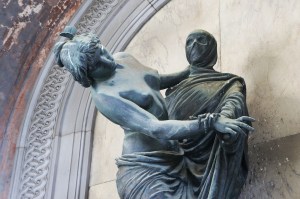
A subject not often discussed is the topic of how to repair strained or broken relationships.  It is one that comes up in everyone’s life, so it will be useful to make a few suggestions about it here.  We will talk about relationships involving friends, family, and lovers.

[To read the rest of the article, click here.]

 

Be The Phantom Of A Vision: The Wisdom Of Ibn Munir

munir2

In medieval times there was a Syrian poet known for his acrid wisdom in verse, as well as for his distaste for dealing with nonsense.  Time and convenience has mercifully shortened his lengthy name (which we will not trouble the reader with here) to Ibn Munir al-Tarabolusi, or more commonly Ibn Munir.

Continue reading

Opposites Are The Cures Of Opposites

opposite2

Readers may be familiar with the Seinfeld television show episode where the George Costanza character resolves to do the opposite of everything he normally does.  The idea actually has a legitimate pedigree, at least with regard to ancient medical science.

Continue reading

The Engrossed

engross1

Seneca had a word for men who were consumed with the chase after worldly riches and pleasures to the exclusion of everything else.  He called them occupati, the past participle of the verb occupare.  They were so busy in this obsessive, single-minded pursuit of the phantoms of prosperity that they never properly set aside time for themselves.  The word occupati means engrossed, preoccupied, or obsessed.  And I think this word is a fitting description.

Continue reading

Ancient Treatment For The Common Cold

cold2

In a recent article we discussed Celsus’s ideas on treatment for depression and melancholy.  We now look at his prescription for dealing with the common cold, an ailment that until this day has defied a consistent cure.  What is interesting about his treatment suggestions is that they seem to be about as effective as anyone could give a cold sufferer today.  Judge for yourself.  The following information is taken from his De Medicina (IV.5).

Continue reading

The Wisdom And Judgment Of Ibn Abi Duwad

qadi1

Ibn Abi Duwad was a judge (القاضي) who was born in Basra around A.D. 776.  He lived during the reign of the eighth Abbasid caliph Al-Mu’tasim.  An Arabic historian relates the following wise sayings of his, along with an amusing anecdote.  We will relate them here.

Continue reading

Ancient Treatment For Depression And Melancholia

depress1

What did the ancients think about depression, and how to cure it?  We will look at the views of Celsus, who wrote the most complete medical guide that has survived from Roman times (excluding the writings of Galen).

Continue reading

The Pearl Of Peroz

pearl

Peroz I (or Pirouz) was a Persian king who wore the royal diadem from about A.D. 459 to 484.  The Greek historian Procopius (I.4.18) relates a great fable about him and his pearl, which we will reproduce here.  As is often the case with these enchanting old tales, the reader will be asked to suspend his credulity as to the fable’s literal truth, while being mindful of its deeper purpose as a moral exemplar.

Continue reading

The Seven Sleepers

cave2

We all desire to retain a sense of connection to the past.  It is part of human nature.  Too sudden a break with tradition can produce something very much like insanity; in individuals we call this a broken mind, and in nations we call it revolution.  And both of these reactions are destructive.  And at the same time, we need to feel we can project ourselves into the future, somehow.  We want to escape the limitations of this frail physical life, with its miserly duration and inconstant rewards.

Continue reading

The First Rule Of Soviet Military Doctrine: Only The Offensive Brings Victory

soviet2

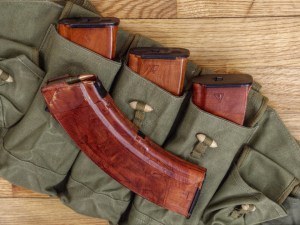
I am an admirer of the author Victor Suvorov.  I wish I could meet and speak with him.  He served for thirty years as an officer in the Soviet Army before defecting to the West in the 1980s.  In his book Inside The Soviet Army, he tells the following anecdote:

Continue reading