Disaster And Heroism At Maiwand

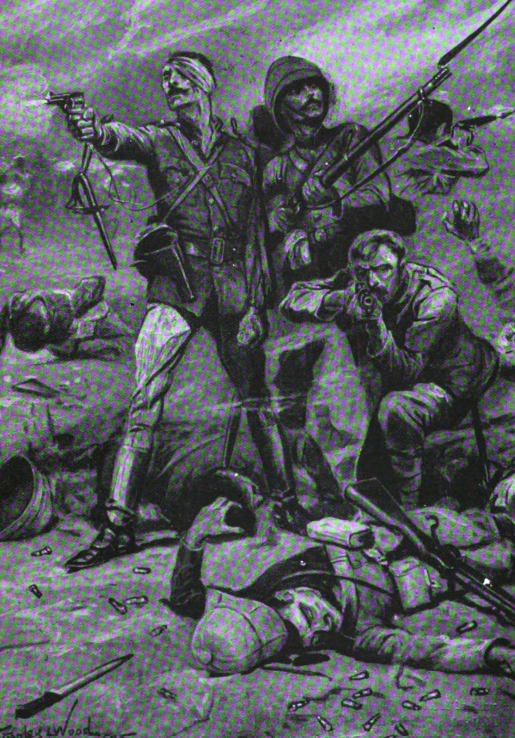
On July 27, 1880, General George Burrows led just under 2,500 British and Indian troops into the field near Maiwand, Afghanistan, to intercept an Afghan force led by Ayub Khan.  Burrows, however, was not aware that he was confronting a force that numbered around 25,000 Afghan warriors.  The terrible engagement that followed, known to history as the Battle of Maiwand, was one of the major battles of the Second Anglo-Afghan War.     

Continue reading

Clausewitz’s “Coup d’Oeil”: That Special Knack (Podcast)

The military theorist Carl Von Clausewitz used the term coup d’oeil to describe a special, innate ability to grasp the military possibilities presented by a specific situation. We may broaden this idea to describe an instinctive talent in some field of endeavor. Each of us possesses a special skill that distinguishes us from others; too often, however, those talents languish, or remain undiscovered. It is our responsibility to try to discover where our own coup d’oeil lies.

Continue reading

On Whether Alexander Could Have Conquered Rome

It is said that after Alexander the Great completed his conquests in Asia, he intended eventually to turn his gaze westward to the Mediterranean region, and bring those lands under his control.  Death, of course, overtook him before he could begin this campaign.  Either the lingering effects of his battlefield wounds, or his dissolute living habits, brought him to an early grave. 

Continue reading

The Moral Corruption Of The Elites

The military historian Polyaenus, in his Stratagems of War (II.17), relates the following anecdote.  There was once a man named Dinias, the son of Telesippus, who lived in the city of Cranon, which is located in the region of Thessaly in Greece.  He was originally from the town of Pheraea.  He was a poor man, we are told, and earned his living by hunting and fishing in the countryside near the city.

Continue reading

Focusing On What Matters (Podcast)

In this podcast we discuss the importance of focusing on what matters, not on what does not matter. We illustrate this principle with a few anecdotes.

Continue reading

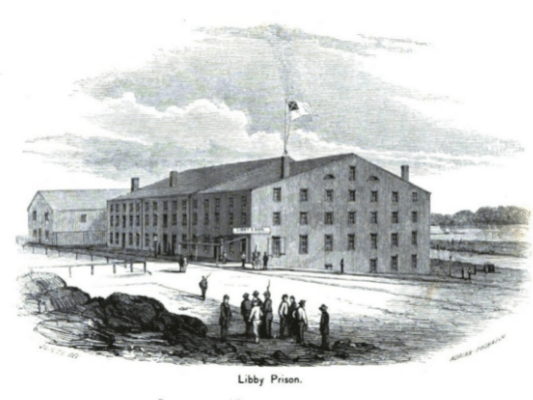
Escape From Libby Prison (Part II)

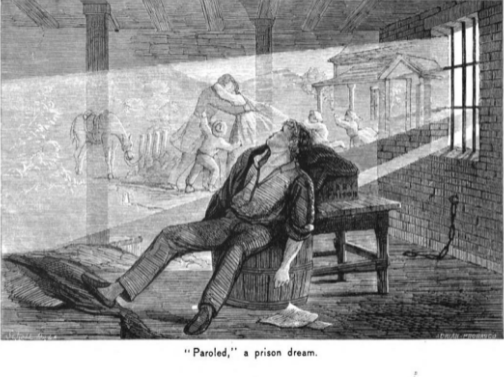
As February 10, 1864 dawned at Libby Prison, the remaining inmates awaited the inevitable hurricane of outrage and disbelief that they knew was coming.  All through the night, men had made their way through Col. Thomas Rose’s tunnel and out of Rat Hell to the dark streets of Richmond.  Now they would have to face the music once the morning count was conducted. 

Continue reading

Escape From Libby Prison (Part I)

The greatest prison camp escape in American history took place at Libby Prison in Richmond, Virginia, in February 1864.  On a cold winter night, 109 Union officers crawled through a suffocating, claustrophobic tunnel from a Confederate hell-hole to an empty lot near the building, and from there tried to make their way through hostile country to Union lines more than fifty miles away.  Many of them won their freedom, but many were recaptured and sent right back to prison. 

Continue reading

The Mysterious Death Of Lord Kitchener

By 1916, the year of his death, Lord Horatio Kitchener had for years been a venerated and legendary figure throughout the British Empire.  The campaigns in Gallipoli and Mesopotamia had dimmed some of his luster, but his name remained a revered one.  The official announcement of his death thus came as a deep shock; and even today, after more than a hundred years, the nebulous circumstances of his death continue to invite speculation as to whether some element of foul play was involved. 

Continue reading

The Top 10 Articles Of 2021

It’s time to review the top ten articles and essays that have appeared here at Fortress of the Mind in 2021. The following list is ranked by page views, with the greatest number beginning at the top.

Continue reading

Obstacles And Pitfalls For The Youthful Student Of Philosophy

I was recently asked in correspondence to provide some thoughts on the pitfalls and obstacles to the study of philosophy.  I have to admit that it was something of a relief to get this request, as it offers me a pretext to describe my own ideas on this subject.  All of us seek a greater level of understanding of things; but perhaps few of us give much thought to avoiding the obstacles to understanding.  A horse and its equestrian rider, however, cannot clear a hurdle until they have had experience in judging its height and length.  Here, then, are some of the most commonly encountered pitfalls of the student of philosophy. 

Continue reading