Theodore Roosevelt was going to Cuba when war with Spain broke out, and no power on earth was going to stop him. As Assistant Secretary of the Navy, he had fought, schemed, and maneuvered to get an officer’s commission, and he had prevailed.
If we accept the premise that personal sufferings and misfortunes provide excellent grist for philosophy’s mill, then we must concede that Solomon Ibn Gabirol was provided with incomparable ingredients for speculative thought. He was born to a prosperous family in Malaga, Spain around 1022. Yet life wasted no time in dealing him cruel cards; his parents died when he was a child, making him an itinerant orphan. He seems to have been stricken by a degenerative disease as a teenager, and this fact lodged in his breast an enduring sense of alienation and resentment; but like many other thinkers, he would find refuge from his pain by taking up the pen.
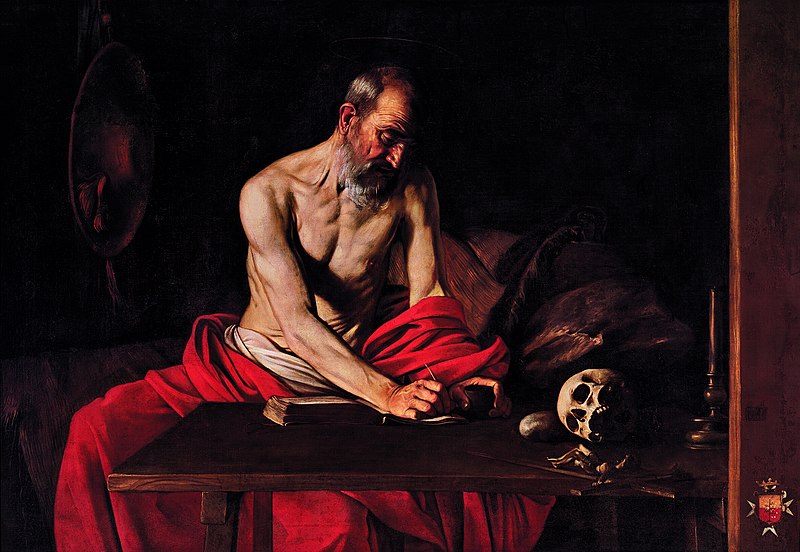
An edifying and unintentionally humorous story emerges from a letter written by St. Jerome in A.D. 405. It is epistle 117, which was addressed to a quarreling mother and daughter residing in Gaul (Ad matrem et filiam in Gallia commorantes).
Only one name in European history unites the realms of religion, mathematics, and philosophy, and that name is Pythagoras. Yet it is this very achievement that so torments posterity when assessing his legacy. Centuries of speculative accretions, hagiographic mythologizing, and the dubious testimonia of ancient authors have so obscured his original doctrines that the exasperated scholar must, at last, accept that fact and legend are in him inseparably woven.
It was in Ionia that the Greek-speaking world of the sixth century B.C. jostled with the ancient kingdoms of Asia’s westernmost region. Phrygia, Lydia, Caria, and the other principalities of Asia Minor were Greece’s portal to the Asiatic interior. The empire of Persia, herself irrigated to fertility by various Asiatic streams, retained a power and influence that lapped the shores of the Aegean Sea.
The ancient Persians held ingratitude to be a very serious offense: for them it was a gateway, in fact, to all kinds of vices. Xenophon, in his Cyropaedia, describes the prevailing attitude in Persian society in this regard:
Andrea Palladio is considered one of the most distinguished names in the history of architecture. His designs of villas, churches, theaters, and palaces have for centuries been held as exemplars of the High Renaissance genius for adapting classical styles and themes to modern purposes.
The Roman writer Aelian, in his treatise On the Nature of Animals (De Natura Animalium), collects many interesting facts related to the habits and behaviors of the creatures of the land, sea, and air. It is unfortunate that he felt compelled to write in Greek instead of Latin, but I suppose this is a decision forgivable for an educated Roman long steeped in Greece’s literary and rhetorical heritage.
At the end of the movie “The Maltese Falcon,” Sam Spade explains his personal code to Mary Astor. He tells her, “When your partner is killed, you’re supposed to do something about it. It doesn’t matter what you thought of him. You’re supposed to do something about it…” But there is a larger lesson here. When problems exist, you have to do something. You have to take action to fight the problems. Running away to live a life of narcissism and selfishness is not what men do.
Few contrasts in character traits are as sharp as the difference between petty pride and true usefulness. The former elevates vanity as a virtue, while the latter represents the practical skills required for life’s unending challenges.









You must be logged in to post a comment.