

The newspapers and magazines of previous eras provide us a window on the age. One gets a sense of the mood and odor of the times. Personal accounts are better still, especially when the writer has endured a direful or traumatic experience.
The newspapers and magazines of previous eras provide us a window on the age. One gets a sense of the mood and odor of the times. Personal accounts are better still, especially when the writer has endured a direful or traumatic experience.

When you are in a position of leadership or responsibility, you must carry out your duties. The mission comes first: you don’t have a choice. Too many people today want the benefits of being “in charge,” without being mindful of the responsibilities. Leadership carries many obligations, and some of them are not pleasant. But they must be done. Life is not about having “fun,” enjoying frivolities, and basking in vanity. In 2020, we saw many examples of mayors and governors dodging their fundamental obligation to keep public order and discipline. We discuss one such example, and seek wider lessons.

The mystic Yunus Ibn Yusuf Ibn Musaed was born around 1132 into the Mukharik family, of the tribe of Shaiban (بنو شيبان). The subdivisions of this tribe occupied an area called the Jazira, a region covering what is now eastern Syria and upper Mesopotamia. He would later found an order of dervishes that came to be called, according to his biographer Ibn Khallikan, the Yunusiya.

As 2020 staggers to a close, it is time to review the year’s eleven most viewed essays and podcasts here at Fortress of the Mind. The misery of the year’s events was in some way mitigated by its productivity in writing. I list them below, in descending order. Now would be a good opportunity to catch up on any that you may have missed, or to visit a favorite once again. Here is the list:
For the student of politics and public affairs, there are few fields so richly rewarding as study of historical figures. We find that the same circumstances, the same problems, and the same challenges present themselves again and again; and the solutions crafted in one era, even if not fully applicable to another, at least provide us some rudimentary guidance.
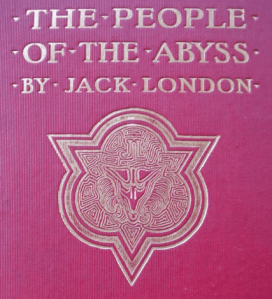
In 1902 Jack London resolved to travel seven thousand miles from California to England. His stated purpose was to lose himself in the docks and slums of London’s squalid East End, and see what he might learn from the experience. One might reasonably ask why he would do this, when numerous examples of urban misery could be observed in the cities of his own country, such as New York, Chicago, San Francisco, or any of a dozen others. But the idea was actually presented to him by his British publisher after the release of London’s first book in England.

A reader writes to ask for advice on whether he should travel to the US to attend college. His family wants him to stay where he is, but he longs for wider horizons and new opportunities. Each option has advantages and drawbacks.

Great enterprises require a sustained effort over a long period of time. They cannot be pursued in fits and starts with intermittent bursts of energy; and they demand a confluence of factors that only coalesce on rare occasions. There must exist the ability and talent to conceive the project; there must be intense initiative and endurance to carry it through to completion; and, as a practical matter, the creator must have the leisure and financial ability to sponsor his labors. If any of these requirements are wanting, there will be no progress.
There is an allegorical short story written by H.G. Wells entitled The Apple. Several men in a “third-class carriage on a Sussex railway,” each absorbed in his own thoughts, begin to talk among themselves. One announces that he is in possession of what he calls an “apple from the Tree of Knowledge,” and that he “must get rid of it.”
We live in times of feeble leadership. Those who occupy public offices often seem more willing to advance their own interests than those of the citizens they represent; they tremble at the thought of taking any action or initiative that might involve risk on their part. And so the citizenry suffers to buttress the careerist ambitions of the few.
Continue reading

 Quintus Curtius
You must be logged in to post a comment.