

A reader talks about how he is having issues with keeping his confidence up.
We offer some suggestions that provide practical ways to overcome fears and self-doubt. Time and experience are the keys here.
A reader talks about how he is having issues with keeping his confidence up.
We offer some suggestions that provide practical ways to overcome fears and self-doubt. Time and experience are the keys here.

Readers may be familiar with the Seinfeld television show episode where the George Costanza character resolves to do the opposite of everything he normally does. The idea actually has a legitimate pedigree, at least with regard to ancient medical science.

When we feel something passionately and sincerely, we have an urge to express this emotion to the objects of our affection. If the feeling is reciprocated (or at least acknowledged) by the beloved, we feel pleasure. But if the feelings are not returned, we will initially feel the sting of rejection.

The outlines of the following story appear in Procopius’s Wars (II.12.8).
The Assyrian king Abgar V governed a region that had its capital at the city of Edessa. The exact dates of his birth and death are not known, but he apparently ruled from around 4 B.C. to 7 A.D. and again from about 15 A.D. to 30 A.D. He was an ally and friend of the Roman Empire; the emperor Augustus knew him well and valued his counsel on Near Eastern affairs.

Directed by: Kevin MacDonald
This is a joint Canadian-British production based on the post-apocalyptic novel of the same name by Meg Rosoff. I had low expectations going into this movie, imagining it would be another stock teen-romance with some derivative end-of-the-world drama thrown in for good measure. But this one actually is oddly affecting, and worth watching.

There are some weapons that have become so identified with an era or organization that one only needs to lay eyes on them to be reminded of the same. The Soviet PPSh-41 is one such weapon. Its ribbed, chromed barrel, drum magazine, sturdy wooden stock, and downward sloping muzzle are all instantly recognizable. If an historian had to pick one infantry weapon to symbolize the Red Army of the Second World War, he would unhesitatingly pick the PPSh-41 (affectionately known as “Pah-pah-sha” to its users).
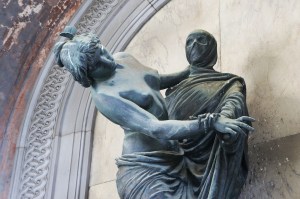
Seneca had a word for men who were consumed with the chase after worldly riches and pleasures to the exclusion of everything else. He called them occupati, the past participle of the verb occupare. They were so busy in this obsessive, single-minded pursuit of the phantoms of prosperity that they never properly set aside time for themselves. The word occupati means engrossed, preoccupied, or obsessed. And I think this word is a fitting description.

In a recent article we discussed Celsus’s ideas on treatment for depression and melancholy. We now look at his prescription for dealing with the common cold, an ailment that until this day has defied a consistent cure. What is interesting about his treatment suggestions is that they seem to be about as effective as anyone could give a cold sufferer today. Judge for yourself. The following information is taken from his De Medicina (IV.5).

When we see a friend is hurting, is it better to try to offer help, or to ignore the problem?

Ibn Abi Duwad was a judge (القاضي) who was born in Basra around A.D. 776. He lived during the reign of the eighth Abbasid caliph Al-Mu’tasim. An Arabic historian relates the following wise sayings of his, along with an amusing anecdote. We will relate them here.
 Quintus Curtius
You must be logged in to post a comment.