
“What You Need Is Strength Equal To Theirs”

We recently discussed some words spoken by the Greek mercenary general Charidamus to the Persian king Darius III on the eve of the Battle of Issus in 333 B.C.  But we discussed only a small part of his speech.  His complete comments are worthy of our meticulous consideration.

Continue reading
Words Do Not Retreat

There is an anecdote told about the prelude to the Battle of Issus in 333 B.C.  This momentous contest, which involved the armies of Alexander the Great and Darius III of Persia, was to decide the fate of Asia. 

Continue reading

All Men Seek Their Divine Origins

By 331 B.C. Alexander the Great had reached Egypt and brought it under his control.  He already had a string of incredible military victories to his credit, including those at Granicus, Issus, and Tyre.  He must have sensed, in the marrow of his bones, that he possessed some indefinable quality that separated him from other men. 

Continue reading

On Whether Alexander Could Have Conquered Rome

It is said that after Alexander the Great completed his conquests in Asia, he intended eventually to turn his gaze westward to the Mediterranean region, and bring those lands under his control.  Death, of course, overtook him before he could begin this campaign.  Either the lingering effects of his battlefield wounds, or his dissolute living habits, brought him to an early grave. 

Continue reading

The Moral Corruption Of The Elites

The military historian Polyaenus, in his Stratagems of War (II.17), relates the following anecdote.  There was once a man named Dinias, the son of Telesippus, who lived in the city of Cranon, which is located in the region of Thessaly in Greece.  He was originally from the town of Pheraea.  He was a poor man, we are told, and earned his living by hunting and fishing in the countryside near the city.

Continue reading

Preserving Something For Time To Make Better

Before I explore the main subject of this essay, I wanted to relate a tale about Alexander the Great’s leadership acumen.  The historian Arrian relates an event that he believes best distills Alexander’s genius for command.  It can be found in VI.26 of his History of Alexander.  When Alexander and his army were passing through the Gedrosian desert (a part of what is now Baluchistan), they ran low on water and began to be tormented by extreme thirst.  Water was almost nowhere to be found, and it would be some time before they could reach a reliable aquifer.

Continue reading

On Forming Our Own Judgments

When we need to form our own estimates of others, we should learn to trust our own judgments, and not be swayed by the criticisms or slanders of others.  Behavior is better verified by observation, rather than by the rumors and innuendos of others.

Continue reading

Alexander’s Conquest Of Tyre

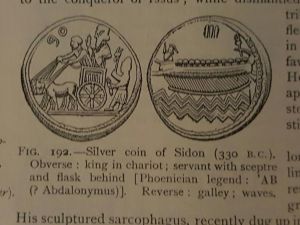
sidon

Alexander the Great knew that if he were to embark on his great project, the conquest of the Persian Empire, he would first need to secure his flanks near the Mediterranean.  This meant the bringing of Syria and Egypt under his control; and to this end he moved south after subduing Asia Minor.

Continue reading