The Story Of Marcus And Barbula

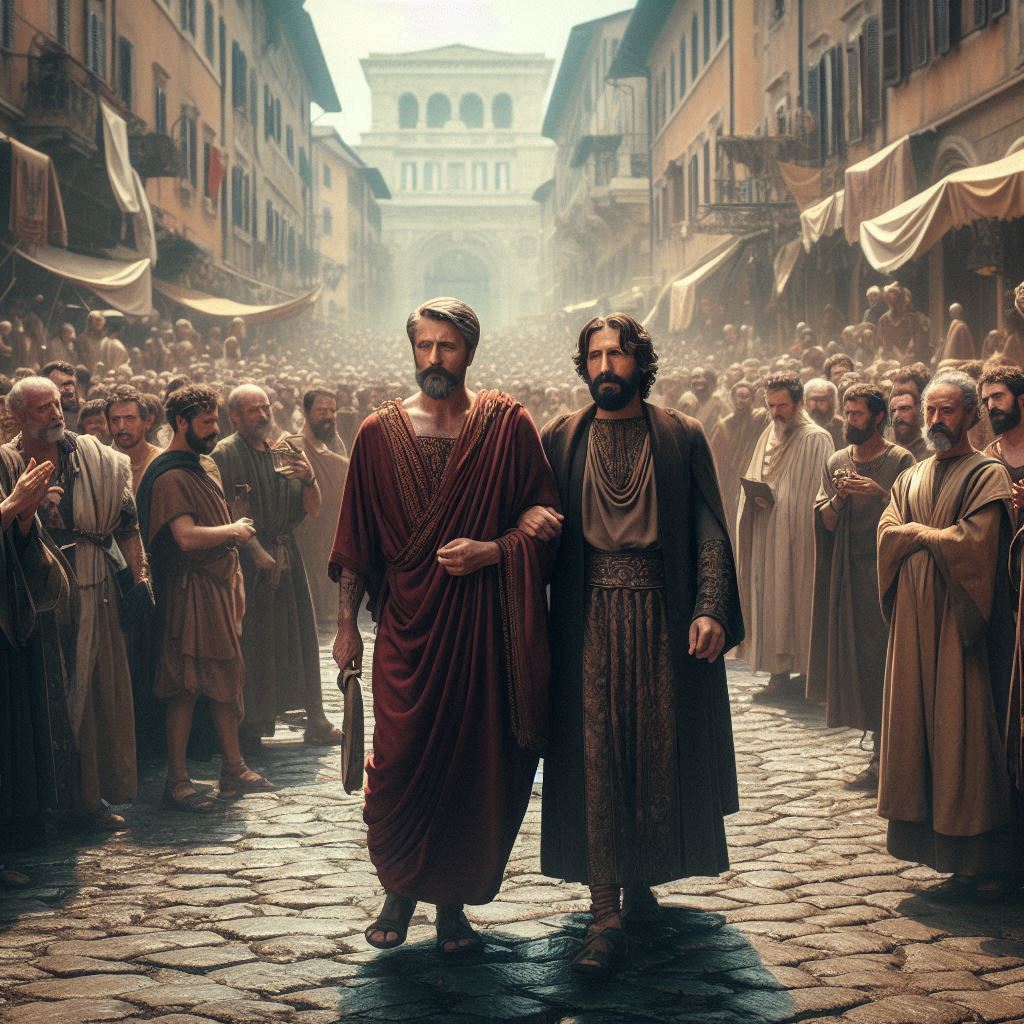
In November of 43 B.C., Rome was gripped by a terrible sense of foreboding.  The historian Appian, in his Civil Wars (IV.1.4) relates that all kinds of strange portents were observed around the city.  Statues sweated blood; a newborn infant uttered words; lightning struck sacred temples; and cattle spoke with a human voice.  So alarmed were some senators that they summoned expert diviners from Etruria to weigh these ominous signs.  The most authoritative of these was an elderly man who told them, “The monarchical rule of ancient times is returning.  You will all be slaves except me.”  Once the Etruscan priest spoke these words to the startled senators, says Appian, he closed his mouth and held his breath until he dropped dead before them.

Continue reading

The Kings Of Nothing

The war between Julius Caesar and Pompey engulfed the Roman world between 49 and 48 B.C.  Historians, seeking concision and brevity at the expense of accuracy, call it a “civil war”; and in one sense it is.  But to those who lived through it, or fell under the long shadow of its aftershocks, it was more than a civil war.  It was with good reason that the poet Lucan, in the first line of his Pharsalia, described the conflict as something “worse than civil”:

Continue reading

The Greatest Hope Lies In The Justice Of One’s Cause (Podcast)

“In war the greatest hope lies in the justice of one’s cause.” This is a line from the historian Appian (IV.12.97), who lived from about 95 A.D. to 165 A.D. We discuss what this line means, and how we can apply it to our own lives.

Continue reading

What Did A Roman Triumph Actually Look Like?

Like the ceremony of deification, the Roman triumph (triumphus) is one of those rituals about which few readers may have a clear picture.  This is unfortunate, for the ceremonial triumph provides a very revealing window on certain aspects of Roman society.  Ancient writers mention it frequently, but almost always in passing; we are seldom offered a description of the event itself.  Fortunately, the Greek historian Appian has done just this in his writings (VIII.9.66), and it will be useful for us to relate the specifics here.

Continue reading

On Living Near The Ocean

Although I do not live near the ocean now, I grew up in a small town that was close to it.  The spirit of place enters imperceptibly into one’s bloodstream; and one gets used to the tang of rotting seaweed, the early morning salt mist, the relentlessly shifting dunes, and the omnipresent screams of the gulls.  I have found that being near the ocean is restorative of health.

Continue reading