
Happy Thanksgiving! I hope the next few days will be a time for reflection and relaxation.
And thanks for joining us in our next lecture on Stoic Paradoxes. In this lecture, we discuss some of the most critical doctrines in Stoic ethics:
Happy Thanksgiving! I hope the next few days will be a time for reflection and relaxation.
And thanks for joining us in our next lecture on Stoic Paradoxes. In this lecture, we discuss some of the most critical doctrines in Stoic ethics:
We continue our lecture series on Stoic Paradoxes
This podcast was brought to you courtesy of Fortress of the Mind Publications.
As always, let me know if you have any questions or comments.

For well over a year now, I’ve been working steadily on the most ambitious literary project of my life. It has been an incredible and exhausting adventure, and has opened up vistas in my perception of the world that I never would have expected.
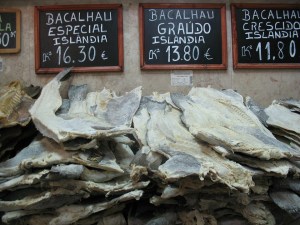
I was eating today at one of those a kilo places in Rio: one of those places where the food is purchased by the total weight. The greater the quantity of food, the greater the price. It turned out to be an opportunity for reflection on the price not of food, but of achievement.
Where food is concerned, nourishment is measured in quantities, by weight. But so is life, or mortality, in a way.
For the doctors of medicine assure us that one can die just as readily from overeating, as from under-eating. Excess is just as much a danger as dearth. And in the developed world, it is more of a danger. For few of us will be faced with the prospect of starvation in our lives. More likely, our challenges will come from the over-abundance of choices, from the temptations of bounty.
My third book, Stoic Paradoxes, is now available on Amazon.
It is offered in both Kindle edition and in paperback. Click on the cover image above.
I wanted to use this post to explain what the book is about, and why it is an important addition to the literature on Stoicism.
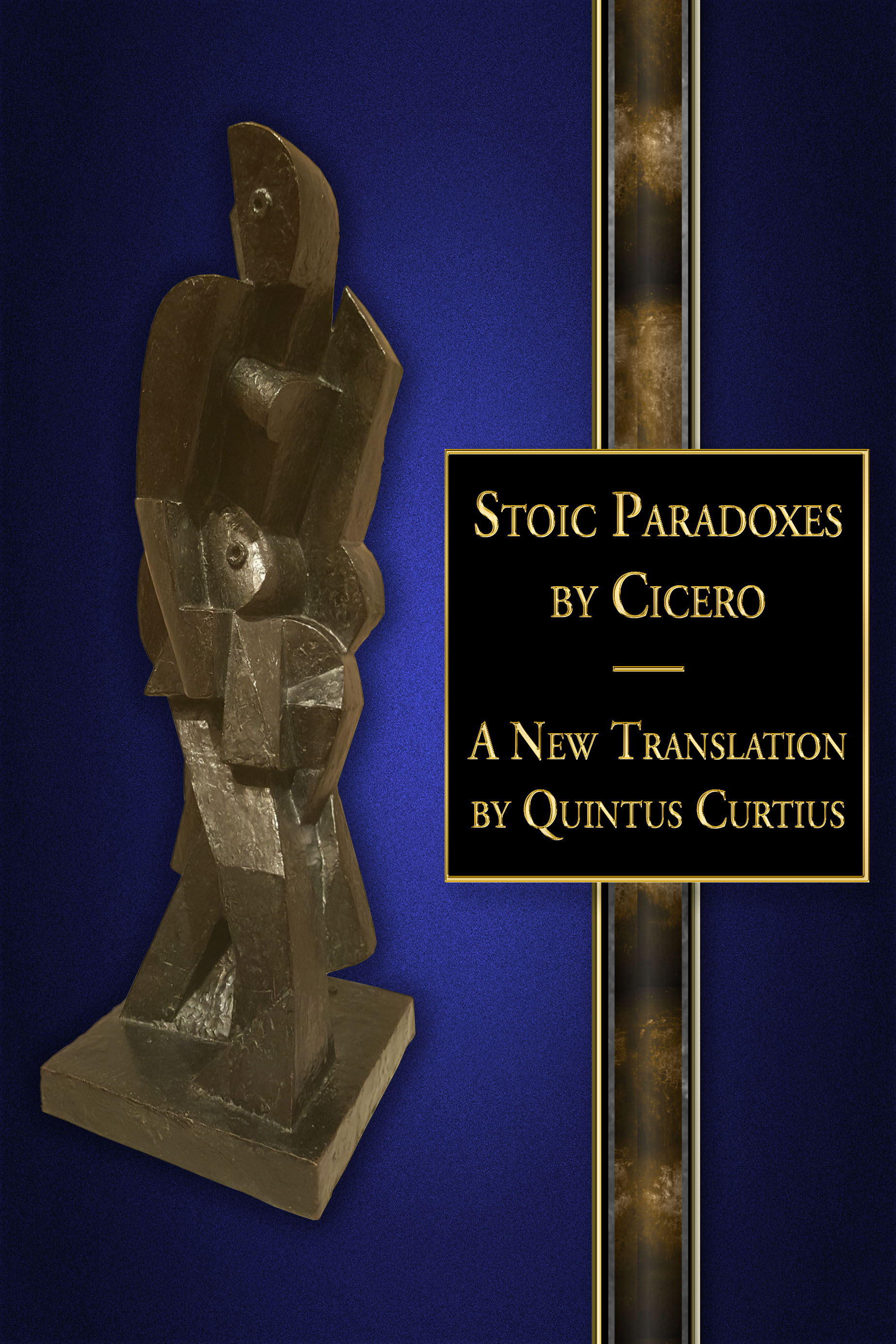
This fall, I will be releasing a translation of Cicero’s Stoic Paradoxes. The book deals with some of the major questions on life and conduct that every man must confront.
The book came about in response to the many questions I received asking for good introductory texts on Stoicism. I feel that this little book is a very useful preparatory work in the subject.
I have produced a modern and accessible translation of this work. There will also be separate chapters on the life of Cicero, the history of Stoic thought, and a detailed synopsis of the text. These extra materials help frame the work in proper context.
Stoicism has proven itself to be an enduring and influential philosophy.
It may not have attracted the greatest number of adherents when compared to other schools of philosophy, but the men that it did attract tended to be the best men.
Cicero, whose name is synonymous with eloquence, wrote a great deal on Stoicism.
I will be releasing a new book this coming fall.
I have decided to issue a fresh, new translation of one of Cicero’s lesser known works, a treatise called Stoic Paradoxes.
Cicero believed that there were four “disorders” of the soul: delight, lust, distress, and fear (Tusc. Disp. IV.12-15). He believed that all of these disorders were the products of either some judgment, or some belief. In other words, we ourselves create the conditions for these disorders, by our own flawed judgments or erroneous beliefs. And if we can correct these deficiencies, we can cure ourselves of the disorder. It is a pretty theory. But I am not convinced of its rectitude.
Are these emotional “disorders” truly the products of personal judgment or belief? Or are some of them involuntary reflexes to our ingrained personality traits? It is not easy to say, but Cicero is correct in urging us to take charge of our own emotional states. If we cannot control ourselves, then no one can. So it is better to follow Cicero and his Stoic path, even if it be not quite right, since they empower us with more control over our own destinies.
Sense-perception is the starting point of all emotional states. We should be neither insensible, nor oversensitive. To be the former is to be an unreasoning brute; the latter, a delicate flower wounded by the wind. Occupying some middle ground strikes the right balance between these two extremes. For when the distress of grief hits us, it is the middle ground that proves itself to be the most stable, and the most able to withstand the emotional tremors rocking us like a ship in the waves.
One of the reasons for excessive displays of grief is guilt. We believe that, if we torment ourselves in overwrought expressions of grief, we can somehow repay a secret debt. Displaying the intensity of our grief will placate the gods. The flagellant who punishes himself seeks to drive out some inner demon; and the wailing mourner with hands to the sky believes that her shrieks will find heavenly satisfaction in direct proportion to their intensity.
And how may grief be assuaged? In what manner may one give relief from the misery of anguish, whether it be in ourselves or in others? Dolor can be dealt with in these ways:
1. Removing it completely
2. Softening it
3. Stopping it from extending
4. Diverting it with replacement emotions
Of these four options, the first seems the most unrealistic. Emotions are not completely voluntary; they cannot normally be turned on and shut off like a valve in a pipe. The second option, that of softening, is a better option; and this consists of speaking comforting words to the grief-stricken, whether it be ourselves or another.
Words of softening provide solace to the bereaved, and should always be forward-looking and positive. For those afflicted by grief, an excursion into the past affords no relief. The past is the repository of sorrows, the store-house of pain. This is because grief and memory reinforce each other, and agitate each others’ glowing coals into new intensities. Also to be avoided are attempts to make rational arguments to the bereaved. It is a mistake to try to argue with the grief-stricken, and to try to show by one proof or another that it is folly to be overwhelmed by lamentation. The heart is not a mechanical contrivance, to be wound up or unplugged on command.
The third option, that of preventing the extension of grief, follows from the softening of grief. Grief’s waves, properly endured with time, will diminish in frequency and amplitude.
The fourth option, that of diversion, seems to be the best and most practical. For it is not enough to tell ourselves or someone else “do not grieve.” The more we try not to think about something, the more we think of it. The mind is like a dog with a bone in its jaws: try to pull the bone out of its mouth, and he clamps down that much harder.
Alleviation from grief comes with productive diversion. The fixation on sadness must be replaced by another activity. In this way the mind finds itself another “bone” to clamp down on. The old bone of grief is released, and replaced with the new, positive, forward-looking activity. And this is why the focus of a new hobby, a new job, or a new activity is so beneficial for those who are waylaid by dejection.
One interesting observation Cicero makes is that grief is a form of envy. That is, we resent the sudden void left by the departure of something precious, and envy those who have what we now suddenly lack. Perhaps this is true. But I have also heard grief described elsewhere as rage turned inward. We feel rage at our loss and deflect this rage back upon ourselves. Either way, grief is linked to envy or rage; perhaps both of these emotions play a part. Envy and rage are burning fires, which will consume the bearer unless properly quenched.
No matter how the cure is effected, grief must be controlled and contained. There is nothing so loathsome as one who refuses to release himself from the grip of sorrow. The sympathy of others quickly can evolve into contempt. As Cicero says,
Quid autem est non miserius solum, sed foedius etiam et deformius quam aegritudine quis adflictus, debilitatus, iacens? [Tusc. Disp. IV.35]
Which means, “What is not only more miserable, but also more terrible and grotesque, than he who is debilitated and afflicted with distress?”
The quote above I have taken from his book Tusculan Disputations, a dialogue which discusses various Stoic philosophical problems. You can find the book by clicking here
Read More: Cicero’s Four Cardinal Virtues


 Quintus Curtius
You must be logged in to post a comment.