
How To Have Willpower (Book Review)

August of 2025 will see the publication of Michael Fontaine’s How to Have Willpower:  An Ancient Guide To Not Giving In.  The volume is a modern translation and interpretation of two classical texts:  Plutarch’s essay On Dysopia and Prudentius’s poem Psychomachia.  Very roughly speaking, these works discuss how to manage our emotional states and overcome the challenges posed by shame and vices.

Continue reading

We Must Be Bold In All Our Designs

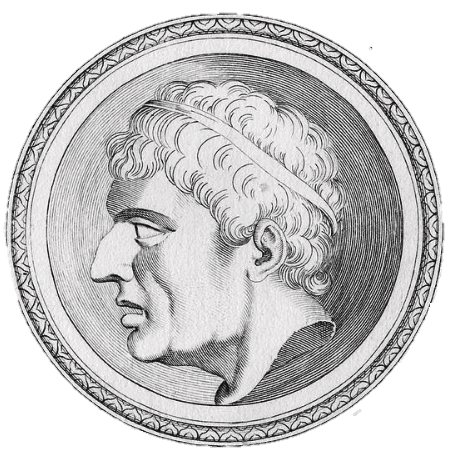
We will relate two anecdotes that appear in the historian Polyaenus’s Stratagems (V.14—V.15).    There once was a young man named Thrasymedes who fell in love with the daughter of Peisistratus, an ancient tyrant of Athens.  One day, as the girl was walking in an official processing through the streets of the city, Thrasymedes boldly approached her and attempted to engage her in conversation. 

Continue reading

The Betrayal And Fall Of Acrocorinthus

Aratus of Sicyon was a Greek politician and military commander who lived from 271 to 213 B.C.  He was forced to flee his native city of Sicyon at seven years of age when his father, a prominent politician, was murdered by a rival.  Raised in Argos, he distinguished himself as an athlete and a leader; and his determination to liberate Sicyon led him to train intensively in the arts of war and command.

Continue reading

What You Vote For, You Must Also Commit To

The Athenian statesman and general Phocion lived from about 402 to 318 B.C.  He was famous for his frugal and unassuming personal habits; and he always put the interests of his country first, in stark opposition to his careerist, opportunistic contemporaries. 

Continue reading

Coping With The Loss Of A Child (Podcast)

In this podcast, we discuss a serious subject. A reader explains that his family has just lost a young child, and he is searching for advice on how to deal with this calamity. I offer some suggestions drawn from Plutarch’s letter of consolation to his wife on the death of his two-year-old daughter Timoxena. We also discuss anecdotes from other sources (e.g., Cicero’s views on grief, the life of P.T. Barnum, etc.), and my own personal experiences. Fiat voluntas tua.

Continue reading

The Moderation And Control Of Anger

Anger is an insidious thing.  It can twine and wind its way around the soul, like ivy over some physical impediment, and slowly throttle our more beneficent instincts.  This creeping control does not happen all at once; it happens gradually, imperceptibly, one gradus at a time.  When speaking to someone on the phone, I often find my voice gradually rising with a surplus of emotion.  You can barely notice it happening, but it happens still.  Anger then finds a ready opportunity to intrude itself.  Anger is also deceptive:  it makes us believe we are taking action to solve some problem, when in fact we are doing nothing to solve the problem.  Anger is a liar.  He is a deceiver.

Continue reading

Coming Full Circle

As a man hopefully grows in experience and knowledge, he will begin to notice a curious thing.  The knowledge that he continues to acquire, and the sights that he continues to see here and there, subtly redirect him back to where he first departed.  It is almost as if some grand cosmic joke is at work.  Now when I say we return to where we first started, I do not mean that we return as ignorant as when we first left.  We have grown, matured, and become more complete; there is no going back to the old ways and old days.  And yet, as knowledge grows, we begin to long for the places of our youth:  the sights and sounds of our younger days, and the pleasant connections to eras past.  Wisdom reduces all things to their essentials.

Continue reading

The Art Of Consolation

consolation4

There used to exist a literary genre called the consolatio, or consolatory essay.  It is the type of thing that would be written by one person to another on the event of some terrible personal tragedy, such as the loss of a loved one.  Sometimes (e.g., in the case of Boethius) the writer simply wrote it for himself.  The ancient authors recognized it as a form of oratory, but it has been out of fashion for a long time now.

Continue reading

One Illusion Is Only Worth Another Illusion: The Judgment Of Bocchoris

shadow-198682_960_720

Here is a sly and amusing story that I came across in Plutarch this weekend.  We find it in his Life of Demetrius (Ch. 27).  It is short, but effective.

There was an Egyptian pharaoh named Bakenranef, who was known to the Greeks as Bocchoris (names of foreign rulers and notables were often Hellenized by historians).  According to the chronicler Manetho, he ruled Lower Egypt as a king of the Twenty-Fourth Dynasty from 725 to 720 B.C.  According to tradition, he was famous for his wisdom and prudence.

Continue reading

Success Can Be Fatal

bac1

I was eating today at one of those a kilo places in Rio:  one of those places where the food is purchased by the total weight.  The greater the quantity of food, the greater the price.  It turned out to be an opportunity for reflection on the price not of food, but of achievement.

Where food is concerned, nourishment is measured in quantities, by weight.  But so is life, or mortality, in a way.

For the doctors of medicine assure us that one can die just as readily from overeating, as from under-eating.  Excess is just as much a danger as dearth.  And in the developed world, it is more of a danger.  For few of us will be faced with the prospect of starvation in our lives.  More likely, our challenges will come from the over-abundance of choices, from the temptations of bounty.

Continue reading