

Many years ago I read a book called The Next Ten Thousand Years. The author, Adrian Berry, argued that no matter what happened to mankind–good or bad–he would survive, prosper, and go on literally to reshape the solar system and explore the galaxy.
Many years ago I read a book called The Next Ten Thousand Years. The author, Adrian Berry, argued that no matter what happened to mankind–good or bad–he would survive, prosper, and go on literally to reshape the solar system and explore the galaxy.

Injustices thrive in atmospheres of fear and intolerance. I came across one story recently that illustrates this point. It could just as easily have come from Stalinist Russia, or modern-day North Korea. The tale is found in Giuseppe Riciotti’s Age of Martyrs, and concerns the accidental martyrdom of a man named Silenus, who lived during the emperor Diocletian’s vigorous persecution of Christians in the last years of fourth century. Riciotti does not mention the original source, but it must have come from one of the ecclesiastical historians of the period.
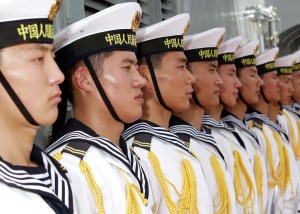
In 1999, two colonels in the Chinese Army, Qiao Liang and Wang Xiangsui, published a treatise that would heavily influence Chinese military planning for the following decades. The book was called Unrestricted Warfare. Its central theses were these:
A reader writes that he is beginning to doubt some of the tenets of the religion he grew up with. He is dealing with doubt, and is not sure how to handle it. He wonders of masculist doctrines can serve as a substitute for religion.

Some statements of philosophers are so transcendent, and so soaring in imaginative power, that they require little or no comment. I found one such passage today in a book that in recent years has come to be one of my favorites: Pascal’s Pensées. I love Pascal because I can open his book at random, any time I feel the need, and feel his spiritual fingers gripping my throat with every sentence. He is not only a philosopher, but a saint.

The great humanist Francesco Petrarca (Petrarch) had opportunity to reflect on the fact that the more he gained in knowledge and experience, the less and less certain he became of his own judgments. These thoughts were recorded in an essay called On His Own Ignorance And That Of Many Others (De sui ipsius et multorum ignorantia). Some of these observations are incredibly frank.
I was recently watching the film Maya Lin: A Strong Clear Vision. It is a 1994 documentary about the architectural work of Maya Lin, the designer of the Vietnam Veterans’ Memorial on the Mall in Washington D.C. One of the key figures interviewed in the film was an honest-faced, frank man named Jan Scruggs.
Continue reading
There is a scene at the end of the film Apocalypse Now where Colonel Kurtz delivers a monologue on the ruthless tactics of the Viet Cong guerrillas. He relates how the Viet Cong had come and “hacked off” the arms of child villagers that the Americans had inoculated as part of an effort to win their hearts and minds.
I interview Ace Johnson, the co-founder of the knife manufacturing company Delta2Alpha, about his recent extended trip to Tasmania. Great experiences and adventure…with a 18 mile march to the airport thrown in for good measure.

Xenophon’s Anabasis is one of the primary classics of ancient Greek literature. For students of ancient Greek, it has served much the same function as has Caesar’s De Bello Gallico has for Latin; that is, it has been used as a foundational text in the study of the language.
 Quintus Curtius
You must be logged in to post a comment.