The Fragility Of Historical Knowledge: The Case Of Lorenzo Boturini In Mexico

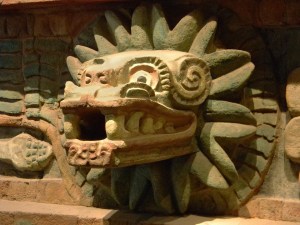
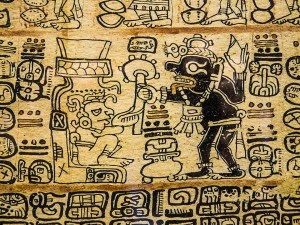
In the modern era we like to think of knowledge as something indelibly fixed and permanent.  We take it for granted that it will always be here, like the Great Pyramid, and are apt to overlook the bitter struggles that our ancestors may have endured to acquire such knowledge.  Information has not always been as easy to obtain as it is now.  As we read about the adventures of scholars of the past, we get the distinct impression that the learned men who came before us had a hardiness and tenacity that is lacking in the modern era.  I will let the reader judge for himself.
Continue reading

Paulus Catena: The Psychology Of An Accuser And The Anatomy Of A Witch-Hunt

Witch-hunts and persecutions thrive in environments where certain conditions are met.  There must be some driving motivation, such as greed, envy, ideology, or hate; there must be willing accomplices who spread accusations and create new ones; and there must exist some tolerance of the persecution, whether from the leadership at the top or from the affected group at large.  When these conditions are met, witch-hunts can seize hold of a group and spread as quickly as a wildfire.  They are sustained by fear and hysteria; the affected group is made to feel as if hidden enemies are lurking around every corner and hiding behind every curtain.

Continue reading

The Brutal Siege Of Amida

The Persian king Shapur II (A.D. 309–379) decided early in his reign to recover by force several of the Roman Empire’s eastern provinces, especially the rich lands of Mesopotamia and Armenia.  In the year 359 he focused his attention on capturing the city of Amida; the city was located in the spot currently occupied by Diyarbakir in Turkey.  Its extended siege and dramatic fall are recounted in detail by Ammianus Marcellinus, whose account (Res Gestae XVIII.9) forms the primary source for the present article.  The historian was personally present during the siege and took part in its defense, and his account of the battle forms one of the most dramatic episodes of his book.

Continue reading

Trust In Fate, Rely On Your Abilities, And Keep Moving

There are times in life when we need to have blind faith in forward momentum.  We need cease the deliberations, the doubts, the equivocations, and the rationalizations.  We should, instead, resolve to maintain a steady forward pace, trusting to our own abilities and the favorable intercession of Fortune.  We may not have contingency plans for every eventuality, but we must press on with blind faith nonetheless.  Momentum creates its own dynamic, and its own outcomes.  It was precisely this principle that the great Spanish conqueror Hernán Cortés brought to bear in the early stages of the conquest of Mexico in 1519.

Continue reading

John Ireland: Captured By Cannibals In The South Seas

We have here related incredible tales of suffering, adventure, and endurance.  The little-known account of the adventures of John Ireland ranks high on the list of harrowing stories of nineteenth century explorations.  The world was a larger place then, vastly less explored than now, and some places in the remoter regions of the globe were as isolated as they had been for thousands of years.  Just how isolated and remote, the reader here will soon discover.

Continue reading

Dealing With Treachery And Treason

Betrayal, treachery, and treason are among the most hated of crimes.  From antiquity until our own time, commanders have devised numerous ways to prevent or limit them.  Some examples are presented here.  The reader will discover that all of them involve either incentives or punishments; sometimes a mixture of the two is employed.  The Roman commander Frontinus, in his Stratagems (III.16), provides us with several examples.

Continue reading

The Emperor Julian Cleans House With Bold Reforms

When a new leader assumes a position, it is often necessary for him to undertake significant reforms.  If he wishes to make lasting changes to the system, he should undertake to do so both quickly and boldly.  To wait too long is to risk seeing one’s foes united against you; and when embarking on a course of reform, it must be made clear that the old ways of doing things will no longer do.  Bold adjustments are often more effective than half-hearted measures.

Continue reading

The Special Fruitfulness Of Verona In Northern Italy

The humanist and historian Biondo Flavio (1392–1463) conducted a historical survey of all of Italy, going through the country region by region.  The result of his labors was the massive Italia Illustrata, probably the first topographical survey since ancient times.  We have recorded elsewhere his description of bird-hunting in Anzio.  We will now linger over his description of the rich agricultural regions near Verona and the River Adige.

Continue reading

Knowledge Is One Thing, But Implementing That Knowledge Is Something Else

For those who wish to seek it, precious knowledge can be found in many different places.  The secrets of history, warfare, personality, leadership, good, evil, life, love and many other things can usually be located by diligent seekers.  But it is one thing to know something:  and it is quite another to put that knowledge into practice.  Why is this?  There are many reasons.

Continue reading

Charles Étienne Brasseur de Bourbourg: An Early Pioneer In Mesoamerican Studies

We have previously discussed the career and work of Fray Bernardino de Sahagún.  Another major pioneer in the study of early Mexican antiquities was the intense French abbé Charles Étienne Brasseur de Bourbourg (1814–1874).  He remains another name nearly lost to history, but a good case can be made that without his work, we would know far less than we do about the culture of old Mexico and Guatemala.

Continue reading