
The Special Fruitfulness Of Verona In Northern Italy

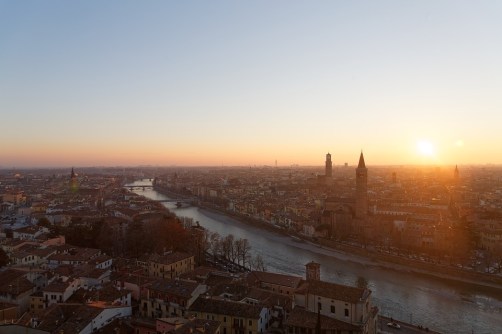
The humanist and historian Biondo Flavio (1392–1463) conducted a historical survey of all of Italy, going through the country region by region.  The result of his labors was the massive Italia Illustrata, probably the first topographical survey since ancient times.  We have recorded elsewhere his description of bird-hunting in Anzio.  We will now linger over his description of the rich agricultural regions near Verona and the River Adige.

Continue reading

Knowledge Is One Thing, But Implementing That Knowledge Is Something Else

For those who wish to seek it, precious knowledge can be found in many different places.  The secrets of history, warfare, personality, leadership, good, evil, life, love and many other things can usually be located by diligent seekers.  But it is one thing to know something:  and it is quite another to put that knowledge into practice.  Why is this?  There are many reasons.

Continue reading

Charles Étienne Brasseur de Bourbourg: An Early Pioneer In Mesoamerican Studies

We have previously discussed the career and work of Fray Bernardino de Sahagún.  Another major pioneer in the study of early Mexican antiquities was the intense French abbé Charles Étienne Brasseur de Bourbourg (1814–1874).  He remains another name nearly lost to history, but a good case can be made that without his work, we would know far less than we do about the culture of old Mexico and Guatemala.

Continue reading

Fray Bernardino de Sahagún: The New World’s First Ethnographer

Little known today is the courageous Catholic friar, linguist, and ethnographer Fray Bernardino de Sahagún.  He was born in Sahagún, Spain, in 1499 and drank deeply from the well of Renaissance humanism that had been washing over Europe for several decades.  Mastering Latin at an early age, he startled his instructors with the intensity and depth of his observational powers.  He arrived in Mexico (New Spain) in 1529 with a group of Church prelates whose job it would be to convert the natives to Catholicism.

Continue reading

To Curb North Korean Provocations, Pressure Must Be Placed On China

There is a steady stream of news these days about North Korean missile launches and nuclear tests.  Accompanying this news are debates and discussions about how the United States should handle the situation.  I wanted to offer my own assessments and opinion on the matter.

Continue reading

The Trial Of Galileo (Podcast)

The Italian astronomer Galileo was examined by the Inquisition for heresy in 1633. At issue was his advocacy of the heliocentric (sun-centered) view of the solar system. What was the significance of the trial, and what were the motivations of the participants?

Continue reading

Robert Leckie’s “Helmet For My Pillow” (Review)

I very much enjoy reading war memoirs.  I think it’s because I recognize that the authors have tapped into special knowledge that the rest of us cannot access.  They have seen beyond, somehow.  Their experiences have stamped on them an indelible impression that neither time nor distance can erase.  I will be honest:  I am envious of the special knowledge they have, and which I do not have.  Having been in the military is one thing, but having been in real combat is something very different.  Deep down, I regret that I never was given the opportunity to experience what they experienced.

Continue reading

The Loss Of The Liner “Empress Of Ireland”

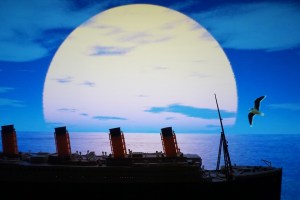
I have long had a fascination with nautical lore.  It is one of these interests that comes as a residue from having spent much time–perhaps too much time–by the ocean as a boy, toying with sailboats and motorboats, quahogs, crabs, bluefish, and what lies beyond the surf.  It is impossible for me not to be entranced by the sea; one is drawn to its primeval magnetism, and by the knowledge that it represents the origin of life on earth.  Perhaps it also represents the destiny of earthly life; when H.G. Wells’s time traveler hurls himself forward hundreds of thousands of years into the future, he finds himself on a ghastly blood-red beach, accompanied by monstrous crabs and eternal silence.

Continue reading

“Italy Is Excellent In All Things”

The Roman engineer and architect Vitruvius believed that one of Italy’s special gifts was its geographical location.  The nation was so situated, he believed, to combine the positive aspects of both cool and warm climates.  In his treatise De Architectura (VI.11), he notes that

Continue reading

The Continued Progress Of The Plutocratic Insurgency (Podcast)

This podcast accompanies my most recent article. In it, we explore two additional dimensions of the “plutocratic insurgency”: (1) the techno-palaces of the global elite, and (2) the creeping confiscation of public lands by private actors. The end result of these two trends is to accelerate the already destabilizing wealth imbalances in societies across the globe.

Continue reading