Dire Circumstances Arouse Latent Powers

The advent of extreme circumstances either activates the latent abilities of the brave man, or smothers the spirit of the timid soul.  Of the many historical examples that verify this, we will discuss one that is unlikely to be familiar to most readers.

Continue reading

The Testimony Of Language

The words and syntax of a speaker are as revelatory of identity as a fingerprint, a ballistics test, and a DNA sample are to a criminologist.  The critical inquiries of the scholar, or the practiced eye of the native speaker, will as readily deduce the origin of a written text from an examination of its lexicon and constructions, as might a forensics scientist derive a wealth of information from a study of a fragment of bone, a scrap of tissue, or a tuft of hair.  While this truth has not often been appreciated, it remains one that has been consistently demonstrated.  We will discuss three examples that illustrate our proposition.

Continue reading

The Four Pillars Of Self-Confidence

So much has been written on the subject of self-confidence that a few more observations are unlikely to draw an objection.  It seems to me that self-confidence rests on four pillars:  (1) one must accurately and honestly assess one’s value; (2) self-confidence should never veer into the territory of arrogance or insolence; (3) self-confidence must be buttressed by demonstrated experience; and (4) while all can improve in self-confidence, it is essentially a character trait that comes easier to some than to others.

Continue reading

The Stirrings Of Conscience

The etymologists tell us that the word conscience is derived from the Latin conscire, meaning to know well, or to have an intimate knowledge of something.  This verb could be used in two contexts:  conscire alii (to know something along with someone else), and conscire sibi (to know something with oneself only).  Time and modern usage has given “conscience” the meaning of an internal conviction, a mental recognition of something.

Continue reading

Ibn Gabirol Discusses The Virtues

If we accept the premise that personal sufferings and misfortunes provide excellent grist for philosophy’s mill, then we must concede that Solomon Ibn Gabirol was provided with incomparable ingredients for speculative thought.  He was born to a prosperous family in Malaga, Spain around 1022.  Yet life wasted no time in dealing him cruel cards; his parents died when he was a child, making him an itinerant orphan.  He seems to have been stricken by a degenerative disease as a teenager, and this fact lodged in his breast an enduring sense of alienation and resentment; but like many other thinkers, he would find refuge from his pain by taking up the pen. 

Continue reading

Secluded Bodies, Wandering Tongues

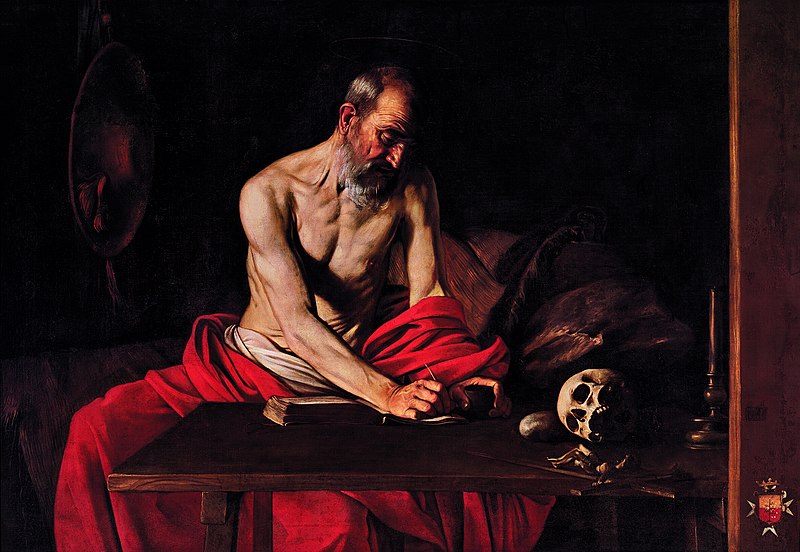
An edifying and unintentionally humorous story emerges from a letter written by St. Jerome in A.D. 405.  It is epistle 117, which was addressed to a quarreling mother and daughter residing in Gaul (Ad matrem et filiam in Gallia commorantes).

Continue reading

Pythagoras: An Introduction To His Life, School, And Ideas

Only one name in European history unites the realms of religion, mathematics, and philosophy, and that name is Pythagoras.  Yet it is this very achievement that so torments posterity when assessing his legacy.  Centuries of speculative accretions, hagiographic mythologizing, and the dubious testimonia of ancient authors have so obscured his original doctrines that the exasperated scholar must, at last, accept that fact and legend are in him inseparably woven.

Continue reading

The Unrelenting Fires Of Heraclitus

It was in Ionia that the Greek-speaking world of the sixth century B.C. jostled with the ancient kingdoms of Asia’s westernmost region.  Phrygia, Lydia, Caria, and the other principalities of Asia Minor were Greece’s portal to the Asiatic interior.  The empire of Persia, herself irrigated to fertility by various Asiatic streams, retained a power and influence that lapped the shores of the Aegean Sea. 

Continue reading

On The Gratitude Of Animals

The ancient Persians held ingratitude to be a very serious offense:  for them it was a gateway, in fact, to all kinds of vices.  Xenophon, in his Cyropaedia, describes the prevailing attitude in Persian society in this regard:

Continue reading

The Object Of One’s Desire Is The Means Of One’s Capture

The Roman writer Aelian, in his treatise On the Nature of Animals (De Natura Animalium), collects many interesting facts related to the habits and behaviors of the creatures of the land, sea, and air. It is unfortunate that he felt compelled to write in Greek instead of Latin, but I suppose this is a decision forgivable for an educated Roman long steeped in Greece’s literary and rhetorical heritage.

Continue reading