

It is a cliche that knowledge is power. But sometimes, not knowing something is also power. There is power in saying “I Don’t Know.” Let me explain what I mean.
It is a cliche that knowledge is power. But sometimes, not knowing something is also power. There is power in saying “I Don’t Know.” Let me explain what I mean.
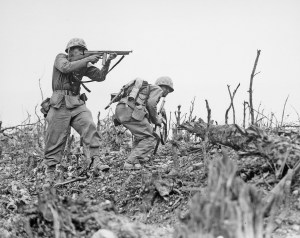
Columnist Andrew Bacevich recently wrote an article for the Dallas Morning New entitled “Why America’s All Volunteer Force Fails To Win Wars.” The article makes the point that something is seriously wrong with the US military. While most of the article is couched in politically-correct innuendo and a studied avoidance of the real problems, it at least has the merit of pointing out the obvious. And this is that the military has sold out the martial virtues, and replaced them with something else.
[To read the rest of the article, click here.]

The first Western thinker to come up with a comprehensive theory of “progress” was Bernard Le Bovier de Fontenelle (1657-1757). His importance today rests on the fact that he was a promoter and popularizer of the ideas of Rene Descartes in the face of the sustained attacks that Cartesian ideas came under from established religious and academic circles. Descartes was one of the true visionaries of the Western tradition, and is rightly considered to be one of the fathers of modern philosophy and science.

Everyone thinks of Leonardo da Vinci as the paragon of Renaissance virtue. He could paint, design, and use intuition as an aid to creativity, when he felt like doing so. But a closer look at the record paints a picture of a chronic procrastinator, a man of dubious reliability, and an idler who was more preoccupied with his daydreams than with perfecting his craft. He had genius, of course. But that is never enough. Harness, discipline, and application are far more important.

A reader needs some suggestions on how to handle a “friend” who he has known for a while. This person is fine with him when they are alone, but when girls are around, he seems to make jokes at his expense to ingratiate himself with the girls. What are some good ways to handle this situation?
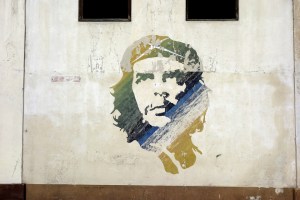
The visage of Ernesto “Che” Guevara has graced countless t-shirts, posters, and other kitsch memorabilia. He has assumed the status almost of a secular saint, the supposed defender of the poor and marginalized. Few who concern themselves with such things, however, know much about the man himself, or about his murderous legacy.
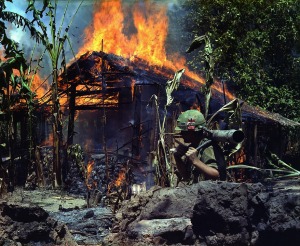
Vo Nguyen Giap (1911-2013) was the architect of the Vietnamese victory in the “Second Indo-China War” (called in the United States the “Vietnam War”), which took place from 1960 to 1975. He must also be credited with winning the “First Indo-China War,” which was waged against the French from 1946 to 1954. He proved to be a master of both conventional and guerrilla tactics, and displayed an incredible single-mindedness and foresight in pursuing his objectives to ultimate victory.

The science fiction genre is filled–too filled–with stories about what might happen if extraterrestrials came into contact with human beings. It is a favorite subject of writers, who use the theme to explore deeper truths about man and his place in the universe. And this is all well and good.

A reader has a business in the United States but wants to begin traveling and living abroad. He eventually wants to split his time between the US and Colombia. What is the best way to do this? I offer some suggestions.
“All that will be left, eventually, will be the grin of the Cheshire cat.”

Nations that have been victorious in war like to talk about their triumphs, but less often their failures. It is for this reason that the Allied raid on the French port city of Dieppe remains an obscure incident of the Second World War. But it should not be. For it can be argued that in war, like much else in human endeavor, failures are far more instructive than successes.
 Quintus Curtius
You must be logged in to post a comment.