Your Guardian Deity

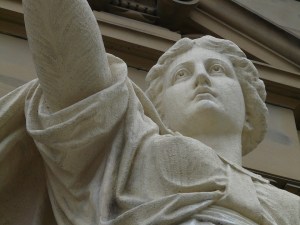
Plutarch’s essay On Socrates’s Personal Deity (593A-594A) contains an idea that I find appealing.  He proposes that every man has a “personal deity” that looks out for him and helps him in a time of need.

We can think of this deity as a kind of guardian angel.

The personal deity is an experienced attendant-god or demi-god, who is well-versed in the struggles of life.  He now watches over the struggles of mortal man, and every now and then reaches down to help those he believes are deserving of his aid.

Continue reading

The Strange Adventures Of Antonio Marques Da Sylva

omens1

Toby Green’s excellent book Inquisition:  The Reign of Fear contains an interesting story that highlights how uncertain and adventurous life could be in ages past.  The story concerns one Antonio Marques da Sylva, a Brazilian man who lived in seventeenth century Bahia.

In 1647 he was married to Maria Figeuira de Abreu.  He had children with her and lived in Bahia for three years.  He then decided to sail to Portugal for business in 1650.  What seemed like a simple decision actually set in motion a bizarre sequence of events.

Continue reading

How To Read A Book

epicurus2

I often get questions on book recommendations.  People will ask me, “What book do you recommend for learning about XYZ historical event?”

Or they will say, “What book do you recommend for learning about XYZ philosophy?”

Or whatever.

And this is fine.  I always am happy to give my opinion.  I like to discuss, to critique, and to analyze, because this is how the forward movement of knowledge works.

Continue reading

Michael Collins: The Irish Prophet Of Urban Guerrilla Warfare

Few figures in the history of guerrilla warfare have been as influential and successful as Michael Collins (1890-1922), the Irish revolutionary leader.  His tactical and strategic mastery of urban guerrilla techniques showed what a determined minority could do against an oppressive system of domination.  His career is said to have been studied carefully by such widely disparate figures as Mao Zedong and Yitzak Shamir.

He was born on October 12, 1890 in County Cork, Ireland, as the youngest of eight children.  The Ireland into which he was born was subject to direct British rule.  But Irish nationalism was in his blood: his father’s family had had connections with the Irish Republican Brotherhood, and he imbibed from this well as a youth.

Continue reading

An Excerpt From The Upcoming “Stoic Paradoxes”

stoic.para.kindle.cover

This fall, I will be releasing a translation of Cicero’s Stoic Paradoxes.  The book deals with some of the major questions on life and conduct that every man must confront.

The book came about in response to the many questions I received asking for good introductory texts on Stoicism.  I feel that this little book is a very useful preparatory work in the subject.

I have produced a modern and accessible translation of this work.  There will also be separate chapters on the life of Cicero, the history of Stoic thought, and a detailed synopsis of the text.  These extra materials help frame the work in proper context.

Continue reading

On Making Setbacks Appear To Be Advances

alps1

Conflict surges back and forth.  There will be advances, and there will be reverses.  It is inevitable:  no one who is actively engaged in the games of life will be able to avoid reverses.  But then the question becomes:  how may reverses be characterized as gains?

If you believe that this is not a question worth asking, then I would disagree strongly with you.  There are times when it will be necessary to conceal the magnitude of one’s reverses, so as not to embolden the enemy.

Remember:  you will normally have very few allies.  Most people want to see you fail, so that their inaction and timidity are thereby affirmed.  We must be mindful of human nature, which in these matters resembles the proverbial crab in the bucket, clawing at every other crab, to the detriment of all.

Continue reading

Paul Von Lettow-Vorbeck: The Greatest German Commander Of The Great War

paul1

The leadership principle of “economy of management” holds that we should strive to do more with less.  If the ability to do much with limited resources is a measure of greatness, then few field commanders in twentieth century military history are greater than Paul von Lettow-Vorbeck.  His name is relatively unknown today, but a recounting of his exploits in East Africa during the First World War leave no room for doubt that this was one of the few truly great men of that conflict.  His tactics and innovations form the foundation for modern rules of guerrilla warfare.

Continue reading

Take The Initiative And Do The Unexpected


Your enemies are slothful, satisfied, and unwilling to tolerate pain and discomfort.  They wish to be comfortable, to enjoy their privileges, and to spend their days in leisure.

They would rather hate on you than do any work to improve themselves.

They are cozy in their little domains.  You, on the other hand, are willing to head out into the wasteland:

Your enemies are afraid of the wasteland.  But you embrace it.  You have conquered your fear of it.  You are willing to do what is necessary, unlike them.  And this is why you will triumph, and they will not.  Take the initiative, and keep moving.

Several examples illustrate this point.

Continue reading

The Fable Of Aridaeus of Soli

air

Plutarch’s essay On God’s Slowness to Punish (563C et seq.) relates a vivid fable on the punishments meted out to those to commit evil acts in their lives.  It also relates to us the requirements and possibilities for moral redemption.

The fable takes the form of an out-of-body experience that has much to say about ethics and human responsibility.  But it is parable rich in metaphor and meaning.  Readers can interpret it in a variety of ways.

This is the story.

There was a native of the town of Soli named Aridaeus.  He indulged himself in every type of sensual and mortal passion that he could, and was undeterred by the effects that these pursuits caused to others.  He quickly exhausted his money, and turned to a life of crime.  His sole motivation was profit and gain.

Continue reading

Great Leaders Usually Emerge In Crises

The current batch of presidential candidates leaves me feeling nothing. I don’t feel inspired by any of them. I don’t feel interested in any of them. All I feel is…nothing, a generalized emptiness that edges into contempt.

All of them are complete nothings, nonentities.

You may feel the same way. When it comes to politics, disappointment is now so routine that we simply take it for granted. None of the candidates has anything positive to offer. All they are offering is a continuation of the same tired old policies.

[To read the rest of my article at Return Of Kings today, click here].