
John Lewis Burckhardt’s Travels And Explorations In Nubia

J.L. Burckhardt’s intensity and determination clearly show in this engraving.

In a previous article we have sketched the life of John Lewis Burckhardt.  He was born in Lausanne, Switzerland in 1784 of a prominent family.  At the age of 16 his father moved the family to Leipzig; and four years after this they moved again to  Göttingen.  His family was staunchly opposed to the new Napoleonic government that had taken power in France, so he moved to London in July 1806 to seek employment prospects there.  At some point, and possibly influenced by the daring men he had contact with there, he decided on a career in exploration.

Continue reading

David Mamet’s Film “Redbelt” (2008) (Podcast)

In this podcast we discuss David Mamet’s 2008 film Redbelt.  This is a great movie, and a worthy addition to his long line of films that explore the moral and ethical problems that men face as they try to reconcile their personal creeds with the world’s corrupting influences.  How we resolve this struggle will define what kind of man we are.  Mamet instinctively understands the necessity of masculine virtus in a world characterized by shifting loyalties, fair-weather friends, and moral corruption; this makes him, in a sense, the most “virtuous” filmmaker today.

Continue reading

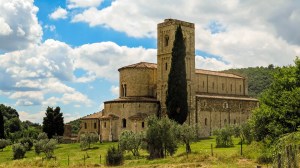
The Boar And The Wolf Of Sant’ Antonio

I will turn again to Biondo Flavio’s geographical compendium of Italy called Italia Illustrata, which was published in 1453.  Flavio traveled all over the Italian peninsula and recorded historical information, anecdota, and local customs of the Italian countryside in the late medieval period.  During his tour of Tuscany, he found himself in the region near the city of Petriolo.  Here there was a remote monastery dedicated to Sant’ Angelo named the Eremo di Sant’ Antonio in Val d’Aspra.  Flavio describes the place as being at the top of an irregular road threading through forested hills.  It was also an austere place, not lavish at all in its construction (ut ad parum sumptuose et minus laute aedificatum te conferas monasterium).

Continue reading

What Were A Medieval Serf’s Feudal Obligations?

Sometimes I think historians have exaggerated the misery of the medieval serf in Europe.  I would not want to exchange my lot for his, of course, but it is a useful exercise to examine in detail just what his feudal obligations were.  There is no strict definition of “feudalism,” as it varied in time and place; but it found its fullest expression in medieval France.  To understand why it developed, we must appreciate the profound insecurity and chaos that most of Europe was plunged into after the fall of the western Roman Empire.  At that time, security and peace mattered more to the common man than his freedom; and the system worked well considering the environment of the times.

Continue reading

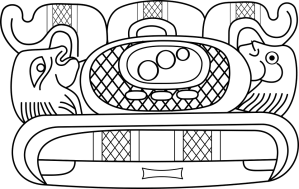
The Painted Books Of The Maya: Surviving By A Hair

Sometimes the precious things of this world survive by just a hair.  Just a hair.  The difference between victory and defeat, between survival and ruin, between conquest and destruction, between glory and despair:  these are not differences of tremendous magnitude.  They are fine-line distinctions.  And when I say fine-line, I mean very fine.  Fortune loves to play games with us, and when she casts her dice to predict our fate, the outcome often hangs by a hair.  By such threads does the fate of man so perilously hang.

Continue reading

How The Plutocratic Insurgency Targets You Personally: The Use Of AI For Targeted Shakedowns

In our discussions on the “plutocratic insurgency” here, we have focused on the malfeasance and corrupt practices of the moneyed elites, their political lackeys, and a few of the major corporations.  Some people, reading these pages, may be tempted to think, “Well, so what?  It doesn’t affect me personally!  What do I care!”  But the insurgency does, in fact, affect all of us on an individual basis.  When your society is being attacked, you come into the cross-hairs.  It makes no difference whether the attack is prolonged or sudden; it is an attack nonetheless.

Continue reading

Impressions Of Belo Horizonte, Brazil

I spent the recent holidays in Belo Horizonte, which is the capital of the Brazilian state of Minas Gerais.  It was a fantastic trip, and I wanted to give readers my impressions of the city.

Continue reading

Vanguard Of The Plutocratic Insurgency: Apple Inc. Plies Its Trade

Previous articles here have described in detail a phenomenon called the “plutocratic insurgency.”  The term was coined by Robert J. Bunker and Pamela L. Bunker in a series of articles that have appeared in Small Wars Journal.  I have discussed the Bunkers’ conclusions in my own articles here:

Continue reading

The Wisdom Of Ibn Zafar al-Siqilli And Abu Bakr al-Khowarizmi

The writer and scholar Ibn Zafar al-Siqilli lived from 1104 to about 1170.  The cognomen al-Siqilli (“the Sicilian”) was given to him because he was born on the island of Sicily.  There are a number of important works credited to his name, the most famous of which is a book of ethical and political philosophy called Consolation for the Master Who Suffers From the Hatred of His Servants (the brilliant Arabic title, written in the rhyming prose typical of Arabic literature, is سلوان المطاع في عدوان الأتباع‎).  In English, this work is often referred to simply as the Sulwan al-Mutaa’.  The book was composed in 1159, during the time of the second Norman king of Sicily, William the Bad.  Sicily (Sakalliya) had been an Arab emirate from A.D. 831 to 1091.

Continue reading

The Top 10 Articles At Fortress Of The Mind For 2017

Below is a list of the top 10 viewed articles at Fortress of the Mind for the year 2017.  Now might be a good time to re-read the essays from last year that spoke to you:

Continue reading