
Charles Sturt: A Pioneer Of Australian Exploration

The student of the history of exploration and discovery cannot fail to notice certain recurring patterns in the lives of great explorers.  Many of them come from modest or poor backgrounds; many have military experience; many are driven by an inner conviction that they are destined for great achievements; many have a high tolerance for pain and hardship; and some of them have combative or disputatious natures that make them difficult to get along with.  Not all of these generalizations are found in every explorer, of course.  But it cannot be denied that a certain personality type is well-suited to a life of exploration.

Continue reading

Ibn Zafar’s Principles Of Power And Success In Leadership

We have previously mentioned the political philosopher Ibn Zafar Al-Siqilli (“The Sicilian”), who lived from 1104 to about 1171.  Very little is known of his early life; his entry in Ibn Khallikan’s Biographical Dictionary reveals little more than a few sad anecdotes.  We do know that he was born under the Norman rule of Sicily, and received a good education in Mecca in Arabia.  A period of wandering followed, which ended around 1150 when he secured a teaching position in Aleppo, Syria.  When war broke out in Syria, Ibn Zafar moved back to Sicily; some years later he moved back to Syria, ultimately residing in Hama, where he died around 1172.

Continue reading

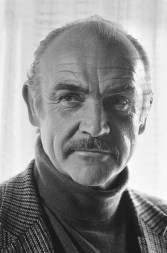
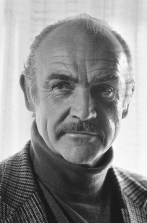
Michael Crichton Sobre As Virtudes Masculinas De Sean Connery

[The article I published yesterday on Sean Connery was translated into Portuguese by Mr. Daniel Castro].

Tradução por Daniel Castro.

Em suas memórias de 1988 Travels, o autor Michael Crichton lembra-se da época que ele passou com o ator Sean Connery durante as filmagens de The Great Train Robbery na Irlanda em 1978. Crichton, o famoso autor de Jurassic Park, Sphere, Congo, Disclosure, e algumas outras histórias populares, também era um diretor de filmes. Connery era a estrela de The Great Train Robbery, e Crichton claramente estava impressionado com o escocês vulcânico.  As anedotas que ele relaciona ao carisma masculino de Connery deixam claro que os homens hoje em dia podem aprender muito com ele.

[Leia o restante o artigo aqui].

Michael Crichton On The Masculine Virtues Of Sean Connery

In his 1988 memoir Travels, author Michael Crichton recalls the time he spent with actor Sean Connery during the shooting of the film The Great Train Robbery in Ireland in 1978.  Crichton, the famed author of Jurassic Park, Sphere, Congo, Disclosure, and a number of other popular novels, was also once a film director.  Connery was the star of The Great Train Robbery, and Crichton clearly was in awe of the volcanic Scotsman.  The anecdotes he relates of Connery’s masculine charisma make it clear that men today can learn a great deal from him.

Continue reading

How Benito Mussolini Took Power

Quintus Curtius's avatarQuintus Curtius

fire

Stalin biographer Stephen Kotkin spends several pages of his book discussing the lessons to be learned from Mussolini’s seizure of power in Italy in the early 1920s.  It was something that happened gradually, in stages, when institutions that should have been able to bring him to heel did nothing, either due to their own lack of resolution or tacit support of his power grab.

View original post 998 more words

Carsten Niebuhr: Sole Survivor Of The Danish-Arabian Expedition

Of the German explorers of the eighteenth century, the only man whose accomplishments rival those of Alexander von Humboldt is Carsten Niebuhr.  His extensive travels and surveys in the Near East and India resulted in specific geographical data, surveying information, and historical insights.  This was no dreamy wanderer; this was a trained professional, a man who was tough, hard-bitten, and practical, with the astuteness to process what was going on around him and commit his observations faithfully to paper.

Continue reading

Why We Must Seek The Divine Within Us

Upon his accession to the throne of Augustus in A.D. 364, the emperor Valentinian gave a short address to his troops.  The speech is related in Ammianus Marcellinus’s history (XXVI.1).  The historian tells us that Valentinian appeared on an open expanse of ground and mounted a platform that had been arranged for this purpose; he was also wearing an imperial robe and a coronet.  The speech itself was short and to the point.

Continue reading

Why We Should Not Rely On First Impressions

It is often said that a man should rely on his first impressions of things when trying to form a final judgment.  There is some merit to instinct; but it seems to me that reasoned deliberation will always provide more accurate results than the shifting sands of sense-perception.  We cannot know all things, or even many things, at a glance.

Continue reading

Carl Friedrich Philip Von Martius’s Daring Explorations In Brazil

Men undertake explorations and great journeys for many reasons.  Some expeditions–such as those undertaken by Denham, Burton, Burckhardt, and others like them–are primarily focused on expanding geographical knowledge, commercial information, and ethnographic data.  Others, such as those of Humboldt, Rondon, Lewis and Clark, and von Barth, are more interested in the collection of scientific information about the natural world.  The Brazilian explorations of Carl Friedrich von Martius falls into the latter category.

Continue reading

The Wrath Of Least Persistence

Everyone has heard the tired phrase, “path of least resistance.”  It represents a principle that I have no objection to.  Of course there is no reason to make more work for oneself without good reason.  No one is arguing with this idea.  All things being equal, the shortest path to a goal is usually the best.  But it occurred to me today to take this phrase and modify it a bit to create another principle, one perhaps equally valid, yet one far less frequently discussed.  Let us consider this new phrase:  the wrath of least persistence.  What do I mean by this?

Continue reading