Fray Bernardino de Sahagún: The New World’s First Ethnographer

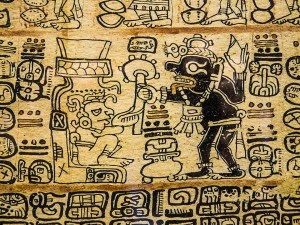
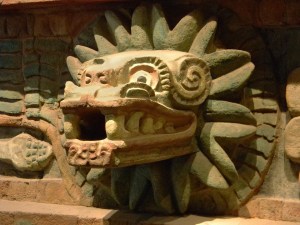
Little known today is the courageous Catholic friar, linguist, and ethnographer Fray Bernardino de Sahagún.  He was born in Sahagún, Spain, in 1499 and drank deeply from the well of Renaissance humanism that had been washing over Europe for several decades.  Mastering Latin at an early age, he startled his instructors with the intensity and depth of his observational powers.  He arrived in Mexico (New Spain) in 1529 with a group of Church prelates whose job it would be to convert the natives to Catholicism.

Continue reading

How To Solve The North Korea Problem (Podcast)

What is the motive behind North Korea’s belligerent behavior? Who is pulling the strings in the background? And what is the best way to resolve this situation? We discuss the power realities in East Asia and explore some options for the United States at home and abroad.

Continue reading

To Curb North Korean Provocations, Pressure Must Be Placed On China

There is a steady stream of news these days about North Korean missile launches and nuclear tests.  Accompanying this news are debates and discussions about how the United States should handle the situation.  I wanted to offer my own assessments and opinion on the matter.

Continue reading

Even When Glory Departs, Something Always Remains

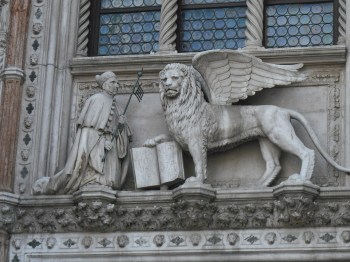
The Italian humanist Ciriaco de’ Pizzicolli lived from 1391 to 1452.  He is more commonly known as Cyriac of Ancona.  While most humanists of his era were content to labor at their desks, he was unusual in that he sought to observe ancient monuments and inscriptions in person.  He was, in fact, one of the very first to undertake a systematic survey of the surviving monuments of Greek antiquity in the Eastern Mediterranean; his work is of great value to the modern antiquarian, since many of the inscriptions and temples he sketched now no longer exist, ravaged by the cruelties of time and man.

Continue reading

The Trial Of Galileo (Podcast)

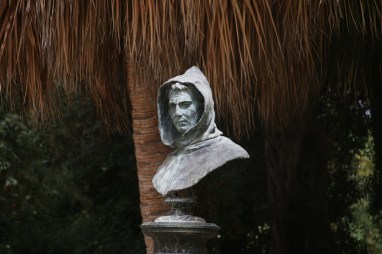
The Italian astronomer Galileo was examined by the Inquisition for heresy in 1633. At issue was his advocacy of the heliocentric (sun-centered) view of the solar system. What was the significance of the trial, and what were the motivations of the participants?

Continue reading

Robert Leckie’s “Helmet For My Pillow” (Review)

I very much enjoy reading war memoirs.  I think it’s because I recognize that the authors have tapped into special knowledge that the rest of us cannot access.  They have seen beyond, somehow.  Their experiences have stamped on them an indelible impression that neither time nor distance can erase.  I will be honest:  I am envious of the special knowledge they have, and which I do not have.  Having been in the military is one thing, but having been in real combat is something very different.  Deep down, I regret that I never was given the opportunity to experience what they experienced.

Continue reading

Catching Birds In Anzio, Italy

The Italian humanist Biondo Flavio of Forli (1392-1463) was one of the great names of Renaissance humanism.  His extensive Description of Italy (Italia Illustrata) collected anecdota and geographical information about every region of the country from ancient times until his own day.  It was first published in 1451, but saw frequent additions and revisions until Flavio’s death.  Book II, section 7 of his treatise provides some details on how the natives of Nettuno (a town in the region of Lazio, south of Rome) go about netting birds.  The passage attracted my attention for some reason, and I thought it might be worth relating; it may even be of interest to modern hunters.  Flavio himself can provide the specific details:

Continue reading

The Wisdom Of Ibn Al-Sammak

The biographical encyclopedia of Ibn Khallikan–that deep well of collective anecdotal wisdom–has an interesting entry for one Abu Al-Abbas Muhammad Ibn Sabih.  His surname was Al Mazkur, but like many famous figures it is his nickname that posterity recalls best.  This nickname is Ibn Al-Sammak, which literally means “son of a fish-monger” in Arabic (the word for fish is samak, سمك).  It is not clear where this name came from; perhaps he had a fish-merchant as an ancestor.

Continue reading

A Video Review Of My Translation Of Sallust

Literary critic and reviewer Andrew Vittoria today released a video review of my latest book (published in June), a new translation of the works of the historian Sallust, The Conspiracy Of Catiline and The War Of Jugurtha.  I very much appreciate the time he took to put together this quite detailed review:

Continue reading