John Ireland: Captured By Cannibals In The South Seas

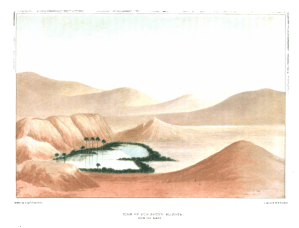
We have here related incredible tales of suffering, adventure, and endurance.  The little-known account of the adventures of John Ireland ranks high on the list of harrowing stories of nineteenth century explorations.  The world was a larger place then, vastly less explored than now, and some places in the remoter regions of the globe were as isolated as they had been for thousands of years.  Just how isolated and remote, the reader here will soon discover.

Continue reading

Dealing With Treachery And Treason

Betrayal, treachery, and treason are among the most hated of crimes.  From antiquity until our own time, commanders have devised numerous ways to prevent or limit them.  Some examples are presented here.  The reader will discover that all of them involve either incentives or punishments; sometimes a mixture of the two is employed.  The Roman commander Frontinus, in his Stratagems (III.16), provides us with several examples.

Continue reading

Why You Should See “Blade Runner 2049” (Podcast)

In this podcast we talk about Denis Villenueve’s new film, the visually dazzling Blade Runner 2049.  In conception and execution, this film accomplishes the rare feat of being a sequel that is entirely worthy of its predecessor.  We’ll give a few reasons why this movie is worth a careful viewing, and why I think it is a triumph of cinematic art.

Continue reading

Sometimes One Must Speak In An Indirect Way

There are times when one’s communications must be protected from the unwelcome attentions of third parties.  The richness of a language’s vocabulary, and its embedded metaphors and cultural allusions, are powerful assistants to this end.  I was recently reminded of this when reading an anecdote related by that most colorful of biographers, Ibn Khallikan.  We have related many of his stories and wise sayings here in past articles.  The story I am about to relate here is linguistically oriented; it can tell us much about the power of speech in the hands of those who can deliver it with nuanced subtlety.  It will be of interest to any enthusiast of language, philology, and culture.

Continue reading

The Emperor Julian Cleans House With Bold Reforms

When a new leader assumes a position, it is often necessary for him to undertake significant reforms.  If he wishes to make lasting changes to the system, he should undertake to do so both quickly and boldly.  To wait too long is to risk seeing one’s foes united against you; and when embarking on a course of reform, it must be made clear that the old ways of doing things will no longer do.  Bold adjustments are often more effective than half-hearted measures.

Continue reading

The Special Fruitfulness Of Verona In Northern Italy

The humanist and historian Biondo Flavio (1392–1463) conducted a historical survey of all of Italy, going through the country region by region.  The result of his labors was the massive Italia Illustrata, probably the first topographical survey since ancient times.  We have recorded elsewhere his description of bird-hunting in Anzio.  We will now linger over his description of the rich agricultural regions near Verona and the River Adige.

Continue reading

Knowledge Is One Thing, But Implementing That Knowledge Is Something Else

For those who wish to seek it, precious knowledge can be found in many different places.  The secrets of history, warfare, personality, leadership, good, evil, life, love and many other things can usually be located by diligent seekers.  But it is one thing to know something:  and it is quite another to put that knowledge into practice.  Why is this?  There are many reasons.

Continue reading

Charles Étienne Brasseur de Bourbourg: An Early Pioneer In Mesoamerican Studies

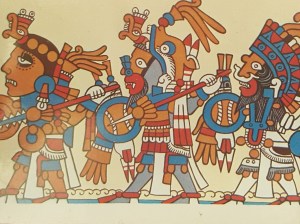
We have previously discussed the career and work of Fray Bernardino de Sahagún.  Another major pioneer in the study of early Mexican antiquities was the intense French abbé Charles Étienne Brasseur de Bourbourg (1814–1874).  He remains another name nearly lost to history, but a good case can be made that without his work, we would know far less than we do about the culture of old Mexico and Guatemala.

Continue reading

Fate And Struggle (Podcast)

In this podcast, we discuss some questions about the role of “Adrastia” or “Nemesis,” the ancient goddess of retribution. We also talk about the redemptive power of struggle as the theme of the compelling 2011 film The Grey, which starred Liam Neeson.

Continue reading

Adrastia: The Goddess Who Punishes Hubris And Arrogance

We have observed that one of the themes of ancient literature is the concept of Fate or Fortune.  We find it first expressed in the plays and heroic poems of the Greeks; the idea then seeped into the writing of history and biography.  Closely associated with this concept is the idea of divine retribution for offending the gods.  Those who showed contempt for divine or human law would be humbled by the harsh blows of Fate:  no man could expect to thumb his nose at the laws of the universe and get away with it.

Continue reading