The Tomb Of The Scipios

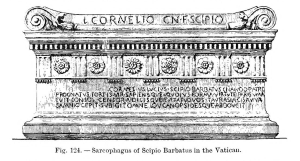
When one considers the veneration that the ancient Romans had for their ancestors, it seems incredible that the tomb of the Scipios—one of the city’s most illustrious families—should be shrouded in such neglect and mystery.  And yet this is precisely the case.  One senses that the family and the city endured a bitter divorce, from which each emerged with an implacable hostility to the other; Rome never forgave the family’s recalcitrance, and punished it with a sullen historical silence.

Continue reading

The Sources Of Anger (Podcast)

In this podcast we talk about the origins of anger, and how to manage your anger issues.  It’s not a time for sugar-coating things, and telling you what you want to hear.  Most anger can be traceable to one or more of these factors:

Continue reading

A Terrible Storm Destroys Octavian’s Fleet

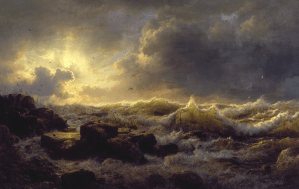
In the modern era we tend to minimize or downplay the influence of weather and geography on human activity.  In earlier periods of history, armies and fleets had a much more intimate relation with the inconstancy of the natural world.  Ancient man could not insulate himself from the ocean’s surges, the sky’s furies, or the impediments of geography; and perhaps for this reason our ancestors had a healthier respect for Nature’s capabilities.

Continue reading

How Art Can Inspire Great Deeds

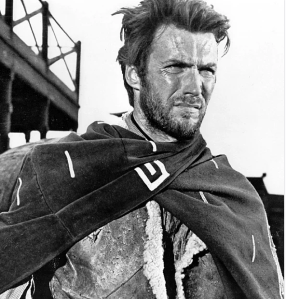
In this podcast, I talk about the documentary film Sad Hill Unearthed, and what conclusions we should draw from it. The movie describes how four friends found and restored the cemetery in Spain used for the iconic climax of the 1965 Sergio Leone film The Good, The Bad, And The Ugly.  We discuss how art can work to nurture dreams, and why you should follow your visions, no matter what other people may think.

Continue reading

“Digest” Is Now Available

Digest is available in paperback, hardcover, and Kindle editions.  This comprehensive (713 pages), annotated, illustrated, and fully indexed collection includes all of Quintus Curtius’s important essays from 2016 to January 2020.  Some of the essays have been expanded.  The range of topics is diverse and compelling, and includes history, moral and ethical philosophy, travel and exploration, language, and the wisdom of the Near East. These penetrating and inspiring writings provide a window into a philosophy of life based on a belief in achievement through struggle, the redemptive power of wisdom, the value of moral goodness, and the necessity of direct personal experience.

Continue reading

Greed Is Always Their Undoing

In the first book of the Panchatantra (the classic Sanskrit collection of moral fables), the writer, Vishnu Sarma, mentions “five evils” that can befall an individual or a state:  absence or dearth; rebellion; addiction; calamities; and tactical inversions.  Each of these is explained in the following way.

Continue reading

Petrarch Counsels A Ruler On The Ends Of Power

Giacomo Bussolari was born to a poor family in Pavia, Italy around 1300.  A natural gift for oratory augmented the modest opportunities available to him; and he found in the Augustinian order a vehicle for the expression of his ambitions.  During the 1350s he was a leading figure in the city, even rising to command the city’s military during conflict with the Visconti in 1356.  Yet Fortune was to turn against him, as so often happens; by 1359 the Visconti had mounted a successful campaign against Pavia, and Bussolari was ignominiously deposed.

Continue reading

“I’m Thinking About Doing Something, But Don’t Know If It’s A Waste Of Time And Money” (Podcast)

I often get questions from readers asking if they should do seminars, courses, retreats, take classes, or things like this.  It’s a great question.  My thoughts are these: (1) Everyone has different motivational needs and requirements; (2) Your resources and time are limited; (3) You should experiment with different things to find out what works, and what does not; (4) Even if it doesn’t work out, you will still have learned something.

Continue reading

The Travels And Achievements Of Giovanni Belzoni

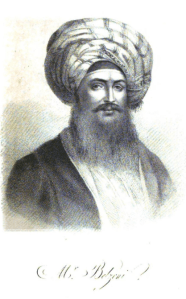
Giovanni Battista Belzoni ranks as one of the most unexpected and fascinating of European travelers.  With little formal experience and education, he managed not only to explore and document various parts of the Arab world, but also to carry out engineering and logistical feats that would have daunted even the trained professionals of his era.  This fearless Italian was born in Padua in 1788.  He was but one of fourteen children, and the son of a barber; finding few career prospects in his native city, he set out for Rome at the age of sixteen with the intention of pursuing a monastic career.  The Church at least could offer him food, drink, and a roof over his head; and for a poor youth, these inducements were considerably attractive.

Continue reading

Ringing In 2020: A New G Manifesto Tweet Reading

We’re ringing in the new year with another G Manifesto tweet reading (even though he’s already in 2022). The topics are: custom suits, nootropics, game meats, mountain villages, ocean swims, beautiful girls, and avoiding weesh dudes. What more can be said? Kick back, have a drink or two, and laugh along with us! Life is too short!

(Most will never get something like this).

Continue reading