One Should Avoid Dangerous Places: The Rescue Of Euthymios And His Brethren

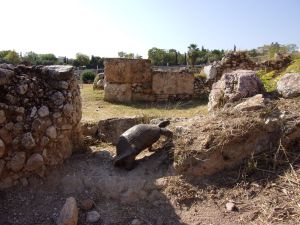
When considering tales from the lives of the great saints, we should be more mindful of the moral imparted by the story than strictly attentive to the accuracy of its details.  We must take into account the perspective of the writer, his proximity to the events he describes, and his moral purposes.  To do anything less would defeat the purpose of the anecdote.  Yet I am confident that many of the stories related by the biographer of Euthymios the Younger (823 A.D.?–898 A.D.) are based on actual events, and are not the idle speculations of the cloister.  One of these stories we will now relate.

Continue reading

“How Can I Mentor Someone Else”? (Podcast)

A reader tells how he had a very good mentor when he was young. As an older man, he now wants to be a mentor to a young person, but is not sure of the right way to go about it. We offer some suggestions.

Continue reading

Euthymios Declares His Life’s Road

At some point in every man’s life, he must declare the road he wishes to follow.  This statement may be openly verbal, or it may be spoken indirectly, through actions and deeds.  It does not matter how the statement is made:  the point is that it is made, whether the man is aware of it or not.  There exists a need in every human heart to declare itself to the outside world, and this need cannot indefinitely be suppressed.  It must find a voice.

Continue reading

Movie Roundup (10/14/2018)

Venom (2018)

Director:  Ruben Fleischer

One of the things that makes Venom so refreshing is its old-school feel.  The characters are not preachy, obnoxious, or offensive, and you never get the sense that the director is trying to push any kind of agenda on you.  It’s just a good fable, engagingly told.  This is an unadulterated throw-back to the great pulp comic book films of the old days (and I mean very old days), in which an Average Joe gets randomly chosen to be the bearer of special gifts.  I went into this movie not knowing anything at all about it; sometimes I just like to wander into a theater and see what happens.

Continue reading

“On Moral Ends” Is Now Available

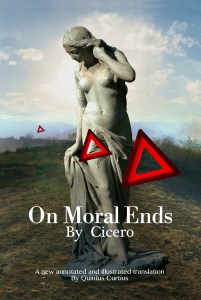
My illustrated, annotated translation of Cicero’s De Finibus (On Moral Ends) was released today.  Purchase details can be found by clicking on the image above.  An audio version will be also soon be available.  This article will explain the unique features of this highly original translation, and why it represents a new direction for what may be Cicero’s most profound work.

Continue reading

The Right To Evolve

Anyone who has ever cleaned out his basement or attic has certainly come across writings or photos from earlier years.  We are likely to wince upon reading things we wrote ten, fifteen, or twenty years ago, to the same degree that we shake our heads in bewilderment at seeing old photos of ourselves.  This is because our minds, and our consciousness, does not remain fixed and unmoved as we age; they are not like the Rock of Gibraltar.  The things we believe when we were younger are not going to be the same things we believe as we get older.  This is natural and predictable; only a fool would refuse to change his views as he aggregates years and worldly experience.

Continue reading

Legends Related To The Conquest Of Spain

Musa Ibn Nusair (موسى بن نصير) lived from 640 to 716 A.D. and served as the Umayyad governor-general of the province of Afriqiyya (North Africa).  It was he who planned and directed the Arab conquest of the Gothic kingdom of Spain.  The biographer Ibn Khallikan, writing in Baghdad in 1274, sketched the outline of his career and notable deeds.  Ibn Nusair’s full name was Abd al-Rahman Musa Ibn Nusair, and he was noted throughout his life, we are told, “for prudence, generosity, bravery, and piety.”  No army under his command was ever defeated.

Continue reading

Film Roundup (10/4/2018)

I haven’t done any film reviews in a while, so maybe it’s time to talk movies again.  Here are a few recent experiences that I felt moved to write about.

Continue reading

George Forster Travels Overland From Bengal To England

Little is known of the early life of British explorer George Forster.  His travel memoirs, published in 1808 after his death, were edited by persons who apparently never considered that such information would be of interest to readers.  We can thus only rely on what we find in scattered letters and journals.  He was probably born around 1750 and at some point joined the East India Company as a young man; he would eventually be posted to Madras to work as a writer.  Around 1782 he was granted leave to return to England; and for some reason–perhaps it was just a taste for adventure–he decided to make the return trip by land through Afghanistan, Central Asia, and Russia.

Continue reading

Ictus Animi: The Smiting Of The Mind

We are unlikely to arrive at any awareness of things while sitting within the confines of our domestic barricades.  Enlightenment requires perception; perception, sensory input; and sensory input, direct experience with the world of the living outside our familiar habitations.  The leisure of contemplation, and the enticements of philosophical reflection, allow for the refinement and processing of these experiences, but cannot serve as a direct substitute for them; and unlucky is he who deludes himself into believing he has arrived at weighty insights from the contemplation of the four walls around him.

Continue reading