How Venice Solved Its Political Corruption Problems

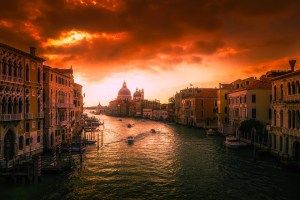
Corruption is like a virus, or a noxious weed.  If you turn your back on it for even an instant, you will find it has found creative ways to grow and spread.  Like any human activity, it can never be completely eradicated; but it can certainly be tamed and curbed, and prevented from interfering with the purposes of government.  But it takes leadership and determination, and a willingness to take certain risks.  And if anyone thinks that one man can make no difference in such matters, he need only study the example of Antonio Tron.

Continue reading

The Tripod’s Prophecy And The Death Of The Emperor Valens

On the subject of prophecies, men are accustomed to take differing viewpoints.  Some say that the predictions of oracles and diviners mean nothing at all, and should be counted as so much nonsense:  any “true” predictions they make are solely the result of blind coincidence.  Others say that they have independent value as evidence of our imaginative capacity; and that prophecies are, more or less, records of our psychological projections and subconscious desires.  Still others believe that they should be seen more as predictions of what might happen, rather than statements of what will happen.  As in so many other things, it will be the responsibility of each reader to decide for himself.  But it seems to me that we should at least acknowledge that such practices have been around for millennia, and that they are found across the globe within nearly every society and culture.

Continue reading

The Combat Of Sonnenberg And Sanseverino

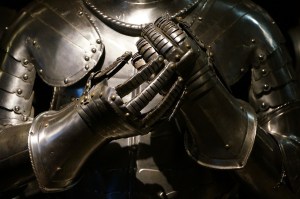
It is right for us to celebrate great deeds of valor of ages past.  By doing so we are inspired to achievement in our own affairs, and become connected to that electric current of masculine virtue that winds through the entire landscape of civilized, productive effort on this earth.  It is good for us to be reminded of the feats of our predecessors; for if they fought, struggled, and overcame, then we know we have the ability to do the same.  Let us now turn our attention to Italy during the waning days of the Renaissance.

Continue reading

Bad Character Will Inevitably Bring Consequences

The historian Ammianus, in describing the brief career of the usurper Procopius (326–366 A.D.), comments on the moral corruption inevitably caused by the abuse of power and privilege.  It will have a familiar ring to those accustomed to the practices of contemporary politics:

Continue reading

The Religion Of Mithras And Its Mysteries

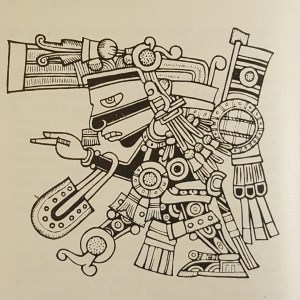
Some months ago The Guardian published an article about the reopening of a reconstructed mithraeum (Temple of Mithras) in London.  I had known about the cult of Mithras for some time; the Roman emperor Julian, whom I have written about, was a devoted follower of the religion.  Yet it remains almost totally unknown to the public, even to students of classical literature and ancient history.  It will be useful to review its origins, doctrines, and the reasons for its extinction.

Continue reading

The Right Man In The Right Place Can Make All The Difference

There are times in history where the right man in the right place can make all the difference.  Accidents of fate, the changing circumstances of fortune, and the randomness of events all conspire to turn predictability into uncertainty; yet a man of learning, vision, and character may, at times, interpose himself in the middle of these whirlwinds and by his actions change the course of history.  It happens all the time.

Continue reading

How Benito Mussolini Took Power

Quintus Curtius's avatarQuintus Curtius

fire

Stalin biographer Stephen Kotkin spends several pages of his book discussing the lessons to be learned from Mussolini’s seizure of power in Italy in the early 1920s.  It was something that happened gradually, in stages, when institutions that should have been able to bring him to heel did nothing, either due to their own lack of resolution or tacit support of his power grab.

View original post 998 more words

What Were A Medieval Serf’s Feudal Obligations?

Sometimes I think historians have exaggerated the misery of the medieval serf in Europe.  I would not want to exchange my lot for his, of course, but it is a useful exercise to examine in detail just what his feudal obligations were.  There is no strict definition of “feudalism,” as it varied in time and place; but it found its fullest expression in medieval France.  To understand why it developed, we must appreciate the profound insecurity and chaos that most of Europe was plunged into after the fall of the western Roman Empire.  At that time, security and peace mattered more to the common man than his freedom; and the system worked well considering the environment of the times.

Continue reading

The Painted Books Of The Maya: Surviving By A Hair

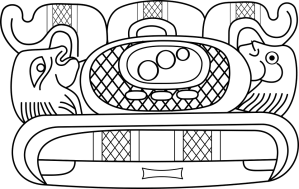
Sometimes the precious things of this world survive by just a hair.  Just a hair.  The difference between victory and defeat, between survival and ruin, between conquest and destruction, between glory and despair:  these are not differences of tremendous magnitude.  They are fine-line distinctions.  And when I say fine-line, I mean very fine.  Fortune loves to play games with us, and when she casts her dice to predict our fate, the outcome often hangs by a hair.  By such threads does the fate of man so perilously hang.

Continue reading

The Incredible Life And Explorations Of John Ledyard

Of all the explorers and travelers I have written about, few are as fascinating and as little-known today as the American adventurer John Ledyard.  He lived from 1751 to 1789, during the seminal years of American history; and his travels across the globe (especially in Russia and Siberia) mark him out as a man who deserves far more recognition than he has received from posterity.  In fact, as I was researching his life in preparation for this article, I could hardly believe that his name had sunk into such undeserved oblivion.  Let us give him his due now.

Continue reading