
The Justice Of Malik Shah, Son Of Alp Arslan

Malik Shah I lived from about 1053 to about 1092, and was the sultan of the Seljuk Turkish Empire from 1072 to 1092.  His name in Turkish is given as Melikşah; and he succeeded his father, the renowned Alp Arslan.  According to his biographer Ibn Khallikan, Malik Shah was famous for his sense of justice and equity; he was said to have been untiring in his efforts to correct wrongs that were in his power to cure.  So known was he for this trait that some Arabic historians took to calling him الملك العادل (al-malik al-a’adil), which means “the just king.”
Continue reading

The Mystery Of Cicero’s Lost Work “On Glory”

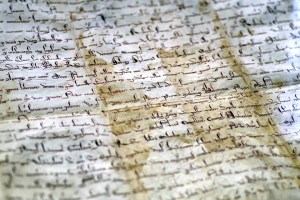
Of the literary works of classical antiquity, only a fraction have survived to the present day.  What fraction this is, we do not know; one estimate places it at one-fourth, but the true figure will never be known.  The reader may wonder how it can be that literary masterpieces could have been permitted to fade into obscurity, and then oblivion; but, on further reflection, he will marvel more at the fact that anything at all survived from antiquity than rue the losses we have suffered.  Printing and the mass production of books are relatively new inventions.  For most of history (in Europe at least) books could only be reproduced as fast as a copyist could transcribe them.  Multiplicity was the only insurance against destruction:  the more copies in existence, the better the book’s chance of survival.

Continue reading

The Corrupt Rule Of Walter VI Of Brienne, The “Duke Of Athens”

The citizens of a free republic should always be alert to threats to their liberty.  Such threats may come in a variety of forms; one of the most dangerous is that posed by a fraud or con artist who appears in the guise of a “people’s champion.”  Skilled at manipulation and demagoguery, such men know how to take the measure of a crowd, or the tenor of the times; they know how to cast their voices so as to appear sympathetic to the legitimate aspirations of their people; and they are practiced at dangling before their gullible audiences the enticements that could be theirs, if only they agree to throw in their lot with him.

Continue reading

The Travels Of John Bell In Persia and China

John Bell was born in 1690 in Antermony, Scotland.  He seems to have decided at an early age to study medicine, but was lured into the world of adventure and travel by hearing stories of Peter the Great of Russia, who was a famous figure in Europe in the early eighteenth century.  He resolved to visit Russia for himself, and set out to St. Petersburg in July 1714.  The czar was preparing a delegation under the command of Aremy Petrovich Valenskyto travel to Persia; and Bell, with his medical background, volunteered to join the party as an attendant.

Continue reading

The Recruit In The Soviet Army

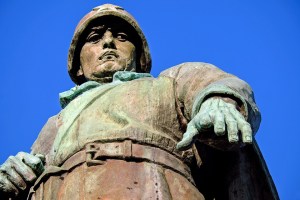
In 1982 a former Soviet officer using the pen name Viktor Suvorov published a book entitled Inside the Soviet Army.  The book discussed the doctrines, tactics, and organization of the Soviet Army.  Reading it today feels like opening a time capsule; we even begin to feel in its pages a trace of nostalgia for the old empire.  The author includes a section on the lot of the common soldier, describing in detail how he was called up, what he had to do, and what his training was like.  These details we will summarize here.

Continue reading

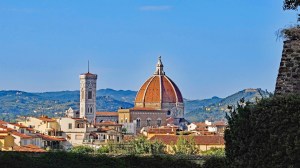
Giano Della Bella Confronts The Nobility And Institutes Reforms

The city-state of Florence in the late 13th century was suffering from an imbalance of political and economic power.  In its hands, the nobility had concentrated vast powers to the exclusion of the common citizens, who were either ignored or deliberately disenfranchised.  Political leaders functioned as the hand-puppets of powerful families–the medieval equivalent of the modern corporate conglomerate or “special interest” group–who pulled the strings from behind the scenes.  Demagogues, ever-ready to prey on the innocence or gullibility of the masses, promised what they never intended to deliver; and when they could not deliver, contented themselves with distracting the populace with frights, scares, amusements, or foreign military adventures.

Continue reading

Even Trivial Incidents Can Spark Disaster When Wise Leadership Is Absent

The astute observer of affairs will keep his finger on the pulse of unfolding events.  He will make his observations, draw his own conclusions, and adjust his behavior accordingly.  It is of no use to pretend that something is not what it clearly is; to live in denial is to live with a suspended sentence hovering over one’s head.  For when the conditions are right for a fire, any spark can be the cause of a conflagration.

Continue reading

Military Adventurism Brings Disaster To The Reckless

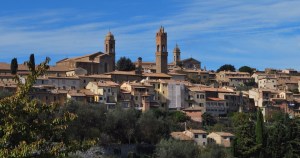
In the year 1260, Tuscany was engulfed in war.  The cities of Florence and Siena were engaged in mutual hostilities.  About twenty-five miles from Siena was located the small town of Montalcino, which happened to be a friend and ally of Florence.  The Sienese hoped that by staging an attack on Montalcino they might be able to compel the Florentines to send an expedition for its relief–an expedition that, they hoped, they could lure into a trap.  To this end, the Sienese government publicly announced their intention to move against Montalcino, and watched to see what the Florentine response would be.

Continue reading

The Fall Of Singapore: The Price Of Inept Leadership

It is a pleasant thing to recall our victories.  Far less pleasant is to be reminded of our defeats.  And yet there is something sublime in the recounting of a disaster; provided, of course, one does not have to be on the spot at the time of its unfolding.  Catastrophes provide more fertile material for instruction than do successes; and the conscientious historian should make a strenuous effort to discover why they unfolded as they did.

Continue reading

Case Studies In Conflict: Richard Overy’s “War: A History In 100 Battles”

We hear a lot of talk about “new generations” of warfare.  Everything is supposed to be new, different, and immutably changed from previous eras of conflict.  Some people have even taken to numbering what they see as historical phases of warfare.  First generation, second generation, third generation, etc.  While there is some merit to this classification system, I think its disadvantages outweigh its advantages.  Such neat categorizations tempt us into believing that things are somehow different now than they have been in the past.

Continue reading