Revealing Anecdotes On The Character Of Abraham Lincoln

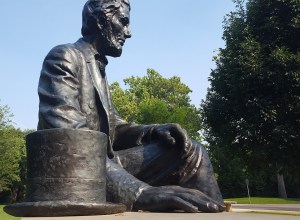
We have earlier stated that anecdotes often reveal more about a man’s thinking and character than might a long recounting of his deeds.  About Abraham Lincoln many stories have been told, some no doubt apocryphal, others not.  I will present here a few true anecdotes that most readers are not likely to be familiar with; they shed revelatory light on Lincoln’s character, and how his leadership gifts were powerful in their own understated way.

Continue reading

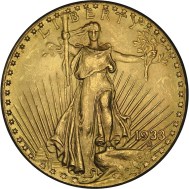
Theodore Roosevelt Reforms The Coinage

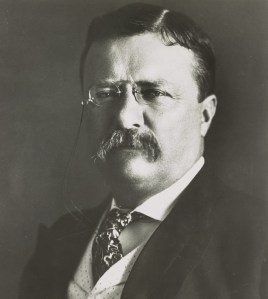
Theodore Roosevelt was not just a president, he was a dynamo.  He initiated anti-trust legislation to break up the plutocratic monopolies that threatened the nation’s economic life; he set aside vast tracts of western lands as national parks to protect the nation’s natural heritage against plunder by rapacious business interests; he advocated a muscular foreign policy that included direct intervention to build a canal in Panama; he promoted a new concept of nationalism; and he took steps to reform exploitative labor laws.  He was no less energetic in his private life.  Throwing himself into the thick of the action, he personally led a unit in the Spanish-American War, hunted big game in Africa, boxed, wrestled, hiked, and nearly killed himself in an incredible journey of exploration in Brazil.  There never was–and never will be again–anyone like him.  He is a man I admire deeply.

Continue reading

Some Humorous Epitaphs

Many forget that we should learn to be wise enough to laugh at the world and ourselves.  Without laughter–the universal tonic for all melancholic maladies–it becomes ever easier to take ourselves too seriously, and to retreat into comfortable recesses of our own minds that promise nothing but stagnation and sterility.  This may be the unconscious message of the humorous epitaph:  a warning to the living that our time here is not unlimited, and that unless we appreciate the idea of memento mori, we are living in delusion.  Few things are so grim that we cannot make light of them somehow.

Continue reading

Edgar Allan Poe’s Sinister Inspiration For “The Cask Of Amontillado”

Most readers will be familiar with Edgar Allan Poe’s macabre tale The Cask of Amontillado.  It is a dark tale of revenge, in which one man deliberately intoxicates a hated enemy and then walls him up alive in a crypt.  Like most writers, Poe took his inspiration from his life experiences, and then mixed those with the creative power of his imagination.  Was The Cask of Amontillado based on an actual incident?  The answer appears to be yes, at least in part.

Continue reading

The Importance Of Theodore Roosevelt’s “New Nationalism” Speech

This past weekend, I visited the John Brown cabin and museum in Osawatomie, Kansas.  This historic former residence of the abolitionist–a key figure in American Civil War history–is now a state park.  What I had not known was that the park was dedicated in 1910 by none other than Theodore Roosevelt, a man who is a personal icon of mine and certainly one of the greatest presidents in US history.

Continue reading

The Plague Of Justinian

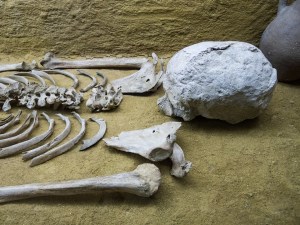
During the reign of the eastern Roman emperor Justinian, the Mediterranean world was hit by a pandemic whose virulence was exceeded only by the outbreak of the Black Plague in western Europe many centuries later.  The pandemic–commonly known today as the Plague of Justinian–only lasted from A.D. 541 to 542, but there were residual aftershocks of the disease that occurred periodically for two centuries thereafter.  It is important to history not only for its extremely high death toll, but also for the political and economic changes that followed in its wake.

Continue reading

The Search For The Real Anwar Sadat

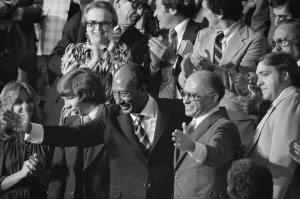
Immediately after he was assassinated in 1981, Egyptian president Anwar Sadat was canonized by the Western media.  He was portrayed as a brave crusader for peace who had taken bold steps to overcome his people’s alleged resistance to resolving the Arab-Israeli conflict.  By single-handedly flying to the Israeli Knesset and embracing Menachem Begin, he had broken down years of psychological barriers and secured his place in history as a statesman of unblemished stature.  Sadat, we have been told, was a man “ahead of his time” whose bold vision was overcome by the fanaticism of the “extremists” who cut him down in his prime.

Continue reading

How Al Fadl Al-Barmaki Learned Bluntness And Generosity

Al Fadl Ibn Yahya al-Barmaki (A.D. 766—808) was a government official who served the most famous of all the Abbasid caliphs, the great but mercurial Harun al-Rashid.  Besides serving in several administrative posts (such as governor of Khurasan), he was also trusted enough to tutor Harun’s young son and heir al-Amin.  Although he later fell out of favor with the caliph, many stories are told of his generosity and kindness.

Continue reading

The Dangers Arising From One’s Subordinates: The Case Of Eumenes

No matter how much ability a commander may have, his purposes will ultimately come to nothing if he is surrounded by discontented or disloyal associates.  It was for this reason that, as the historian Sallust relates, the Roman general Metellus decided to send his disloyal subordinate Marius back to Rome.  A further example of this is provided by the career of the Greek general Eumenes of Cardia (362–316 B.C.).

Continue reading

The Great New York City Blackout Of 1977

I saw a program the other day about an event I previously had known little about:  the great New York blackout of 1977.  Something about the story left me with a distinct feeling of unease.  I don’t imagine many readers here are familiar with it, either.  Let me describe some of the details.

Continue reading