Solomon Outwits The Queen Of Sheba

The following tale is related in a forgotten nineteenth-century volume on the literature of the ancient world.  Its ultimate source is the Talmud (literally, “learning”), that immense compendium of Judaic civil and religious law, garnished with the diligent commentaries of hundreds of learned men.  To the foreigner unfamiliar with its mysteries, it appears to be a vast encyclopedia on every conceivable subject, including the minutiae of social life, work, family, and leisure.  Included also are fables, stories, allegories, proverbs, even jokes; the overall impression given is that of a distillation of cultural traditions and thought that spans many centuries.  The Talmud itself contains two parts:  the Mishna (the older text), and the Gemara, which is a commentary on the Mishna.

Continue reading

The Genius Of The Iliad

About a year and a half ago, I listened to an audio book translation of the Iliad.  I like listening to audio books in my car as I drive around during the day; I can control the content of what I hear, and can avoid listening to the news.  It had been a long time since I had had any extended exposure to the poem, and was wondering if it might mean more to me than it did many years ago.  The full appreciation of works of literature, we all know, is often time-specific.  At one point in a man’s life, a book may seem like a tiresome bore; then, with a refreshing interval of years, the same work can hit you like a bolt of lightning, activating previously dormant or attenuated perceptions.

Continue reading

The Bricklayer Of Granada: A Tale Of The Alhambra

I was lucky enough today to find an old  copy of Washington Irving’s Tales of the Alhambra; the volume is lavishly illustrated and was actually published in Granada in the late 1940s.  The following tale is found in this Andalusian collection; it reminds us of the influence of Fortune in the lives of mortals, a theme that we have  explored frequently in these pages.

Continue reading

The Syrian Lightning: The Fleeting Pleasures Of Imad Al-Din Al-Isfahani

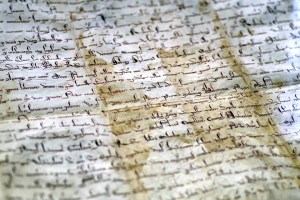
The Persian scholar and poet Imad al-Din al-Isfahani (عماد الدين الأصفهاني) was an important figure in medieval Arabic literature.  He was born in Isfahan in Persia in 1125 and studied in Baghdad.  We are told that he studied law at the Nizamiya college there, but he preferred literature and adventure.  His proficiency in letters brought him to the attention of powerful political figures, who were able to secure him government posts in Basra and Wasit.

Continue reading

Case Studies In Conflict: Richard Overy’s “War: A History In 100 Battles”

We hear a lot of talk about “new generations” of warfare.  Everything is supposed to be new, different, and immutably changed from previous eras of conflict.  Some people have even taken to numbering what they see as historical phases of warfare.  First generation, second generation, third generation, etc.  While there is some merit to this classification system, I think its disadvantages outweigh its advantages.  Such neat categorizations tempt us into believing that things are somehow different now than they have been in the past.

Continue reading

The Limits Of Predictive Power: Graham Allison’s “Destined For War”

The central thesis of Dr. Graham Allison’s Destined for War:  Can America and China Escape Thucydides’s Trap? is relatively straightforward to state.  When a rising power (China) is confronted by a relatively declining power (the United States), the declining one often resorts to making war on its enemy.  Allison’s term for this phenomenon is “Thucydides’s Trap,” a phrase taken from the following observation by the great Greek historian: Continue reading

Removing The Veils Of False Modesty: The Life-Affirming Philosophy Of Al-Salami

The name Muhammad al-Salami (محمد السلامي) (A.D. 948–1003) is nearly unknown in the West, but occupies a prominent position in medieval Arabic poetry.  The genius of his metaphors, the richness of his turns of phrase, and the elegance of his diction can be felt even through the fog of translation; and we will do our best to pay him homage here.  The anthologist Abu Mansur al-Tha’alibi called him:

Continue reading

The Wisdom Of Ibn Zafar al-Siqilli And Abu Bakr al-Khowarizmi

The writer and scholar Ibn Zafar al-Siqilli lived from 1104 to about 1170.  The cognomen al-Siqilli (“the Sicilian”) was given to him because he was born on the island of Sicily.  There are a number of important works credited to his name, the most famous of which is a book of ethical and political philosophy called Consolation for the Master Who Suffers From the Hatred of His Servants (the brilliant Arabic title, written in the rhyming prose typical of Arabic literature, is سلوان المطاع في عدوان الأتباع‎).  In English, this work is often referred to simply as the Sulwan al-Mutaa’.  The book was composed in 1159, during the time of the second Norman king of Sicily, William the Bad.  Sicily (Sakalliya) had been an Arab emirate from A.D. 831 to 1091.

Continue reading

Sometimes One Must Speak In An Indirect Way

There are times when one’s communications must be protected from the unwelcome attentions of third parties.  The richness of a language’s vocabulary, and its embedded metaphors and cultural allusions, are powerful assistants to this end.  I was recently reminded of this when reading an anecdote related by that most colorful of biographers, Ibn Khallikan.  We have related many of his stories and wise sayings here in past articles.  The story I am about to relate here is linguistically oriented; it can tell us much about the power of speech in the hands of those who can deliver it with nuanced subtlety.  It will be of interest to any enthusiast of language, philology, and culture.

Continue reading

Adrastia: The Goddess Who Punishes Hubris And Arrogance

We have observed that one of the themes of ancient literature is the concept of Fate or Fortune.  We find it first expressed in the plays and heroic poems of the Greeks; the idea then seeped into the writing of history and biography.  Closely associated with this concept is the idea of divine retribution for offending the gods.  Those who showed contempt for divine or human law would be humbled by the harsh blows of Fate:  no man could expect to thumb his nose at the laws of the universe and get away with it.

Continue reading