
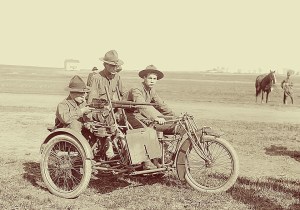
Today we take for granted the fact that infantry units are equipped with all sorts of portable firepower. Squads carrying light machine-guns are accepted as natural and part of the battlefield equation. But it was not always so.
Today we take for granted the fact that infantry units are equipped with all sorts of portable firepower. Squads carrying light machine-guns are accepted as natural and part of the battlefield equation. But it was not always so.


We often get the impression that the world is in chaos, and that the proverbial sky is falling down. Yet our perceptions are distorted by factors that we often fail to appreciate. We discuss some of them.
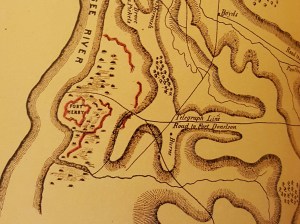
War brought out the bulldog in U.S. Grant. A decent man but a failure in civilian life, he was good at one thing, and one thing only: war. His method was to hone in on his enemy, get in close, and figuratively grab him by the belt to keep him close. So positioned, he would then hammer away at his opponent relentlessly. He may not have had the panache and elan of some of his more exalted (or overrated) contemporaries, but he did have a quick mind that could grasp the military essentials of situations in ways that very few others could.

I was recently corresponding with a reader on the topic of finding inspiration for creative activity. The conversation veered into the subject of dreams. In what way, we wondered, do dreams inspire or retard development of the creative impulse? And what is the source of dreams? The subject is one of general interest, and seems to come up over and over again.

There is a scene in the 1987 film Wall Street when the Charlie Sheen character (Bud Fox) is about to meet the formidable Gordon Gekko (Michael Douglas). He says to himself, “Well, life all comes down to a few moments. This is one of them.”

A reader has a high-powered job and is able to function effectively in what he does.
But he’s concerned that he may not be as decisive as he needs to be in his personal life.
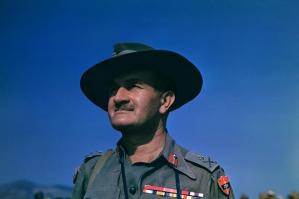

At the conclusion of his memoirs, General William Slim, the British commander in the Second World War’s Burmese and India theaters, had some pungent observations on the conduct of the war and its ultimate outcome. Originally defeated in the field, he came back to hammer the Japanese decisively in some of the most remarkable ground combat of the entire Pacific War.

The Roman engineer and architect Marcus Vitruvius Pollio (c. 75 B.C.–c. 15 A.D.) wrote an extensive and invaluable work (De Architectura) that describes all types of topics in construction and building. We will here describe his interesting (and somewhat amusing) method of locating water springs. This information can be found in book VIII, ch. 1 of his treatise.
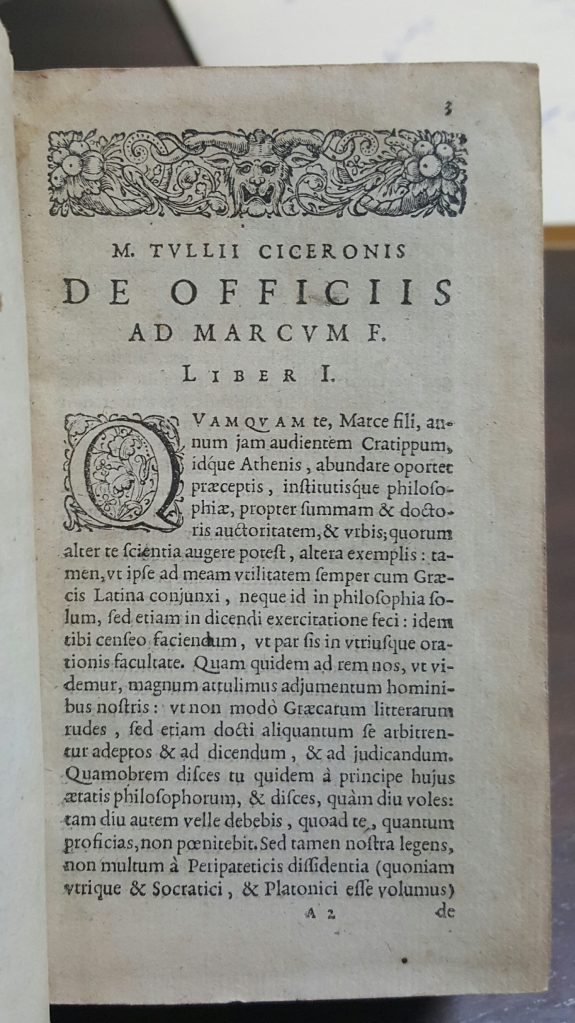

 Quintus Curtius
You must be logged in to post a comment.