
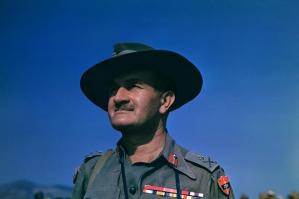
Readers may know that I’ve written two previous articles here on General William Slim’s Burma campaign during the Second World War. His memoirs continue to provide me with gems of advice on morale, conduct, and taking action.
Readers may know that I’ve written two previous articles here on General William Slim’s Burma campaign during the Second World War. His memoirs continue to provide me with gems of advice on morale, conduct, and taking action.

On Duties deals with a very large number of topics. One of the most important unifying threads of the book is the idea of “greatness of soul.” What is it? Why is it relevant?

In 1942, military forces of the Empire of Japan entered Burma and expelled the British from the country. It was one of many disasters of the war’s early years. At the time, few believed that Allied forces in Burma would be able to reconstitute themselves.

We deal with two questions in this podcast. One question involves a reader’s concerns about procrastination. Another involves a question about a passage from my book On Duties.

If someone were to select the most forgotten and God-forsaken theater of the Second World War, he would unhesitatingly point to the Burmese theater, assuming he even knew it existed. In this obscure country, hard-pressed and dreadfully neglected British forces fought a tenacious campaign against the Japanese that deserves to be far better known. The general who led the fighting there must rank as one of the least appreciated commanders of the war: William Slim.
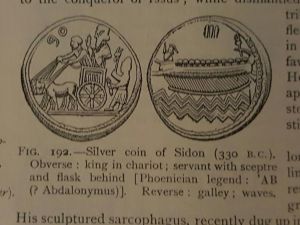
Alexander the Great knew that if he were to embark on his great project, the conquest of the Persian Empire, he would first need to secure his flanks near the Mediterranean. This meant the bringing of Syria and Egypt under his control; and to this end he moved south after subduing Asia Minor.

Finland’s armaments industry quietly produced one of the very best submachine guns of the Second World War. This weapon was the KP/-31 (also known as the Suomi m/1931). The design is not well-known now, but in its day it was the weapon that everyone else wanted.

Little Portugal, located at the western-most tip of Europe, was not endowed by fortune with natural resources (save for its Atlantic proximity). Yet it did have the daring, tenacity, and vision of great men, and that proved to be sufficient to propel it to world prominence.

Like most of the belligerents of World War II, Japan found itself faced with an explosive demand for weapons of all sorts in the first few years of the 1940s. Existing supplies of small arms were simply not adequate, and Japan had to improvise as best it could.

 Quintus Curtius
You must be logged in to post a comment.