


The central thesis of Dr. Graham Allison’s Destined for War: Can America and China Escape Thucydides’s Trap? is relatively straightforward to state. When a rising power (China) is confronted by a relatively declining power (the United States), the declining one often resorts to making war on its enemy. Allison’s term for this phenomenon is “Thucydides’s Trap,” a phrase taken from the following observation by the great Greek historian: Continue reading
A Jaguar Hunt On The Taquary, And The Precepts Of Pythagoras

Every man is a jumble of paradoxes. The same man can harbor sentiments of the noblest, most generous, and elevated type; and at the same time, he can retain the capability to deliver lethal blows for necessity or sport. It is almost as if the altruist or artist needs a bit of tempering with a dash of Tamerlane. Consider Theodore Roosevelt, the president generally considered the primary voice of conservationism in the twentieth century.
Russian Explorer Adam Johann Von Kruzenstern Circumnavigates The Globe
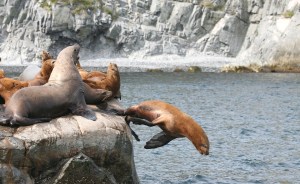
In these pages we have given the great explorers of Britain, Germany, Australia, the United States, and some other nations their due. We now discuss the life and career of Russia’s most accomplished nineteenth century explorer and adventurer, the Baron Ivan Fyodorovich Kruzenshtern (Иван Фёдорович Крузенштерн). Like many of the names celebrated here, his is virtually unknown in the West today, a fact that may intimate just how far we have departed from the adventurous, daring spirit of those who came before us.
The Hand Of Ibn Muqla: Do Not Envy Those Who Wield Power

There was once a government official and literary figure of the Abbasid caliphate in Baghdad named Abu Ali Muhammad ibn Ali ibn Muqla al-Shiraz. He is known to history as Ibn Muqla, and he lived from about A.D. 885 to 940. According to his biographer Ibn Khallikan, Ibn Muqla began his government service career as a tax collector in the city of Fars.
Starting Out With The Roosevelt-Rondon Expedition In Brazil
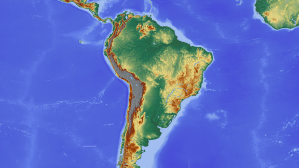
The naturalist Leo E. Miller published an engaging record of his South American adventures in 1918 entitled In the Wilds of South America. We have previously related one of his adventures in Colombia, his quest for the elusive “cock of the rock” whose nesting places were perched over inaccessible, cavernous waterfalls. While he was in British Guiana, he received word that ex-president Theodore Roosevelt had received permission from the Brazilian authorities to explore the ominously-named Rio da Duvida in the Amazon; he would be guided in this effort by Brazil’s most famous living explorer, the indestructible Candido Rondon.
The Meaning Of Self-Denial: The Herdsman And The Monk

One of the primary virtues that Ibn Zafar believes a good leader should possess is the virtue of self-denial. In Arabic this word is زهد, or “renunciation” of worldly things. What he means by this is that no leader–or any other person, for that matter–can ever become truly great until he learns how to subordinate his desires in the face of higher purposes.
“On Duties” Is Now Available As An Audio Book


When Quintus Curtius’s translation of On Duties was first published in 2016, it achieved something few would have thought possible.
The Roman Ceremony Of Deification

We read about how certain Roman emperors were “deified” after their deaths. Unfortunately it is not easy to learn the details about how this process was actually undertaken. I was fortunate to come across a rare description of how the deification (deificatio) ceremony took place in the humanist Biondo Flavio’s Roma Triumphans (Rome in Triumph). This Renaissance Latin work, published in 1459, contains a wealth of information on Roman religion and ceremonies, compiled from a painstaking review of the Latin sources available to him.
Hunting For A Rare Bird In The Colombian Jungle
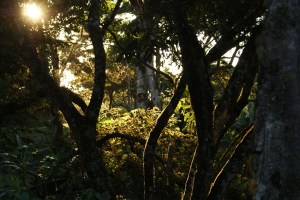
The naturalist Leo E. Miller was a participant in the famed Roosevelt-Rondon Expedition of 1913–1914 that explored Brazil’s unknown Rio da Duvida. He also had a distinguished career exploring the wilds of many different South American countries and cataloging various species of animal life; he would later record these experiences with the publication in 1918 of In the Wilds of South America.
The Tale Of The Two Foxes

Ibn Zafar’s well of wisdom provides us with another fable to ponder. How the reader relates it to his or her own life experience, or to the world’s current events, will be up to him or her to decide. While the narrative below is my own, I have also included some of Ibn Zafar’s quotes (as translated by J. Kechichian and R. Dekmejian–with minor variations by me–in their excellent edition of the Sulwan Al-Muta’) as they appear at relevant points in the story.
 Quintus Curtius
You must be logged in to post a comment.