
Sunday Film Roundup (4/30/2017)

Escobar:  Paradise Lost (2014)

Director:  Andrea DiStefano

A mildly absorbing crime melodrama about an innocent Canadian guy named Nick who marries Pablo Escobar’s niece and gets sucked into the family business.  A theme like this has great potential if handled the right way, but it turns out that the director prefers formula to serious drama.  Irritatingly fresh-faced young Canadian (Josh Hutcherson) is hanging around on the beaches of Colombia in the early 1990s with his brother, doing not much of anything but surfing and looking like a dipshit gringo target for extortion.

Continue reading

The Curious Customs Of The Franks: How One Arab Knight Saw The Crusaders

We have recently discussed a story from the life of the learned Ali Ibn Munqidh.  His grandson Usama Ibn Munqidh (1095–1188) was a very famous poet, warrior and literary figure in medieval Islam and his memoirs are an almost unique portal of insight on how one culture saw the other.  The scholar Philip Hitti describes Usama this way:

Continue reading

Language Mastery As A Secret Code: How Sadid Al-Mulk Was Saved From Danger

Mastery of language is indeed a powerful tool.  This is especially true when the speakers hail from the same cultural background, and can make use of all those subtleties that would be lost on the non-native. This point is brilliantly illustrated by an anecdote told about Ali Ibn Munqidh, who became emir of the district of Shaizar in northern Syria in 1081.  His surname was Sadid al-Mulk, and this is how I will refer to him in this article.  We will see that words effectively deployed can literally save lives.  This story is adapted from Ibn Khallikan’s short biographical sketch of Sadid al-Mulk.

Continue reading

Sunday Movie Roundup (4/23/2017)

Oklahoma City (2017)

Director:  Barak Goodman

The 1990s seem to have an air of unreality about them now.  Looking back, they seem like a time of missed opportunities:  failure to reform the financial system, failure to improve the infrastructure, failure to understand the consequences of unrelenting interference in Middle Eastern affairs.  The drama of 9/11–and everything that followed from it–superseded all that came before it.  It blocked out from our collective memory the threat of domestic radicalism and replaced it the the overarching National Security State where everything was watched and everything was monitored.

Continue reading

Nature Or Nurture?

In this podcast, a reader has a question about nature and nurture.  Which one, he wonders, has the most influence in forming our identities?  The answer is complicated, of course.  But some general points can be stated.  We close with a reading of the Epilogue to my book Thirty-Seven.

Continue reading

Sunday Movie Roundup (4/16/2017)

Disorder (2015)

Director:  Alice Winocour

This is one of those great, slow-burning movies that slipped under the radar (at least here in the United States).  It’s part character study and part suspense drama, but the end result is a very satisfying cinematic experience.  Lead actor Matthias Schoenaerts is a great actor whom I’ve admired for a long time; he deserves to be a big star and I hope he continues on the trajectory he’s on.  To get an idea of just how good he can be, you should check out the great horror film Left Bank (2008) and the drama Bullhead (2011).

Continue reading

The Hollow Men (Podcast)

A reader from Italy writes to say he is frustrated and angry with the deceit and fraudulence of a certain political figure on the world stage. We explain why it is best to take a detached, philosophical view of such men, since experience shows that they eventually bring about their own ruin. What matters is to be a man of substance, not a man of straw, a hollow man.  We close by reading T.S. Eliot’s immortal poem, “The Hollow Men.”

Continue reading

C. Licinius Macer’s Advice To His People

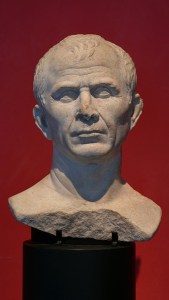
I recently came across a passage from a speech appearing in Sallust’s Historiae (III.48).  The oration is put in the mouth of the popular tribune Caius Licinius Macer, who was battling the influence of the Roman patricians.  It purportedly was delivered in 73 B.C.; Macer’s intention was to rouse the common people to action against the venality and greed of the elites who controlled Rome and who refused to listen to the will of the people.  A continuous theme in the era of the late republic was the constant attempt by the elites to prevent economic reforms that might benefit the state as a whole, rather than just them.  We this same motif, of course, played out again in our own day.

Continue reading

Resources Can Come In Unexpected Ways: The Bounty Of Imad al-Dawla

Imad ad-Dawla Ibn Buwaih (A.D. 891-949) was the founder of the Buyid Dynasty in medieval Persia.  His name in Persian is given as Ali Ibn Buya, but he is more commonly known as Imad al-Dawla (“pillar of the state”).  Ibn Khallikan’s short sketch of his life contains the story related here; this story in turn is taken from the historian al-Mamuni.  It reminds us of the fact that, sometimes in life, a bit of good fortune can provide us with all we need.  The world, somehow, has its own way of providing for us; and if we persist long enough, some problems eventually solve themselves.

Continue reading

François-René de Chateaubriand: The Apostle Of Romanticism

The nineteenth century literary, artistic, and intellectual movement we today call “romanticism” is not easily defined, but is generally acknowledged to embrace the following sentiments:  an idealized view of the past, the emphasis of feeling and sentiment over rationality, a preference for exotic locales and peoples, and the primacy of emotion.  One of the founders—perhaps the founder—of romanticism in French literature was François-René de Chateaubriand, whose memoirs I have just finished.  He titled his book Memories From Beyond The Tomb, since they were specifically intended to be published after his death.

Continue reading