
The Architect Of The Imagination

Man was born for action.  Even if he does not know this–especially if he does not know this–his physical being revolts from long intermissions of supine inertia, and craves the physical release of the violent contest.  This is part of his blood-spirit, his irreconcilable inner Being.  He can try to deny this, and he can try to avoid the consequences of this reality; but in the end the same simple truth returns to stare him in the face.  Even the corpulent sloth will light up like a pinball machine when asked to discuss topics that are of intense interest to him; he will leap out his chair, gesticulate wildly, and hold forth on that topic to which all his energies are directed.  Within him is that fundamental desire for action, and this no amount of subcutaneous body fat can suppress.

Continue reading

The Bricklayer Of Granada: A Tale Of The Alhambra

I was lucky enough today to find an old  copy of Washington Irving’s Tales of the Alhambra; the volume is lavishly illustrated and was actually published in Granada in the late 1940s.  The following tale is found in this Andalusian collection; it reminds us of the influence of Fortune in the lives of mortals, a theme that we have  explored frequently in these pages.

Continue reading

The Recruit In The Soviet Army

In 1982 a former Soviet officer using the pen name Viktor Suvorov published a book entitled Inside the Soviet Army.  The book discussed the doctrines, tactics, and organization of the Soviet Army.  Reading it today feels like opening a time capsule; we even begin to feel in its pages a trace of nostalgia for the old empire.  The author includes a section on the lot of the common soldier, describing in detail how he was called up, what he had to do, and what his training was like.  These details we will summarize here.

Continue reading

The Syrian Lightning: The Fleeting Pleasures Of Imad Al-Din Al-Isfahani

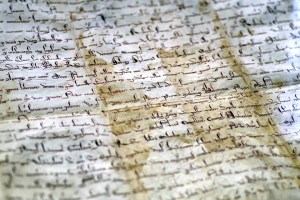
The Persian scholar and poet Imad al-Din al-Isfahani (عماد الدين الأصفهاني) was an important figure in medieval Arabic literature.  He was born in Isfahan in Persia in 1125 and studied in Baghdad.  We are told that he studied law at the Nizamiya college there, but he preferred literature and adventure.  His proficiency in letters brought him to the attention of powerful political figures, who were able to secure him government posts in Basra and Wasit.

Continue reading

Sallust Is Now Available As An Engaging Audio Book

I am pleased to announce that my translation of Sallust’s Conspiracy of Catiline and The War of Jugurtha is now available as an audio book on Amazon and iTunes (click on the image above).

The book is engagingly read by narrator Saethon Williams, who captures Sallust’s stirring narrative style.  These great historical works are not only exciting stories in their own right, but function as timely warnings of the dangers of debased character and moral corruption.

Continue reading

The Oppressive Burdens Of The Powerful

Many men are in the habit of seeing only the privileges of the powerful, while failing to take note of the crushing burdens that such men must carry.  Nothing in this world is gifted to us for free; there is a price to be paid for every acquisition, every privilege, and every benefit.  This cost may not be apparent at first; but over time, it will make itself known.

Continue reading

The Journey Through Life, And Out Of Life

When one examines the characters of different civilizations, one begins to notice commonalities of concern.  That is, recurring patterns.  Especially in the most ancient of civilizations.  There is this obsession with capturing the Spirit of Life, mastering its principles, and using that Mastery as a sort of pole-vault—if you will—to leap over the Wall of Life into the realm of the After-Life.  Look at those old Assyrian stone reliefs, showing the bearded kings pollinating their date-plants, which were the staff of life in the ancient Near East.  Look at the pharaoh smiting his enemies with a mace, and enjoying every minute of it.  Mastering life in order to master death, in other words.

Continue reading

Giano Della Bella Confronts The Nobility And Institutes Reforms

The city-state of Florence in the late 13th century was suffering from an imbalance of political and economic power.  In its hands, the nobility had concentrated vast powers to the exclusion of the common citizens, who were either ignored or deliberately disenfranchised.  Political leaders functioned as the hand-puppets of powerful families–the medieval equivalent of the modern corporate conglomerate or “special interest” group–who pulled the strings from behind the scenes.  Demagogues, ever-ready to prey on the innocence or gullibility of the masses, promised what they never intended to deliver; and when they could not deliver, contented themselves with distracting the populace with frights, scares, amusements, or foreign military adventures.

Continue reading

Now Available: The Audio Book Of “Stoic Paradoxes”

The audio book of my translation of Cicero’s Stoic Paradoxes is now available on Amazon, iTunes, and Audible.  You can find it by clicking on the image above.  The audio book is complete and unabridged; it contains the complete texts of Stoic Paradoxes, as well as the Dream of Scipio, along with summaries and commentary.

Continue reading

Rejecting Cynicism And Nihilism, And Embracing An Ennobling Vision

It is the responsibility of every man to keep himself out of the abyss.  Yet he cannot do this job alone; a set of guiding principles must light the way along the dark and confusing pathways of the forest.  In some cases, he must be hectored, badgered, cajoled, and—in the end—forced to keep along the path; in other cases, he need only be guided by gentle instruction in the illuminating lights of philosophical inquiry.  Every situation is different, and calls for different remedies.

Continue reading