How Venice Solved Its Political Corruption Problems

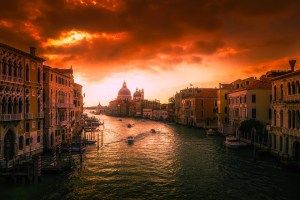
Corruption is like a virus, or a noxious weed.  If you turn your back on it for even an instant, you will find it has found creative ways to grow and spread.  Like any human activity, it can never be completely eradicated; but it can certainly be tamed and curbed, and prevented from interfering with the purposes of government.  But it takes leadership and determination, and a willingness to take certain risks.  And if anyone thinks that one man can make no difference in such matters, he need only study the example of Antonio Tron.


Continue reading

The Tripod’s Prophecy And The Death Of The Emperor Valens

On the subject of prophecies, men are accustomed to take differing viewpoints.  Some say that the predictions of oracles and diviners mean nothing at all, and should be counted as so much nonsense:  any “true” predictions they make are solely the result of blind coincidence.  Others say that they have independent value as evidence of our imaginative capacity; and that prophecies are, more or less, records of our psychological projections and subconscious desires.  Still others believe that they should be seen more as predictions of what might happen, rather than statements of what will happen.  As in so many other things, it will be the responsibility of each reader to decide for himself.  But it seems to me that we should at least acknowledge that such practices have been around for millennia, and that they are found across the globe within nearly every society and culture.

Continue reading

The Travels Of William Of Rubruck In Central Asia And Mongolia

Long are the roads walked by the lonely, intrepid traveler.  Not for him are the well-worn pathways of the conventional sightseer; for he is a seeker, and seekers by definition prefer the untrod vistas of the globe.  He will deliberately chose the unknown road, the trails less walked, the scenes less scrutinized, and the more risky propositions:  and he does this because he must, because some devilish inner compulsion drives him forward, like a demon nipping at his heels.

Continue reading

Ibn Zafar’s Ideas On Revolutions

A careful reading of Ibn Zafar al-Siqilli’s (“The Sicilian”) masterpiece of political philosophy Sulwan al-Muta’ (سلوان المطاع في عدوان الأتباع, or The Consolation of the Ruler in Dealing with the Hostility of His Subjects) shows an emergent theory of political revolutions.  In a previous article here we have discussed the fundamentals of the subtle Sicilian’s treatise.  We will now give the details of his ideas on how revolutions are born and take hold in a nation.

Continue reading

“Don’t Thank Me, Boy” (Podcast)

A reader has a question about the direction he should take in life. His father died recently, and he is feeling the effects of delayed shock and repressed anger. He feels like he has been denied a positive role model.

I offer some thoughts and suggestions, using an anecdote and then some commentary.

Continue reading

The Combat Of Sonnenberg And Sanseverino

It is right for us to celebrate great deeds of valor of ages past.  By doing so we are inspired to achievement in our own affairs, and become connected to that electric current of masculine virtue that winds through the entire landscape of civilized, productive effort on this earth.  It is good for us to be reminded of the feats of our predecessors; for if they fought, struggled, and overcame, then we know we have the ability to do the same.  Let us now turn our attention to Italy during the waning days of the Renaissance.

Continue reading

Bad Character Will Inevitably Bring Consequences

The historian Ammianus, in describing the brief career of the usurper Procopius (326–366 A.D.), comments on the moral corruption inevitably caused by the abuse of power and privilege.  It will have a familiar ring to those accustomed to the practices of contemporary politics:

Continue reading

The Religion Of Mithras And Its Mysteries

Some months ago The Guardian published an article about the reopening of a reconstructed mithraeum (Temple of Mithras) in London.  I had known about the cult of Mithras for some time; the Roman emperor Julian, whom I have written about, was a devoted follower of the religion.  Yet it remains almost totally unknown to the public, even to students of classical literature and ancient history.  It will be useful to review its origins, doctrines, and the reasons for its extinction.

Continue reading

The Porfirio Effect (Podcast)

Coconut debris, machetes, game meats, natural oils, custom suits, and the whole 9 yards. This authorized podcast goes into more details about the themes talked about in my last podcast, “The Surrealistic World of Michael Porfirio.” We delve deeper to extract the timeless lessons for the modern man, and explain the nuances.

The rest is up to you.

Continue reading

The Travels Of Constantin De Volney

Every traveler has a different tale, but the travel itself has the same purpose:  to push through boundaries, overcome obstacles, and to seek out what is not known.  This impulse in man will never change.  And it is right that this is so, for without it the progress of the human race might come to a shuddering halt.  In reviewing the lives and careers of great travelers, we feel almost as if they were animated by some unconscious impulse, some unfathomable compulsion, to thrust out the boundaries of their knowledge.  Every man must determine for himself his own outer limit.  The demarcation is intense, and personal; and it cannot be any other way.

Continue reading