

In this podcast we discuss three movies: “Good People” (2014), “Smoke and Mirrors” (El Hombre de las Mil Caras)(2016), and the truly unsettling “The Killing of a Sacred Deer” (2017).
In this podcast we discuss three movies: “Good People” (2014), “Smoke and Mirrors” (El Hombre de las Mil Caras)(2016), and the truly unsettling “The Killing of a Sacred Deer” (2017).

The name Heinrich Barth is almost unknown today. But he is without doubt the greatest explorer that Germany produced in the nineteenth century, and probably even in the twentieth. Not only did he penetrate completely unknown regions of Africa, but he kept a meticulous record of his travels, to such an extent that his published works are still useful to scholars today. Even in his own day he did not receive the recognition that he deserved; central Africa was then so unknown even to educated Europeans that a balanced appraisal of his work was not possible at the time. Yet a review of his life and travels leaves little doubt that he must be ranked among the bravest and most resourceful of all explorers of the African continent.

Geoffrey of Villehardouin (1160–1212?) is known as one of the first important names in French historiography. Unlike his predecessors, he was not a dry chronicler; he was a historian who participated directly in the events he described, and was reasonably objective by the standards of his day. His book, The Conquest of Constantinople, is a moving and pious account of his involvement in the Fourth Crusade. He was not born a nobleman; he earned his spurs as a knight through loyal service as a soldier and organizer of military campaigns. After his withdrawal from public life, he set out to record the great events he had been a part of, much in the same way that Bernal Diaz (one of Hernando Cortes’s soldiers) and Usama Ibn Munqidh (an Arab knight of the Crusades) would do. Great deeds of valor are rightly celebrated in every culture and in every age, because (as Sallust tells us):

When a writer composes his or her memoirs while in prison awaiting execution, we owe it to ourselves to consider what they have to say. It may be a cliché that the prospect of death focuses the memory and concentration, but it is a cliché that is powerfully true. In Chapter 5 of Thirty-Seven, I discussed the fate of Boethius, who wrote his Consolation of Philosophy while languishing in a dungeon (and awaiting execution) for a crime he did not commit. I recently heard of another last testament written during captivity: the poignant memoirs of Jeanne Manon Roland (1754–1793), known to history simply as Madame Roland.
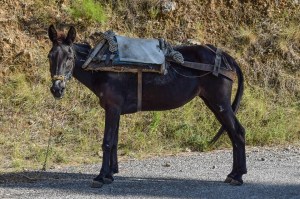
It is a good thing for us to cultivate our aggressive spirit. Life requires participation, and participation demands endurance and adrenaline; and he who enters battle with a spirit of meek submissiveness is likely to get precisely what he asks for. All this is true. Yet the patient endurance of the pack-mule may be just as valuable as the explosive fury of the panther: the former triumphs by being able to endure, while the latter may find itself fatally exhausted once its initial burst of energy is spent. Life more often demands the ability to absorb punishment than the ability to deliver it to others.

In this podcast we provide short reviews of five movies I’ve seen recently:
Hell or High Water (2016)
Life (2017)
Son of a Gun (2014)
Black Snow (Nieve Negra) (2017)
Michael Clayton (2007)
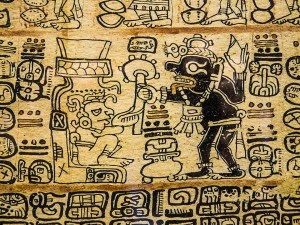
In the modern era we like to think of knowledge as something indelibly fixed and permanent. We take it for granted that it will always be here, like the Great Pyramid, and are apt to overlook the bitter struggles that our ancestors may have endured to acquire such knowledge. Information has not always been as easy to obtain as it is now. As we read about the adventures of scholars of the past, we get the distinct impression that the learned men who came before us had a hardiness and tenacity that is lacking in the modern era. I will let the reader judge for himself.

Witch-hunts and persecutions thrive in environments where certain conditions are met. There must be some driving motivation, such as greed, envy, ideology, or hate; there must be willing accomplices who spread accusations and create new ones; and there must exist some tolerance of the persecution, whether from the leadership at the top or from the affected group at large. When these conditions are met, witch-hunts can seize hold of a group and spread as quickly as a wildfire. They are sustained by fear and hysteria; the affected group is made to feel as if hidden enemies are lurking around every corner and hiding behind every curtain.

The Persian king Shapur II (A.D. 309–379) decided early in his reign to recover by force several of the Roman Empire’s eastern provinces, especially the rich lands of Mesopotamia and Armenia. In the year 359 he focused his attention on capturing the city of Amida; the city was located in the spot currently occupied by Diyarbakir in Turkey. Its extended siege and dramatic fall are recounted in detail by Ammianus Marcellinus, whose account (Res Gestae XVIII.9) forms the primary source for the present article. The historian was personally present during the siege and took part in its defense, and his account of the battle forms one of the most dramatic episodes of his book.
 Quintus Curtius
You must be logged in to post a comment.