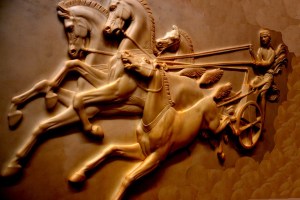
Age Of Spectacle: Chariot Races, The Hippodrome, And The Four Factions

To understand fully the social environment in which the eastern Roman empire operated, we must have some grasp of the unique culture surrounding Constantinople’s Hippodrome in the centuries that followed the disappearance of the Roman empire in the west.  In Byzantium, sport and politics achieved a strange admixture that has no exact historical parallel anywhere else; sport influenced politics, and politics guided sport.  It was a peculiar world, but one that makes sense once we understand the conditions that existed at the time.  We begin with the arena itself.
Continue reading

The Villa Of The Papyri: A Glimpse At A Roman Book Collection

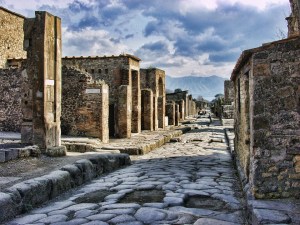
Sometimes an accident of history can preserve records of great value.  As is well-known, Mount Vesuvius in Italy erupted in 79 A.D. entombing the towns of Pompeii and Herculaneum in ash and ejecta.  In the eighteenth century, these sites began to be explored in a random and haphazard manner; one of the villas so discovered turned out to be the residence of a dedicated scholar.

Continue reading

The Wise Sayings Of Al-Muhallab

The Arab military commander Al Muhallab Ibn Abi Sufra (المهلّب بن أبي صفرة الأزدي) was born around A.D. 632, but not much is known of his early life beyond anecdotes.  His biographer Ibn Khallikan tells us on good authority that “His surnames Al-Azdi, Al-Ataki, [and] Al-Basri indicate that he descended from Al-Atik, member of the tribe of Al-Azd, and that he was a native of Basra.”  We are also told that he was distinguished for his generosity and graciousness.  His military prowess was beyond question; he defended the city of Basra so effectively from its enemies that some took to calling the city “The Basra of Al-Muhallab.”

Continue reading

How Were Ancient Books Made And Stored?

There has been surprisingly little information published on how books were made, edited, distributed, and stored in ancient times.  Yet the subject holds real interest for many of us today.  My goal in this short essay will be to summarize how books were made and stored during the Greco-Roman period.  I am confident that readers will quickly appreciate just how much more convenient our access to written information is in comparison to what our remote ancestors had to contend with.

Continue reading

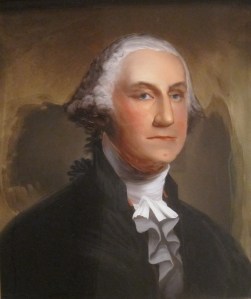
Washington Crosses The Delaware And Attacks

Anyone who thinks the American Revolutionary War was a gentleman’s affair has been seriously misinformed.  We are sometimes given the impression that genteel types in powdered wigs maneuvered this way and that, and at the end of the day, everything was neatly wrapped up as almost a foregone conclusion.  This, however, was not the case, as D.H. Fischer’s Washington’s Crossing makes very clear.  War is war, and there is no way to sugar-coat its effects and costs.

Continue reading

Dr. Johnson Makes An Eloquent Petition For Clemency

It is a noble thing to intercede on behalf of another’s worthy cause.  But the cause should be a worthy one; we must work to manage expectations; and, when every effort has been exerted, we must know when to let matters take their own course.  Advocating on behalf of another in this way could almost be viewed as a form of public service.  One of the law’s fundamental rules is the principle of proportionality:  a punishment should be reasonably proportional to the crime committed.  The reader examining the following anecdote should ask himself whether the punishment was, in fact, proportional to the committed offense.

Continue reading

Legends Related To The Conquest Of Spain

Musa Ibn Nusair (موسى بن نصير) lived from 640 to 716 A.D. and served as the Umayyad governor-general of the province of Afriqiyya (North Africa).  It was he who planned and directed the Arab conquest of the Gothic kingdom of Spain.  The biographer Ibn Khallikan, writing in Baghdad in 1274, sketched the outline of his career and notable deeds.  Ibn Nusair’s full name was Abd al-Rahman Musa Ibn Nusair, and he was noted throughout his life, we are told, “for prudence, generosity, bravery, and piety.”  No army under his command was ever defeated.

Continue reading

Xenophon’s Dream, And The Power Of Character

When a man is under the duress of extreme events, he sometimes finds himself wracked by indecision.  He will mull over various courses of action in his head; he will script out different scenarios in his imagination; and he will ponder his predicament from multiple perspectives.  And yet, when he has finished with these troublesome cogitations, he may find a course of action still eludes him; but at some point, a moment of inspiration will arrive to pierce the gloom, and confer on him the guidance he has desperately been seeking.  When this happens, he must unhesitatingly seize the present hour for action, and proceed with his rendezvous with Fate.

Continue reading

Seeing The Platonic Academy

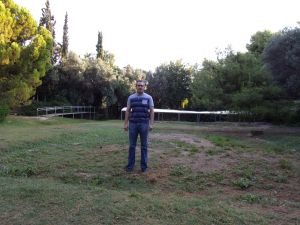
I walked to the ruins of the Platonic Academy in Athens this morning.  Founded by Plato himself around 387 B.C., it persisted through many generations under a variety of scholarchs (i.e., heads).  It finally came to an official end during the reign of the emperor Justinian in 529 A.D., who ordered the closure of all the pagan institutions of higher learning.

Continue reading

Starvation On The High Seas: The Ordeal Of The “Saint Le Jacques”

Perhaps it is well that the modern traveler remains serenely unaware of the extraordinary hardships endured by his itinerant ancestors.  For if he knew what travel in the pre-modern era truly entailed, he would be rightfully consumed by a sense of shame and inadequacy.  His concerns are whether he will have the chicken or the pasta aboard Delta Flight XYZ bound for one city or another; his ancestors, however, were grateful just to get a few moldy biscuits and rum during some miserable transoceanic ordeal.  Perspective is everything, or nearly everything.

Continue reading