The Greatness Of Alp Arslan

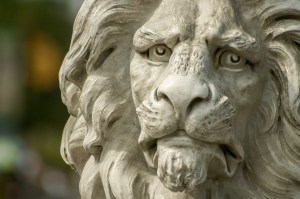
lion

The first of the Seljuk sultans was Togrul Beg.  Of him Edward Gibbon said, “It would be superfluous to praise the valour of a Turk; and the ambition of Togrul was equal to his valour.”  This is a supreme compliment, and entirely true.  By the time of his death in 1063 he had firmly laid the foundations for the Seljuk Empire in the Middle East and Central Asia.

Continue reading

Justice Should Remain Blind

blind

One of the greatest of the medieval Turkish princes was Mahmud of Ghazni (محمود غزنوی) or Mahmud Ghaznawi.  He lived from about 971 to 1030.  During this time his forces conquered large parts of what is now Iran, Afghanistan, and northern India.  It was apparently for him that the title of sultan was first invented.

Continue reading

The Soviet Union’s Philosophy Of Weapons Design

soviet

The Soviet Union is no more, as everyone knows.  Its political system proved to be unsuccessful; it was incapable of adapting to the challenges of history.

Continue reading

Some Wisdom From Chilon And Diogenes

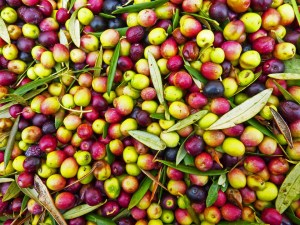
olives3

Here are some sayings and stories taken from Diogenes Laertius’s Lives of the Philosophers.  I’ve mentioned this book in a few previous articles here.  Practical life advice, amusing anecdotes, and mischievous criticisms of famous names never lose their freshness or fail to bring a smile.  Indeed, we often forget that one of the greatest lessons philosophy can teach us is a sense of humor about ourselves and most other worldly things.

Continue reading

Many Go To The Market-Place, But Few Seek The Crown At Olympia

crown1

Diogenes Laertius’s Lives of the Philosophers contains interesting stories and sayings of a great many ancient Greek sages, of whom most we would otherwise know almost nothing.  My own well-worn copy of the book presented me recently with the wit and wisdom of Lyco, who is said to have lived from 299 to 225 B.C.  The details about his life and legacy are found in V.4 of the Lives.

Continue reading

Michael Psellus On The Challenge Of Being An Emperor

psellus1

Michael Psellus (1017-1078?) was a Greek cleric, historian, and advisor to a number of Byzantine emperors.  His work, known by the name Chronographia, is a series of biographical portraits of fourteen emperors occupying the throne of the Eastern Roman Empire from about 978 to 1050.  Although not a well-known work, it is a candid and intimate record of palace events that the author had first-hand knowledge of.

Continue reading

Vitruvius Discusses Water Prospecting

water2

The Roman engineer and architect Marcus Vitruvius Pollio (c. 75 B.C.–c. 15 A.D.) wrote an extensive and invaluable work (De Architectura) that describes all types of topics in construction and building.  We will here describe his interesting (and somewhat amusing) method of locating water springs.  This information can be found in book VIII, ch. 1 of his treatise.

Continue reading

Why We Need To Restore The Military Draft

draft2

I’ve been thinking about this for some time, and have decided that the arguments in favor of it are far more compelling than those against it.  These are the reasons.

Continue reading

The Three Rings

ring2

An interesting fable is found in one of the published lectures of the late historian J.B. Bury.  Some investigation into its lineage shows that it is of very old date, and has appeared in various literary sources.  One was Boccaccio’s Decameron; another was the medieval chronicle Gesta Romanorum; and yet another was from Lessing’s drama Nathan der Weise.  In most essentials, the stories agree with each other, and I will reproduce it here.

Continue reading

Towards A Definition Of Art

art2

I was recently talking to James Seehafer, the originator of the art school known as massurrealism.  Although I am only an amateur in this subject, I have found myself thinking more and more about what can be called “art,” and what should not.  Are we to imagine–as many careless people nowadays do–that anyone can create any random object and call it art?  Are there any rules, guidelines, or elements for what may be considered “art”?

Continue reading