The Road To Tusculum

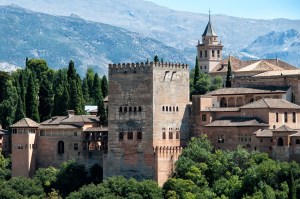
Today I visited the site of the old Roman town of Tusculum.  It is located in the Alban Hills outside Rome, near the modern town of Frascati.  It is close to Barco Borghese, Monte Porzio Catone, and Montecompatri.  In Cicero’s day, Tusculum was known as a fashionable spot for the elite to have summer villas.  Cicero himself owned a villa in Tusculum, and although its precise location has not yet been identified, he and his friends walked the ground there many times.

Continue reading

On The Banquets Of Montezuma

There must be many times when the participants in great historical events can scarcely believe their good fortune in being present to witness the momentous events in question.  Chance has its role in history; and whether Fortune or virtue plays the deciding role in human events is a question that we must leave to the philosophers.  Cicero tells us (On Moral Ends V.5) that Theophrastus’s treatise On the Happy Life placed too much weight on the role of Fortune, and not enough emphasis on virtue.

Continue reading

Sometimes You Have To Be Wrong (Podcast)

Our society places too much emphasis on the individualistic need to win every argument, to be right in all things, and to impose our will on others. Sometimes, you need to swallow your pride and let things go for the sake of preserving harmony. Stop trying to be “right” all the time. You will find yourself feeling better, less stressed out, and more at peace. Sometimes, being good is more important than being “right.”

Continue reading

Johan Nieuhof’s Pioneering Travels In China

Johan Nieuhof was one of the most accomplished Dutch travelers of the seventeenth century.  Although he made separate and independently valuable explorations in Brazil, India, and China, it was his experience in China that has made his name known to history.  No serious student of Asian history and economic affairs can afford to overlook him or the implicit lessons of his travels.

Continue reading

The Limits Of Predictive Power: Graham Allison’s “Destined For War”

The central thesis of Dr. Graham Allison’s Destined for War:  Can America and China Escape Thucydides’s Trap? is relatively straightforward to state.  When a rising power (China) is confronted by a relatively declining power (the United States), the declining one often resorts to making war on its enemy.  Allison’s term for this phenomenon is “Thucydides’s Trap,” a phrase taken from the following observation by the great Greek historian: Continue reading

A Jaguar Hunt On The Taquary, And The Precepts Of Pythagoras

Every man is a jumble of paradoxes.  The same man can harbor sentiments of the noblest, most generous, and elevated type; and at the same time, he can retain the capability to deliver lethal blows for necessity or sport.  It is almost as if the altruist or artist needs a bit of tempering with a dash of Tamerlane.  Consider Theodore Roosevelt, the president generally considered the primary voice of conservationism in the twentieth century.

Continue reading

Russian Explorer Adam Johann Von Kruzenstern Circumnavigates The Globe

In these pages we have given the great explorers of Britain, Germany, Australia, the United States, and some other nations their due.  We now discuss the life and career of Russia’s most accomplished nineteenth century explorer and adventurer, the Baron Ivan Fyodorovich Kruzenshtern (Иван Фёдорович Крузенштерн).  Like many of the names celebrated here, his is virtually unknown in the West today, a fact that may intimate just how far we have departed from the adventurous, daring spirit of those who came before us.

Continue reading

The Hand Of Ibn Muqla: Do Not Envy Those Who Wield Power

There was once a government official and literary figure of the Abbasid caliphate in Baghdad named Abu Ali Muhammad ibn Ali ibn Muqla al-Shiraz.  He is known to history as Ibn Muqla, and he lived from about A.D. 885 to 940.  According to his biographer Ibn Khallikan, Ibn Muqla began his government service career as a tax collector in the city of Fars.

Continue reading

Starting Out With The Roosevelt-Rondon Expedition In Brazil

The naturalist Leo E. Miller published an engaging record of his South American adventures in 1918 entitled In the Wilds of South America.  We have previously related one of his adventures in Colombia, his quest for the elusive “cock of the rock” whose nesting places were perched over inaccessible, cavernous waterfalls.  While he was in British Guiana, he received word that ex-president Theodore Roosevelt had received permission from the Brazilian authorities to explore the ominously-named Rio da Duvida in the Amazon; he would be guided in this effort by Brazil’s most famous living explorer, the indestructible Candido Rondon.

Continue reading

The Meaning Of Self-Denial: The Herdsman And The Monk

One of the primary virtues that Ibn Zafar believes a good leader should possess is the virtue of self-denial.  In Arabic this word is زهد, or “renunciation” of worldly things.  What he means by this is that no leader–or any other person, for that matter–can ever become truly great until he learns how to subordinate his desires in the face of higher purposes.

Continue reading