The theme of this podcast is the subject of escape, and how it is connected with travel and discovery. We explore this theme through the prism of two recent movies: “The Last Days” (2013) and “The Way Back” (2010).

The theme of this podcast is the subject of escape, and how it is connected with travel and discovery. We explore this theme through the prism of two recent movies: “The Last Days” (2013) and “The Way Back” (2010).

When we are dealing with an opponent of substantial power, we should try to cut him off from his source of strength. If he can be made incapable of drawing on his strengths, he will be weakened; and so weakened, isolated; and if isolated, destroyed. Everything has a source of strength, whether we are talking about a person, an animal, a machine, a group, a nation. So the first step will be to identify this power source.

We have paid a price for the media age. Yes, it is true that we have access to huge volumes of information (or mindless trash, depending on your perspective); but the average person is now so deluged with tsunamis of inanity that it is a full-time responsibility just to sift out what is of value from what is not. Some people are not able to do this–or do not want to do it–and swim in mental sewage. Others are able to do it, and can ascend to the loftiest heights of knowledge and perception. Every man makes his own choice as to which world he prefers to inhabit.

There are times in a leader’s experience when it will be prudent to watch and await developments. Sometimes more is to be gained by figuratively taking off one’s pack, sitting down on the side of the road, and monitoring the flow of events, than by leaping into the fray. On the other hand, there are also just as many–if not more–times when decisive and speedy action is necessary to deal with a nascent problem. Knowing when to wait and when to act is one of those key questions that we all have to confront sooner or later. It is ultimately a tactical decision for which no firm rules can be laid out: every situation must be evaluated on its own merits.

The belief in portents and auguries was common before the modern era. We moderns, comfortably ensconced in our towers of science and “rationalism,” are likely to view with extreme skepticism the notion that future events can be foretold. Such a view would appear to some as a superstitious relic from a less enlightened era. Or so we would like to imagine.

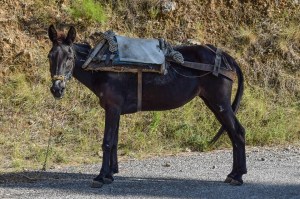
It is a good thing for us to cultivate our aggressive spirit. Life requires participation, and participation demands endurance and adrenaline; and he who enters battle with a spirit of meek submissiveness is likely to get precisely what he asks for. All this is true. Yet the patient endurance of the pack-mule may be just as valuable as the explosive fury of the panther: the former triumphs by being able to endure, while the latter may find itself fatally exhausted once its initial burst of energy is spent. Life more often demands the ability to absorb punishment than the ability to deliver it to others.

We have recently discussed ways of handling a lack of appreciation. A certain independence of spirit–a soaring greatness of soul–is one of the main ways we can limit our expectations of appreciation from others. Consider again, if you need to, the verses of Ibn Munir on this subject, which capture perfectly this spiritual independence. As I see it, no more powerful statement of this ethic has ever been put into poetic form.

The historian Herodotus (I.30) relates an anecdote involving a conversation between the Lydian king Croesus and the Athenian statesman Solon. Solon once found himself as a guest at Croesus’s court. The king knew that Solon was renowned for his wise judgment and careful consideration of life’s important questions. So he could not resist asking the Athenian a question that was troubling him. The question he asked him was this: “Who, Solon, was the happiest man you have ever seen?” It was expected for royal visitors to tell the king what he wanted to hear, of course. Croesus was expecting some words of flattery from Solon to reassure himself that he was living a meaningful life.

When a new leader assumes a position, it is often necessary for him to undertake significant reforms. If he wishes to make lasting changes to the system, he should undertake to do so both quickly and boldly. To wait too long is to risk seeing one’s foes united against you; and when embarking on a course of reform, it must be made clear that the old ways of doing things will no longer do. Bold adjustments are often more effective than half-hearted measures.

For those who wish to seek it, precious knowledge can be found in many different places. The secrets of history, warfare, personality, leadership, good, evil, life, love and many other things can usually be located by diligent seekers. But it is one thing to know something: and it is quite another to put that knowledge into practice. Why is this? There are many reasons.
You must be logged in to post a comment.