

We deal with a few recent questions from readers. They are:
We deal with a few recent questions from readers. They are:

I had a chance yesterday to learn more about a strange and tragic incident in recent Brazilian history: the country’s so-called “rubber soldiers” (soldados na borracha) program of the Second World War. The story is almost totally unknown in the United States, and for this reason I thought it would be worthwhile to share some details about it here.

Here are some sayings and stories taken from Diogenes Laertius’s Lives of the Philosophers. I’ve mentioned this book in a few previous articles here. Practical life advice, amusing anecdotes, and mischievous criticisms of famous names never lose their freshness or fail to bring a smile. Indeed, we often forget that one of the greatest lessons philosophy can teach us is a sense of humor about ourselves and most other worldly things.

Diogenes Laertius’s Lives of the Philosophers contains interesting stories and sayings of a great many ancient Greek sages, of whom most we would otherwise know almost nothing. My own well-worn copy of the book presented me recently with the wit and wisdom of Lyco, who is said to have lived from 299 to 225 B.C. The details about his life and legacy are found in V.4 of the Lives.

A reader is annoyed that someone is trying to tell him how he should approach and think about his parental responsibilities.
This person is appears to be crossing lines of decorum, but as often happens, I suspect there is more to the story here.
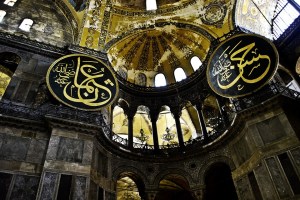
Many decades before 1453 (the year Constantinople finally fell to the Ottoman Turks), the Byzantine “Empire” had become a sad parody of its former self. Mismanagement, bad leadership, and the inability of the old state to cope with the challenges of its strategic environment had fatally doomed it long before Ottoman cannon breached its walls.
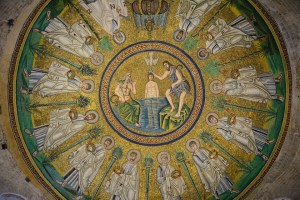
Michael Psellus (1017-1078?) was a Greek cleric, historian, and advisor to a number of Byzantine emperors. His work, known by the name Chronographia, is a series of biographical portraits of fourteen emperors occupying the throne of the Eastern Roman Empire from about 978 to 1050. Although not a well-known work, it is a candid and intimate record of palace events that the author had first-hand knowledge of.

A news agency recently reported the discovery of the tomb of Suleiman the Magnificient, who by general consensus was the greatest of all the Ottoman sultans. Suleiman, who lived from 1494 to 1566, is now nearly unknown in the West; but he was, in the words of one eminent historian, “the greatest and ablest ruler of his age.”

We discuss a moral problem that arose in Japanese prison camps in the Second World War. We discuss how the same moral issue is relevant today, and what Cicero’s response to it would have been.
What duty is owed to our fellow man? When does the pursuit of self-interest go too far?

“Platform businesses” have been all the rage for years now. The general idea of a platform business is that it provides an opportunity for a buyer and a seller to meet and perform a transaction. Airbnb, Fiverr, and Uber are examples of such businesses.
[To read the rest of the article, click here.]
 Quintus Curtius
You must be logged in to post a comment.