


On Moral Ends is now available in audio book format on Amazon Audible and iTunes. For the first time, this essential classic has been introduced to a new generation of readers in a way that preserves the integrity and majesty of the original Latin work. Engagingly and professionally read read by Saethon Williams, this audio book adds a new dimension of understanding to the printed editions in paperback and hardcover. Length: 10 hrs, 17 min.
Author: Quintus Curtius
“On Duties” Is Now Available In Hardcover


Fortress of the Mind Publications is pleased to announce the issuance of On Duties in hardcover. First published in 2016, Quintus Curtius’s innovative translation of On Duties has helped introduce this masterpiece of moral philosophy to a new generation of readers, many of whom have had no previous exposure to classical studies. In so doing, it has itself become a classic, and remains the best selling text at Fortress of the Mind. With topical organization tables, commentary, annotations, and vigorous prose that retains Cicero’s eloquent and disputatious style, this volume is one that merits a lifetime of continued reference and study.
Available at Amazon and all major book retailers (Barnes & Noble, Books-A-Million, The Book Depository, etc).
The Eight Qualities Of The Man Of Understanding

One of the first and greatest classics of Arabic prose is the Book of Kalila and Dimna. It is a collection of fables told with an allegorical purpose, but it is presented with such wisdom, poetic eloquence, and engaging humor as to make it one of the treasures of world literature. Its pedigree verifies its merit. The stories it contains were originally derived from a Sanskrit classic called the Panchatantra, but a Persian scholar and translator named Ibn Muqaffa’ (ابن المقفع), writing around 740 A.D., reworked the stories into something that was entirely original.
On His Deathbed, Johnson Celebrates Youth’s Vitality And Spirit

It is right that youth should celebrate its vigor. We do it a grave injustice by shackling its natural ebullience, by attempting to douse its fires with an excess of admonitions and restrictives. Let it, as far as health and safety will permit, taste the light of the open sky, the airs of unexplored mountains, and the swift currents swirling along tropical beaches. For in our elder years we will recall these liberating sensations with an intensity that sustains life itself.
A London Men’s Club Of 1783 (Podcast)

Men’s clubs used to be places where like-minded individuals could congregate and discuss topics of mutual interest. As society has changed, this is becoming an increasingly rare tradition. To see just what a gentleman’s club was like in London in 1783, we go to the original sources and read the club’s by-laws. Nothing better illustrates how different that era was from today.
Some Bits Of Travel Advice

It is very easy to find travel advice. It gushes in currents, like the waters of a melting glacier, carrying all before it. I have no desire here to provide an exhaustive laundry-list of action items; my goal is only to toss out a few thoughts on the subject that have come to me in recent days. I recently read the following travel recommendations which appear in Boswell’s Life of Samuel Johnson. They are taken from a letter he wrote to one Mr. Perkins in 1782, when Johnson was 73 years old:
Obsession, Judgment, And Restraint (Podcast)

At what point does a man’s dedication turn into obsession? And at what point can this obsession turn self-destructive? What role should judgment and restraint play in our lives? We discuss these issues, and offer the example of storm chaser Tim Samaras.
The Travels Of Sir Thomas Roe

One of the most successful diplomats of his era, Thomas Roe (1581–1644) got an early start on success in life. In his era it helped to be a part of the nobility. He was born in Essex, the son of Sir Robert Rowe, and was educated at Oxford; his genteel manners and refined ways soon gained him access to the court of Elizabeth I. A knighthood followed in 1604, and with this came increased opportunities for advancement and commercial success.
Ibn Fadlan’s Unique Travels In Central Asia And Rus
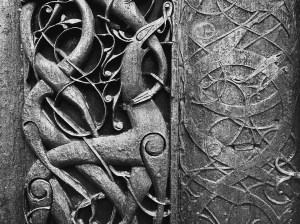
The name of Ibn Fadlan (أحمد بن فضلان بن العباس بن راشد) has received some notoriety in recent years, primarily due to fictionalized accounts of his travels in print and film. Enthusiasts of travel literature who have taken the time to read his work will find, however, that his actual travels have little to do with these sensationalized tales. His book is of great value to modern ethnographers; for it remains the only first-hand account we have of the customs and habits of Viking communities in Russia during the medieval period.
An Interview With Delta2Alpha

Last week I had a great interview with Ace Johnson of Delta2Alpha, an elite knife manufacturing company that I’ve written about before. I think it was one of the most enjoyable I’ve done; Ace knew the right questions and kept things moving.
 Quintus Curtius
You must be logged in to post a comment.