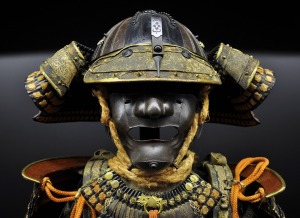

The Conquest Of Anxiety And Fear

anxiety1

The foremost lesson of philosophy should be the lesson of perspective.  When I say perspective, I mean the different interpretation of events that can be given from viewing the matter from different vantage points.

What we think is a product of our relative position to an issue.

You say to me, how oppressed I am with earthly worries and anxieties.  I can barely continue in my day-to-day struggle.  I feel overwhelmed by the brutality and iniquity of the world.
Continue reading

Your Guardian Deity

Plutarch’s essay On Socrates’s Personal Deity (593A-594A) contains an idea that I find appealing.  He proposes that every man has a “personal deity” that looks out for him and helps him in a time of need.

We can think of this deity as a kind of guardian angel.

The personal deity is an experienced attendant-god or demi-god, who is well-versed in the struggles of life.  He now watches over the struggles of mortal man, and every now and then reaches down to help those he believes are deserving of his aid.

Continue reading

On Making Setbacks Appear To Be Advances

alps1

Conflict surges back and forth.  There will be advances, and there will be reverses.  It is inevitable:  no one who is actively engaged in the games of life will be able to avoid reverses.  But then the question becomes:  how may reverses be characterized as gains?

If you believe that this is not a question worth asking, then I would disagree strongly with you.  There are times when it will be necessary to conceal the magnitude of one’s reverses, so as not to embolden the enemy.

Remember:  you will normally have very few allies.  Most people want to see you fail, so that their inaction and timidity are thereby affirmed.  We must be mindful of human nature, which in these matters resembles the proverbial crab in the bucket, clawing at every other crab, to the detriment of all.

Continue reading

The Fable Of Aridaeus of Soli

air

Plutarch’s essay On God’s Slowness to Punish (563C et seq.) relates a vivid fable on the punishments meted out to those to commit evil acts in their lives.  It also relates to us the requirements and possibilities for moral redemption.

The fable takes the form of an out-of-body experience that has much to say about ethics and human responsibility.  But it is parable rich in metaphor and meaning.  Readers can interpret it in a variety of ways.

This is the story.

There was a native of the town of Soli named Aridaeus.  He indulged himself in every type of sensual and mortal passion that he could, and was undeterred by the effects that these pursuits caused to others.  He quickly exhausted his money, and turned to a life of crime.  His sole motivation was profit and gain.

Continue reading

Seeking Peace Of Mind: A Letter

peace3

We cannot always choose our circumstances, but we can adapt our minds and attitudes to the circumstances we are presented with.  Plato, in the Republic (604c5 ff.), famously compared life to a game of dice that was structured at two levels:  the throw of the dice (over which we have no control), and the way in which we deal with the results of the throw.  This same dice analogy is found in Epictetus (II.5.3).  Our attitudes mold our lives.  If we do not adapt our attitudes to our circumstances, we will be like the man who carries a hidden sickness wherever he goes.  He travels here and there, always seeking a better environment, but he finds himself equally miserable wherever he is.  Why is this?  It is because the problem lies in his mind.

Continue reading

Your Defiance Is Your Abundance

def1

We hear a lot, here and there, about creating a “mentality of abundance.”  We read much about how we need to create an “abundance mindset.”

Abundance!  Abundance!  Abundance!  Scream the hype-men, the carnival-barkers, the chest-beaters.  It is a tiresome pantomime.  All under the circus big-top.

Step right up, ladies and gentlemen!  

Which is fine, as far as it goes, I suppose.  I’m a firm believer in abundance, and its mentality.  I want to roll in abundance, if I can.  I want to eat and drink of it.  If I can.

Gorge myself on it.

But when I hear too much of this abundance talk, I want to grind a grapefruit into someone’s face.  I want to say to the chest-beaters and carnival-barkers:  take your abundance mentality and shove it up your ass.  I prefer a defiant mentality.  My will is my abundance. Continue reading

What Is The Best English Translation of Sun Tzu’s “Art Of War”?

My article this week at Return of Kings deals with Sun Tzu’s Art of War.  

Sun Tzu’s The Art of War is one of the most widely read of the military classics. A very large number of translations exist, of decidedly uneven quality. Some of these “translations” omit large portions of the original text’s commentary; and some of them are glossy, slicked-up books that bear little relation to the original.

As it turns out, The Art of War has much to tell us about the art of translation. The translator must know the language, of course; but he must also know his subject, and have a sensitivity to the nuances of a work’s historical context. The quality of a translation can make or break a work. A good translation can communicate the spirit of the original, while a bad one can alienate a reader permanently.

[To read the rest of my article, click here.]

Back To The Basics: The Educational Teachings Of John Comenius

100_0857

I’ve recently learned something about the theories and works of a little-known philosopher and educationalist named John Comenius (1592-1670).  He was a Czech cleric perhaps best remembered for his progressive theories on universal education.  Some exposure to his ideas made me realize just how out of focus the educational system is here in the United States.

In Comenius’s time, illiteracy was the rule in perhaps a majority of Europeans.  He spent decades traveling around Europe to promote educational reform, and to attempt to bring the art of instruction in line with modern realities.

Continue reading

“Do What I Say, Not What I Do”

sam1

We live in times where our “leaders” at the top lecture us on duty and responsibility, yet aggregate to themselves a larger and larger portion of the pie.  They grow fat on your labor, and on your backs; and yet you have very little to call your own.

And in their spare time, they sweep away our cultural inheritance to make way for corrupting entertainments, distracting amusements, and intoxicating spectacles that offer nothing in the way of meaningful value.  We see this as the lesson of the great film Harakiri (1962).  It is one of the great samurai films, and a powerful indictment of institutional hypocrisy.

Continue reading

Beauty Seeks Beauty, And Ugly Seeks Ugly

beauty1

Essayist and Japan observer Alex Kerr wrote a very perceptive collection of essays on Japanese culture and his experiences with it.  The book was released in the 1990s and was called Lost Japan.  I admire the book very much.  The essays in the book are unified by one theme:  his quest for the hidden beauty of things.

One of the many engaging stories he told in the book was how he (basically accidentally) got into art collecting.  He noticed that many Japanese antiquities were undervalued and underpriced.  So he bought a few of them.

And then he bought more of them.

Continue reading